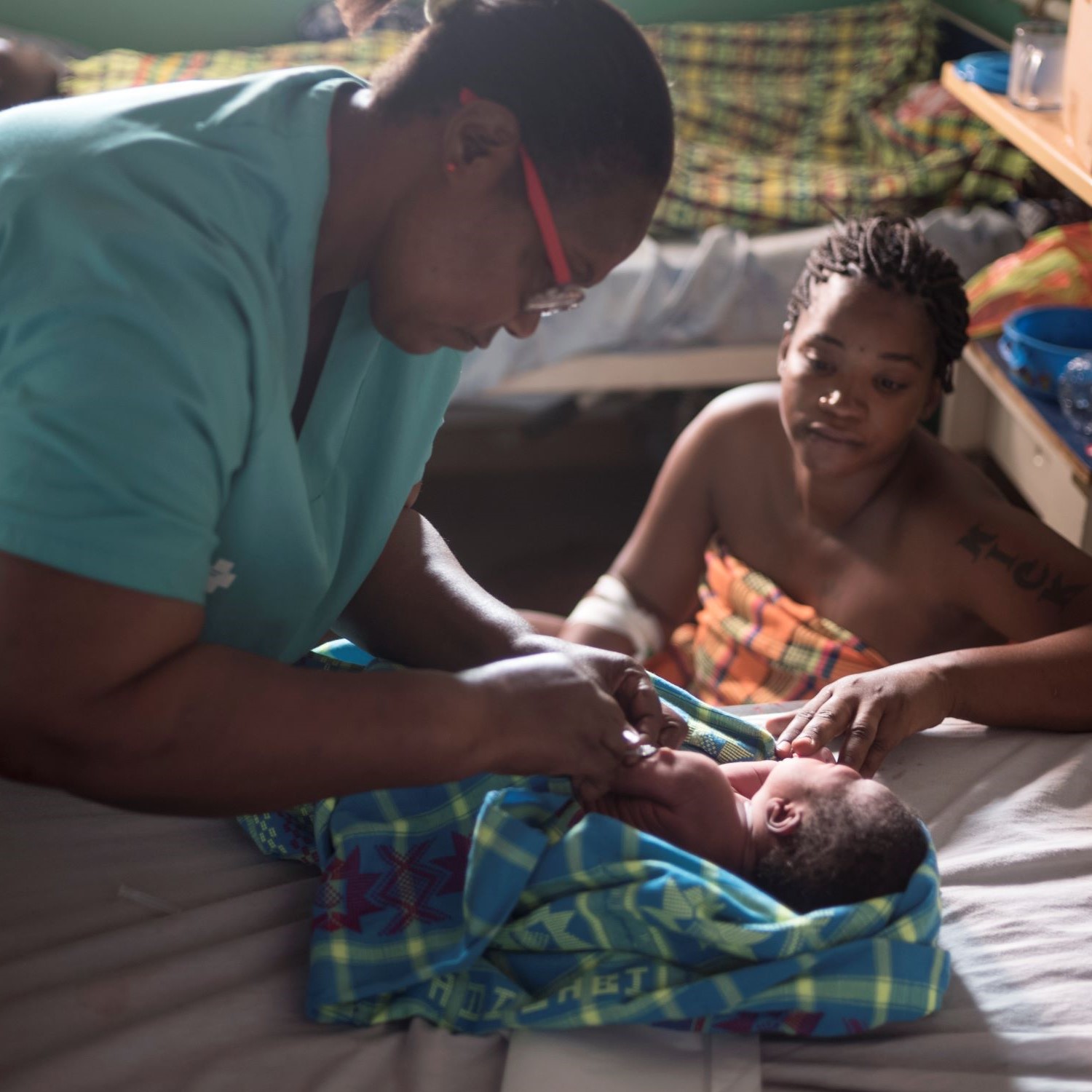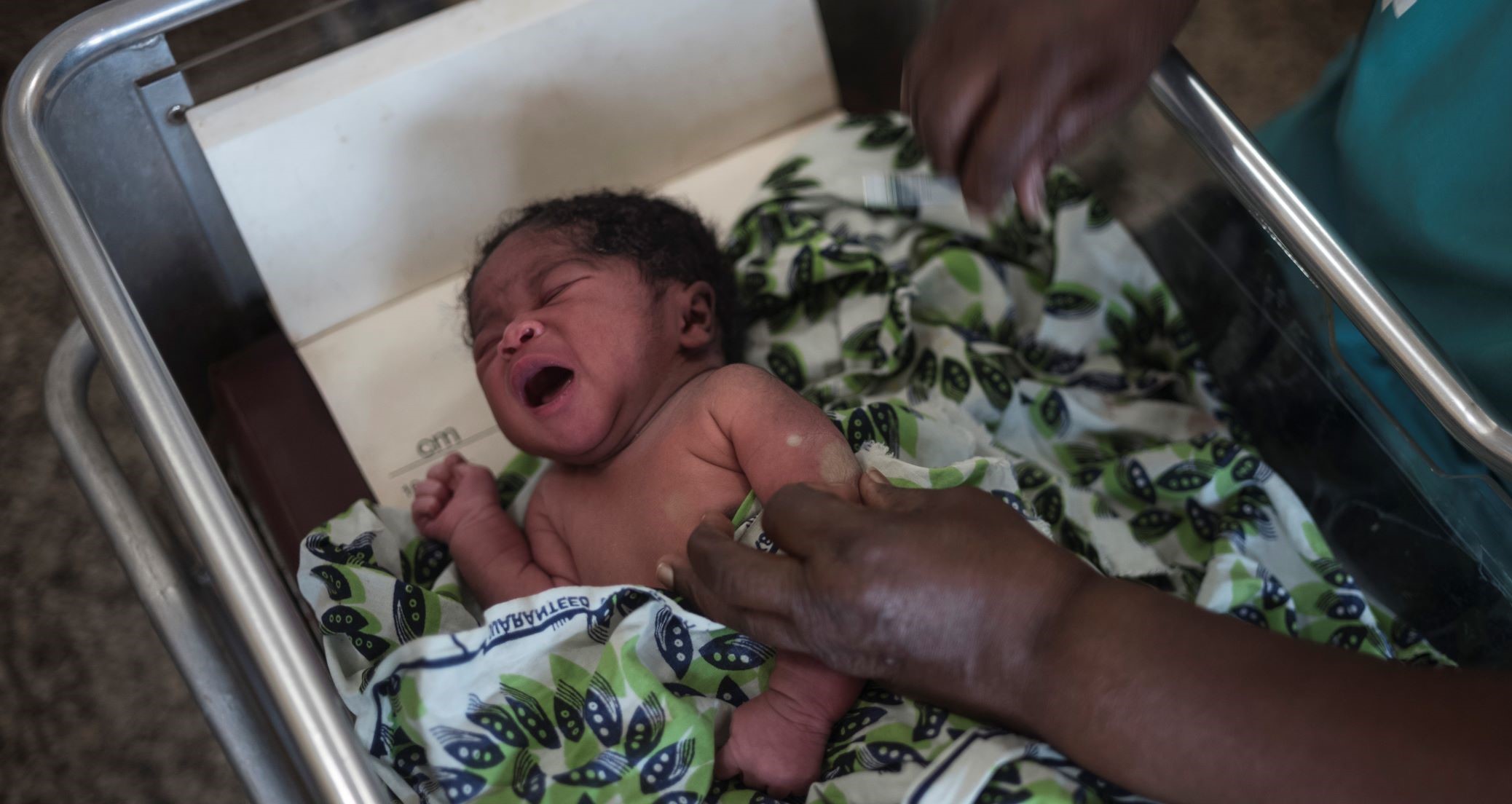
Baby in Guinea Bissau receiving vaccination. Credit: Sofia Busk
The mysterious ability of the veteran tuberculosis vaccine, BCG, to solve health problems way beyond its remit has puzzled scientists for decades. Now, The Kids researchers have not only unlocked part of the secret to its success in saving the lives of newborns, but they’re at the forefront of global efforts to test its ability to fight COVID-19.
It was close to midnight on a wintry Vancouver night in 2013 when Dr Nelly Amenyogbe hit the biology jackpot. Trudging through the cold rain for the latest in a round of regular checks on newborn mice recently given the tuberculosis vaccine, BCG, she wasn’t expecting good news.
The idea had been to try to replicate findings out of Guinea Bissau in Africa a year earlier which suggested that giving BCG to underweight human babies at birth – instead of a month later, as is often the case – reduced their risk of dying by a staggering 50 per cent. The observational study also suggested this positive effect happened within days of BCG administration – much faster than most vaccines kick in.
The findings had been written off by vaccine experts at the highest level as ‘biologically implausible’. It was simply not possible, they suggested, for BCG to work so quickly and to such dramatic effect.
Unwilling to dismiss the idea so readily, Dr Amenyogbe and her colleague, Professor Tobias Kollmann, set up a small study featuring mice vaccinated with BCG shortly after birth and then challenged with sepsis – one of the top causes of early death in newborns in low and middle income countries. They wanted to see whether it was indeed plausible that BCG could rapidly increase newborns’ survival odds.
The night it all came together, Dr Amenyogbe was expecting to make a quick check and then leave. She had peeked in on the sepsis-challenged mice the day before, and all of them – BCG-vaccinated and non-BCG-vaccinated – had looked much the same: sickly and weak.
“I already kind of felt that no, this is not going to work, it’s just not. I was just going to go in there, tick the box, and go home,” she said.
But when she lifted the cage lid this time, she was stunned. Around 70 per cent of the newborn mice that had been vaccinated were now well on their way to recovery. Only about 30 per cent of those which had not received BCG had recovered: the rest remained sickly and weak.