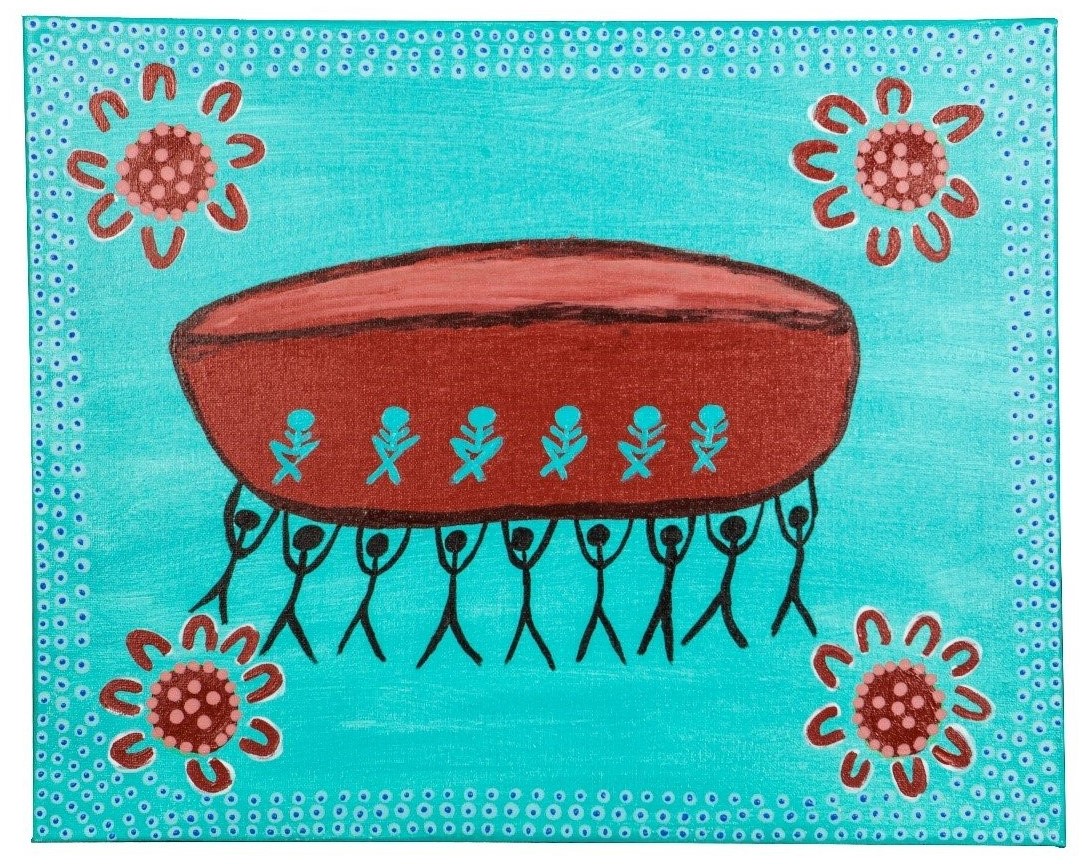
Indigenous and Western worldviews differ in a number of important ways. Here, Ngulluk Koolunga Ngulluk Koort project team leader Dr Brad Farrant explains how NKNK acknowledges and addresses these differences.
The Ngulluk Koolunga Ngulluk Koort project recognises that Aboriginal peoples have a holistic view of health that goes beyond individual physical and mental wellbeing. This includes the social, emotional, and cultural wellbeing of family and community as well as aspects of culture, spirituality, language, connection to land. Indigenous and Western worldviews differ in a number of important ways.
The reductionism of Western worldviews – compartmentalisation/reduction into ever smaller parts – contrasts starkly with the holistic focus of Aboriginal worldviews – ‘everything and everyone is related.’ The work on the Ngulluk Koolunga Ngulluk Koort project has made it very clear that it is critically important to recognise and respect these differences to provide a solid foundation for research, policy and practice.
The origins of authority are also very different in Aboriginal and Western worldviews. Authority in Aboriginal communities is based on age, cultural knowledge and relationships, whereas authority in Western systems is given through roles and bureaucracy.
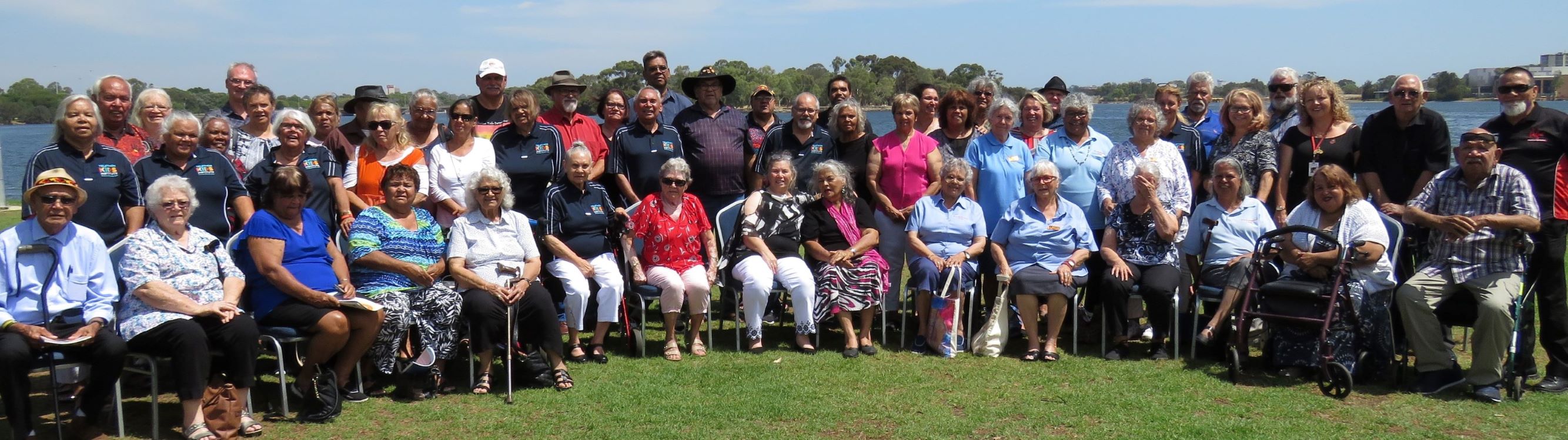
Third Perth-wide Elders Meeting in 2019
In Noongar culture, Elders are the Birdiyas (Bosses). To decolonise research we must recognise and honour the role and status of Elders in Aboriginal culture and put them at the centre of the research process.
As one of the participants in the Ngulluk Koolunga Ngulluk Koort project told us: “Culture is connected to learning to respect your Elders, connection to the bush, being proud of our ancestors and proud of who we were, and then rebuilding yourself for the new, contemporary way to be a Noongar.”
It is also critically important to recognise that Aboriginal and Western worldviews often see issues differently and can also differ on where the origins of problems are perceived.
The Ngulluk Koolunga Ngulluk Koort project team acknowledges the reductive nature of Western science and the failure of many non-Aboriginal researchers to fully engage with and understand holistic Aboriginal worldviews. These have been major barriers to working with Aboriginal communities to develop coordinated, integrated and holistic research agendas that are culturally informed and address community priorities and values.

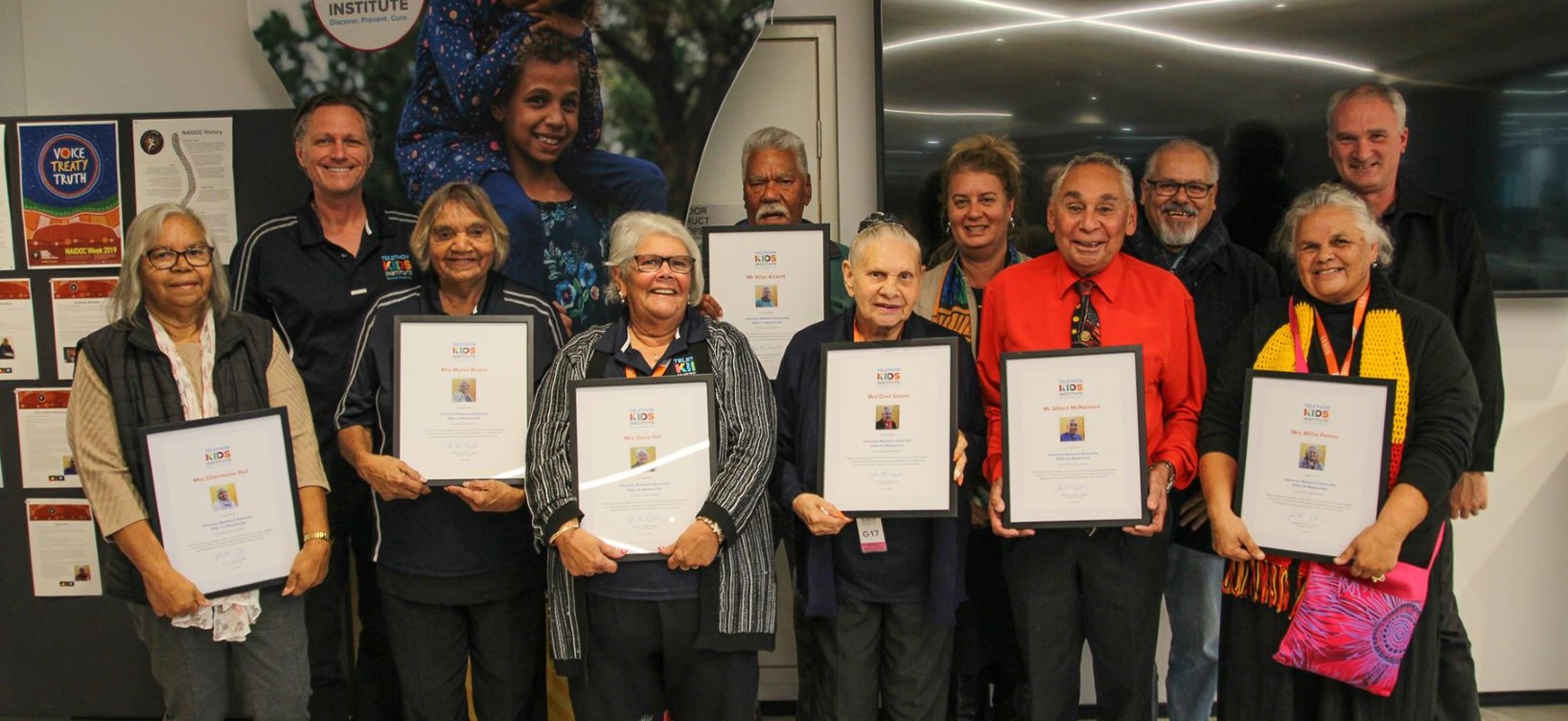 The Kids Research Institute Australia recognised the contribution of the Elder Co-Researchers by awarding them the title of Honorary Research Associates at a special ceremony held during NAIDOC Week 2019.