
Search
Like many other websites, the Institute website may use a standard technology called a 'cookie' to collect information about how you use the site. Any 'cookies' cannot be used to personally identify you.
Your use of The Kids Research Institute Australia website is governed by these Terms of Use. Please read through and ensure you're informed.
News & Events
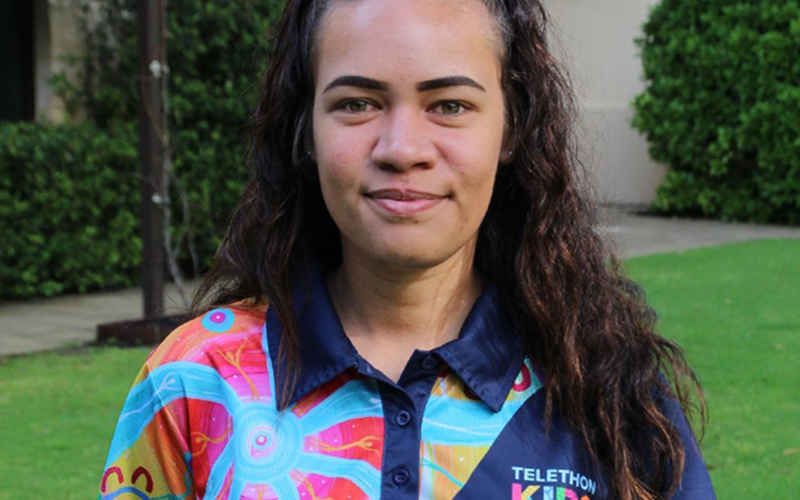
Meet Jordeana - STARS Award RecipientJordeana Howard is a proud Yawuru, Nyul Nyul & Kija woman from the areas of Broome, Beagle Bay & Alice Downs, and a recipient of a The Kids Research Institute Australia STARS Award.
News & Events
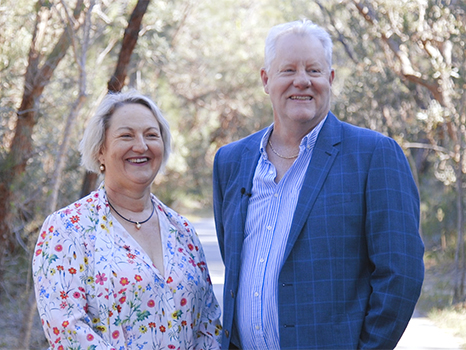
Marianne & Brad’s gift of giving‘Tis the season of giving. Unconditional giving means you directly power all our research to help more kids live happier, healthier lives.

Ever wondered just what your gift means to us? Here's a snapshot.
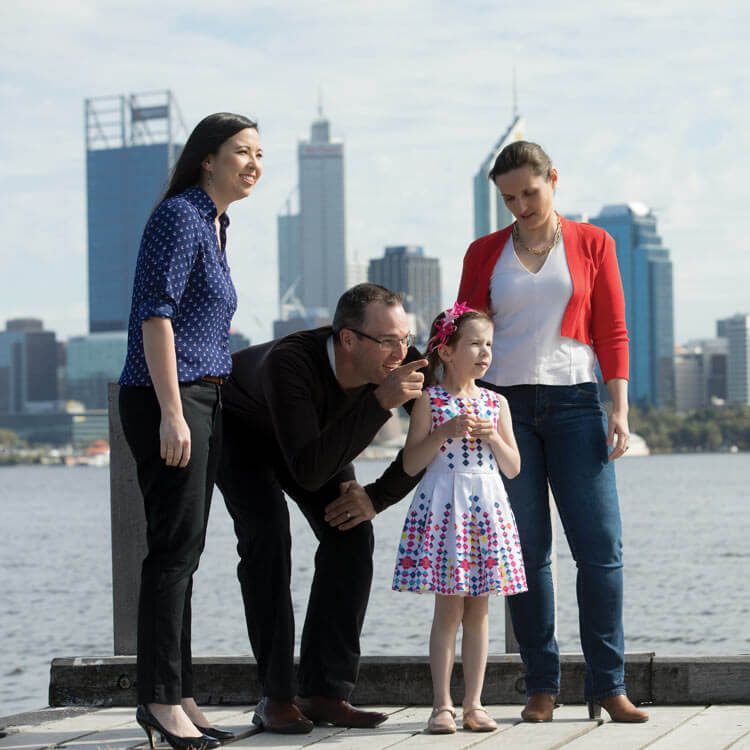
One of Australia’s leading cancer research centres continues to be powered by parents who decided to fight back. Hard.
Research
Mapping the global prevalence, incidence, and mortality of Plasmodium falciparum and Plasmodium vivax malaria, 2000-22: a spatial and temporal modelling studyMalaria remains a leading cause of illness and death globally, with countries in sub-Saharan Africa bearing a disproportionate burden. Global high-resolution maps of malaria prevalence, incidence, and mortality are crucial for tracking spatially heterogeneous progress against the disease and to inform strategic malaria control efforts. We present the latest such maps, the first since 2019, which cover the years 2000–22. The maps are accompanied by administrative-level summaries and include estimated COVID-19 pandemic-related impacts on malaria burden.
Research
Improving sport opportunities, participation, and experiences for children in out-of-home care: A mixed-methods studyParticipation in sport is associated with a range of physical, psychological, and social benefits. However, children in out-of-home care face complex barriers to sport participation, with lower participation rates than children in other household arrangements.