
Search
Research
Twenty-five is not a neurobiologically determined age of maturity for gender-affirming medical decision-makingAmong the increasing threats to the healthcare of transgender and gender-diverse people globally, are efforts to deny gender-affirming medical care to people under age 25 typically justified by stating that the human brain is not developed until the mid-to-late 20's. Thus, this line of reasoning states young adults are not sufficiently mature to be responsible for autonomous healthcare decision-making— at least in regard to gender-affirming care.
Research
A general factor for trust?: Testing latent factor structures of trust across institutional and interpersonal contextsThe literature is replete with multi-dimensional self-report assessments of trust. It is not clear whether these dimensions are statistically distinguishable across institutional and interpersonal contexts, respectively.
Research
A Scoping Review of Methodologies Exploring Diet and Health Outcomes in Lactating Women: What Has Been Done and Where to Next?Developing dietary guidelines for lactating women presents significant challenges, due to limited evidence being available on their specific nutrient needs and the biological impacts of various dietary dimensions. Current dietary recommendations often rely on data from nonlactating women, leading to potential inaccuracies.
Research
“Stop, pause and take a break”: a mixed methods study of the longer-term outcomes of digital emotional wellbeing training for perinatal womenMaternal psychological distress is related to poorer physical and mental health as well as child developmental problems. Interventions that optimise maternal mental health and wellbeing during the "first 1,000 days" of life should have wide-reaching benefits for the mother and her child.
Research
Feasibility of home-based urine collection in children under 5 years in the ORIGINS birth cohort study: mixed method protocol and sample completion resultsUrine is an attractive biospecimen for nutritional status and population health surveys. It is an excellent non-invasive alternative to blood for appropriate biomarkers in young children and is suitable for home-based collection, enabling representative collections across a population. However, the bulk of literature in this population is restricted to collection in primary care settings.
Research
Changing rules, recommendations, and risks: COVID-19 vaccination decisions and emotions during pregnancyAs COVID-19 vaccinations rolled out globally from late 2020, rules and recommendations regarding vaccine use in pregnancy shifted rapidly. Pre-registration COVID-19 vaccine trials excluded those who were pregnant. Initial Australian medical advice did not routinely recommend COVID-19 vaccines in pregnancy, due to limited safety data and little perceived risk of local transmission.

More than 3,000 skin checks have been undertaken as part of a large clinical trial in WA’s Kimberley region aimed at halving the burden of skin sores in school-aged Aboriginal children.

Australia’s first national guideline for supporting the learning, participation and wellbeing of autistic children and their families.
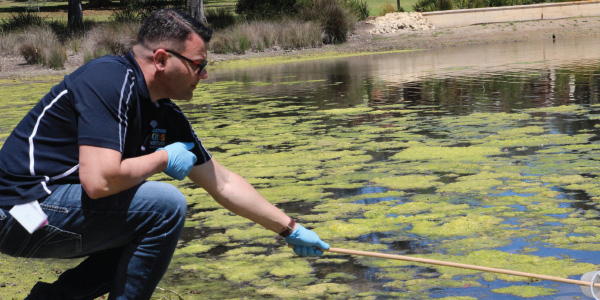
Cystic fibrosis (CF) researchers are working hard to progress phage therapy as an alternative treatment to antibiotics in people with CF who develop life-threatening lung infections.
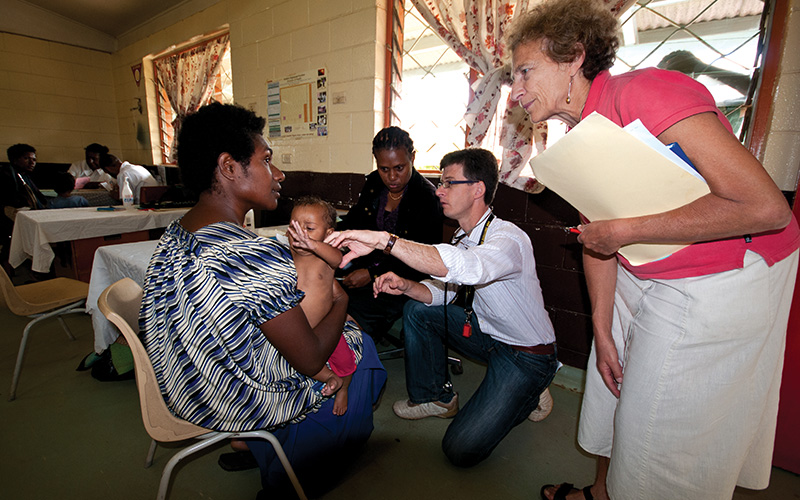
New research has revealed the extraordinary impact of a collaborative project between The Kids Research Institute Australia and the Papua New Guinea Institute of Medical Research, with rates of hospitalisation for pneumonia dropping by nearly 60 per cent thanks to the introduction of the pneumococcal vaccine