Intellectual Disability teams

Child Disability
team profile
Improving the lives of children with a disability and their families sits at the core of our team.
Team profile (Child Disability)
About 2 per cent of children are estimated to have an intellectual disability. The cause of the condition is unknown in at least 50 per cent of cases.
Children with intellectual disability need appropriate supports and services to achieve their best physical and mental health, engage productively in the community, and to have agency and control in their lives.
The cause of intellectual disability is often unknown. Some causes are genetic, problems during pregnancy or at birth, infections and other causes relate to environmental factors.
Some genetic causes are rare, and others occur more commonly.
The aims of our intellectual disability research are:
If you are concerned about your child’s development, you should seek advice from a professional. Getting assessed will provide access to early intervention, education and support.
The Intellectual Disability Exploring Answers (IDEA) database is one of the only population-based resources in the world dedicated to intellectual disability, with additional specific research projects on Down syndrome, Rett syndrome and the CDKL5 disorder.
Researchers are examining critical time periods and their relationship with intellectual disability, including pre-term birth and the transition from school to adulthood for young adults with an intellectual disability. Research on the transition period looks at their work, where they live, who provides cares, how health and therapy needs are managed and how the young adults spend their days.
One study has found that young people with Down syndrome experience fewer behaviour problems compared with those with intellectual disability of other causes. Nutrition and physical activity in children with Down syndrome is another area being explored.
Research has shown that children with an intellectual disability or autism are up to 10 times more likely to be admitted to hospital than children without intellectual disability or autism.
Another study has found that mothers of a child with autism or intellectual disability (but not Down syndrome) were more likely to have mental health problems after the child’s birth. This may relate to the amount of care needed by their child and suggests that support services could also have an important role in supporting the health of the mothers.
Improving the lives of children with a disability and their families sits at the core of our team.
Team profile (Child Disability)
IDEA is one of the few population-based resources in the world dedicated to intellectual disability. The IDEA database contains de-identified information on all children born in Western Australia since 1983 who have been identified with having an intellectual disability and/or autism. IDEA can be linked to other datasets to facilitate research into the determinants, outcomes and service needs of children and adults with intellectual disability. IDEA has supported a wide range of studies relating to risk factors for intellectual disability and outcomes for affected children and their families. Researchers can apply for such linked data, available in a de-identified format under approval from an ethics committee.
Read more about the IDEA database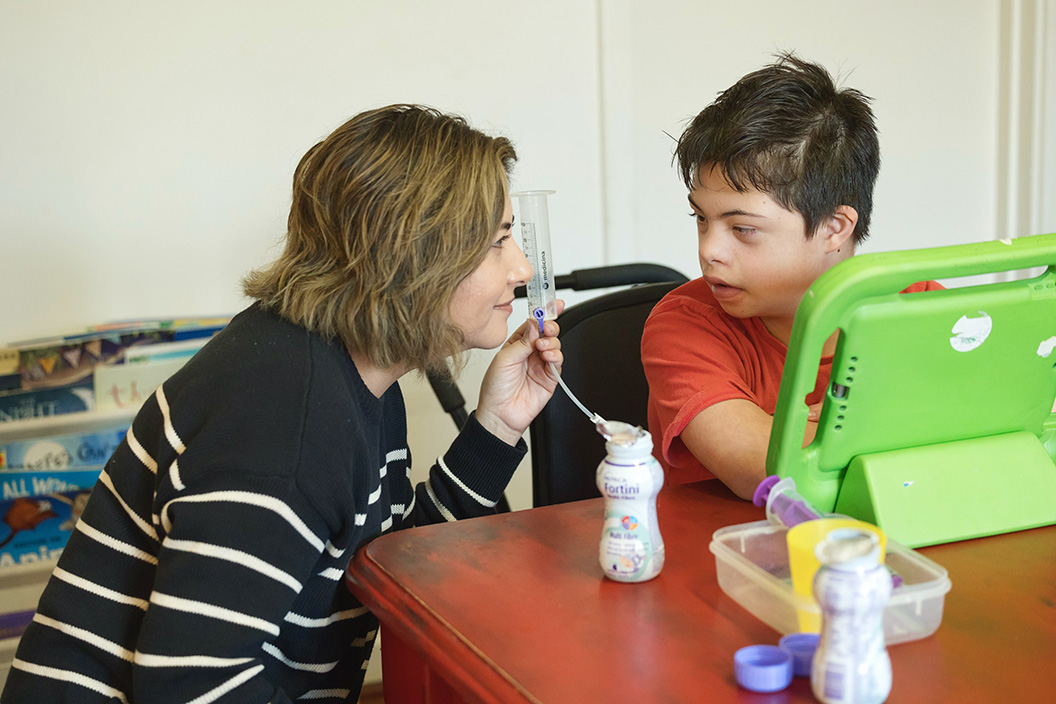
We identified children with intellectual disability in Western Australia who had undergone a gastrostomy insertion – gastrostomy can be used to reduce feeding difficulties in children with a severe disability. This was followed by a program of research that (1) found that gastrostomy insertion was followed by fewer hospitalisations suggesting that the children had better health, (2) explored child and family experiences living with gastrostomy, and (3) developed an online educational resource called Nourish for parents and other carers of children with a gastrostomy.
Read more about gastrostomy
Down syndrome occurs when there is an extra copy of chromosome 21. In Western Australia, approximately 1 in 900 children have Down syndrome. Our research has investigated children’s health, admissions to hospital, dental health, puberty, and leisure activities and participation in the community. We have also investigated the physical and mental health of mothers of children with Down syndrome, siblings, and family quality of life. Parents with a child with Down syndrome contributed important information when we developed the Quality of Life Inventory – Disability (QI-Disability) to measure quality of life.
Read more about Down syndrome