
New approach to protecting bones in children with leukaemia shows rapid results
Preclinical research from the WA Comprehensive Kids Cancer Centre has revealed a promising new strategy to protect bone health in children with high-risk B-cell acute lymphoblastic leukaemia (B-ALL), showing that actively rebuilding bone may deliver faster and more effective protection against debilitating fractur
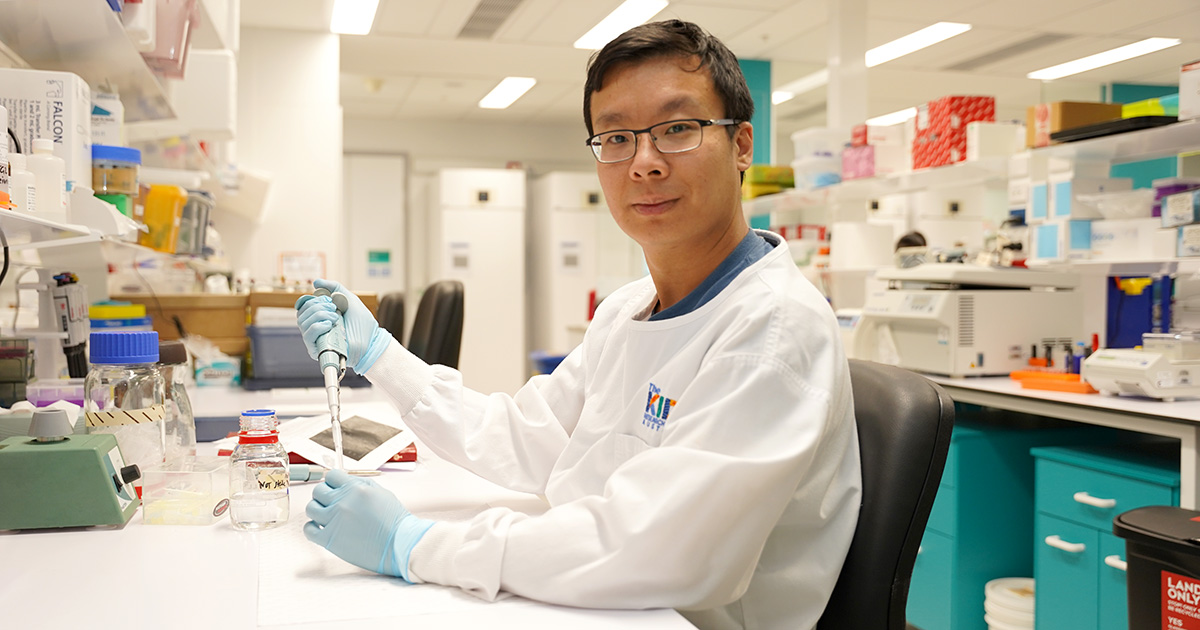
Preclinical research from the WA Comprehensive Kids Cancer Centre has revealed a promising new strategy to protect bone health in children with high-risk B-cell acute lymphoblastic leukaemia (B-ALL), showing that actively rebuilding bone may deliver faster and more effective protection against debilitating fractures than current approaches.
Acute lymphoblastic leukaemia (ALL), the most common childhood cancer, carries a substantial and often under recognised risk of bone damage. Around one in six children present with vertebral fractures at diagnosis, and a similar proportion go on to develop fractures during steroid-based treatment.
In new findings published in HemaSphere, the Centre’s researchers, who are based at The Kids Research Institute Australia, tested a novel therapeutic approach that not only slows bone loss caused by leukaemia but actively rebuilds it.
Dr Vincent Kuek, a Senior Research Officer within The Kids Research Institute Australia’s Leukaemia Translational Research team, said the study demonstrated that an anti-sclerostin antibody can rapidly restore bone density in mouse models of high-risk B-ALL, while also being safely combined with conventional chemotherapy.
“In two separate mouse models, treatment with the antibody led to rapid restoration of bone density, improving both the internal structure and outer layer of bone,” Dr Kuek said.
“It also significantly increased the number of active bone-forming cells within the bone marrow, which are typically depleted by leukaemia. Importantly, the therapy combined safely with a standard chemotherapy drug, with no observable side effects, and resulted in a modest but statistically significant improvement in survival.”
The anti-sclerostin antibody works by blocking sclerostin, a protein that suppresses bone formation. By inhibiting this protein, the therapy effectively releases the body’s natural capacity to rebuild bone, enabling recovery from leukaemia-related damage.
Dr Kuek said this class of drug was already being used to treat brittle bone conditions in adults and was currently being investigated for use in children, which may help accelerate its pathway to clinical application.
“While the findings are based on preclinical mouse models, we are optimistic that the established clinical profile of anti-sclerostin therapies could support future trials,” Dr Kuek said.
“These would investigate whether combining the therapy with standard chemotherapy can reduce fracture risk and improve quality of life for children with high-risk B-ALL.”
Further research will also examine the molecular changes observed in bone-forming cells during leukaemia progression, with the aim of identifying additional therapeutic targets.
Antibodies for animal treatment were kindly provided by Regeneron Pharmaceuticals. The research was conducted in collaboration with Curtin University.
About the WA Comprehensive Kids Cancer Centre
The WA Comprehensive Kids Cancer Centre envisions a future where all children with cancer survive and thrive. The Centre brings together the clinical excellence of Perth Children's Hospital with the research expertise of The Kids Research Institute Australia and The University of Western Australia. Made possible through the support of the Stan Perron Charitable Foundation and the Perth Children's Hospital Foundation, the Centre is accelerating advances in childhood cancer research and care.
First published Tuesday 12 May 2026.
View all news articles