
Search
Showing results for "Study of bullying"
Bullying is now regarded as a health problem and not just a disciplinary problem. Increasing evidence shows both traditional bullying (e.g. hitting, teasing) and cyberbullying have lasting effects on young people (both those who bully and those who are bullied), including damage to self-esteem, academic results and mental health.

Professor Donna Cross and her team at The Kids Research Institute Australia have challenged and overturned damaging attitudes that saw bullying tolerated in childhood.
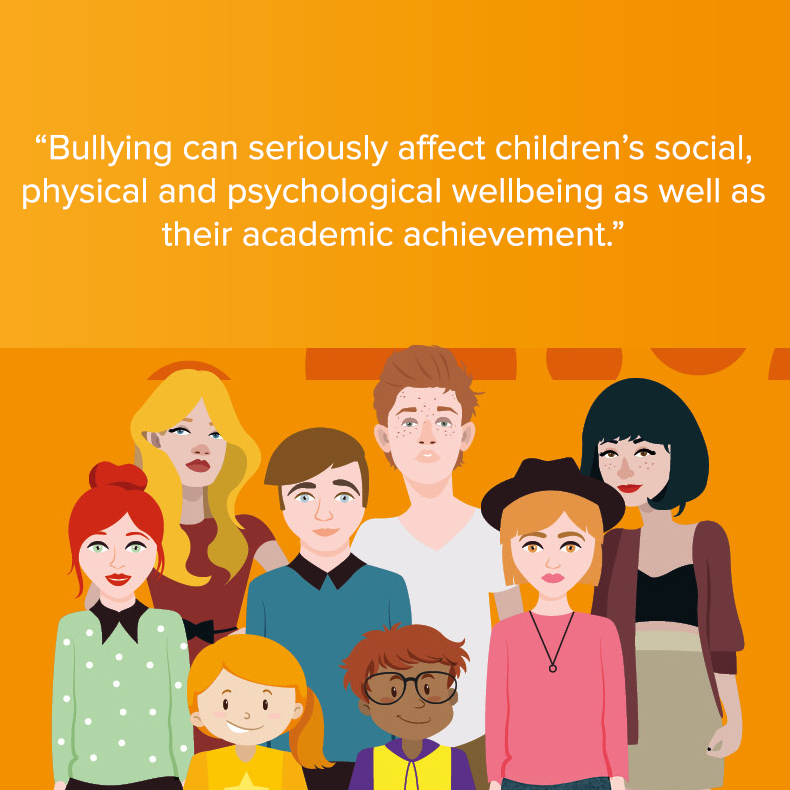
Infographics to easily learn more about bullying and what actions to take should bullying be an issue in your school or community.
The Kids Research Institute Australia's Human Capability Team has been asked by the Commonwealth Department of Education, Skills and Employment (DESE) to prepare a methodology and project plan to conduct a nationally-representative survey of bullying prevalence among children and young people in Years 4–10.
The study of bullying behavior and its consequences for young people depends on valid and reliable measurement of bullying victimization and perpetration.
Bullying behaviour often increases in late childhood and peaks in early adolescence. While interventions to address bullying behaviour typically encourage students to report bullying incidents to school staff, students are often reluctant to report incidents for fear it will worsen their situation or because they lack confidence in a staff members’ ability to intervene effectively. This study explores school staff responses to student reports of bullying behaviour.
Few longitudinal studies have investigated how cyberbullying interacts with traditional bullying among young people, who are increasingly using online...

Most children are capable of bullying behaviour at some time, and it’s our job as parents to discourage this behaviour as soon as it appears.
A commonly suggested strategy for addressing bullying is for victims to seek help from a trusted person. Despite this recommendation, there are a group of adolescent victims who choose not to seek help. This study aimed to identify factors associated with not seeking help among adolescents who experienced bullying victimisation.
Children with asthma face serious mental health risk, but the pathways remain unclear. This study aimed to examine bullying victimisation and perpetration in children with asthma and a comparison sample without a chronic health condition, and the role of bullying in moderating psychosocial adjustment outcomes for those with asthma. A sample of children with and without asthma, and their parents, were recruited from hospital clinics.