
Search
Invasive fungal disease (IFD) remains a challenging complication of treatment for paediatric acute leukaemia. Consensus fungal treatment guidelines recommend withholding chemotherapy to facilitate immune recovery in this setting, yet prolonged delays in leukaemia therapy increase risk of relapse.
Recent evidence suggests that burn patients are at increased risk of hospital admission for infection, mental health conditions, cardiovascular disease and cancer for many years after discharge for the burn injury itself.

The Kids Research Institute Australia researchers will share in $2.3 million awarded by the Western Australian Department of Health Innovation Seed Fund.
Group A streptococcal (GAS) infections can trigger an immune-mediated response resulting in acute rheumatic fever. The role of social and environmental risk factors for GAS pharyngitis and skin infections are not well understood.
Increasing evidence suggests that breastfeeding may protect from childhood acute lymphoblastic leukemia and acute myeloid leukemia. However, most studies have limited their analyses to any breastfeeding, and only a few data have examined exclusive breastfeeding, or other exposures such as formula milk.
Children with cochlear implants are at increased risk of invasive pneumococcal disease, with national and international guidelines recommending additional pneumococcal vaccines for these children. This study aimed to examine the pneumococcal immunization status and rate of invasive pneumococcal disease in children with cochlear implants at a tertiary paediatric hospital over a 12-year period.
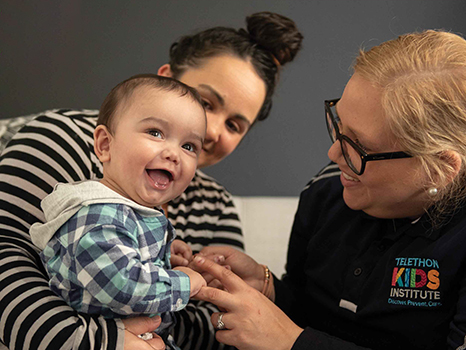

Four The Kids Research Institute Australia researchers from a diverse range of fields have been named as finalists for the prestigious 2022 Premier’s Science Awards.
Contemporary data for the global burden of sore throat and group A Streptococcus (Strep A) pharyngitis are required to understand the frequency of disease and develop value propositions for Strep A vaccines.
The management of multidrug-resistant tuberculosis (MDR-TB) during pregnancy is challenging, yet no systematic synthesis of evidence has accurately measured treatment outcomes.