
Search
Showing results for "Professor"
News & Events
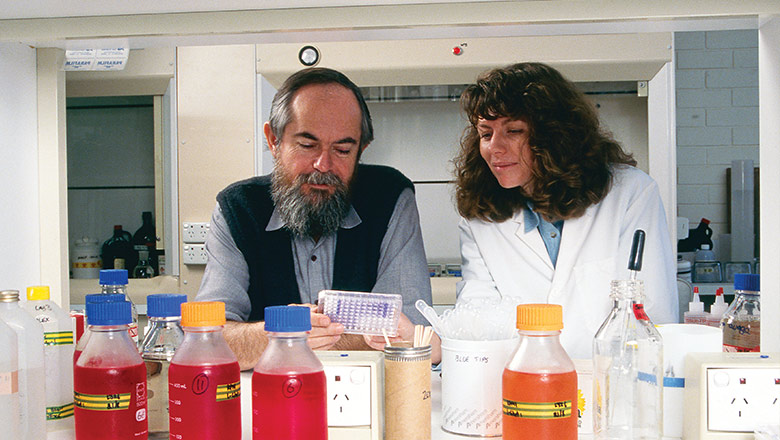
Switch on the immune system earlyFindings by Professor Pat Holt revealed researchers had been heading down the wrong path in their battle strategy against respiratory allergy and asthma.
Research
Medulloblastoma Down Under 2013: a report from the third annual meeting of the International Medulloblastoma Working GroupMedulloblastoma is curable in approximately 70 % of patients. Over the past decade, progress in improving survival using conventional therapies has stalled...
Research
Determinants and Outcomes of Preterm Birth & Pathways into Developmental DisordersBrad Carrington Fiona Farrant Shepherd Stanley BSc (Hons), PhD PhD FAA FASSA MSc MD FFPHM FAFPHM FRACP FRANZCOG HonDSc HonDUniv HonFRACGP HonMD
Research
The Child Mortality Research ProgramBrad Carrington Fiona Farrant Shepherd Stanley BSc (Hons), PhD PhD FAA FASSA MSc MD FFPHM FAFPHM FRACP FRANZCOG HonDSc HonDUniv HonFRACGP HonMD
News & Events
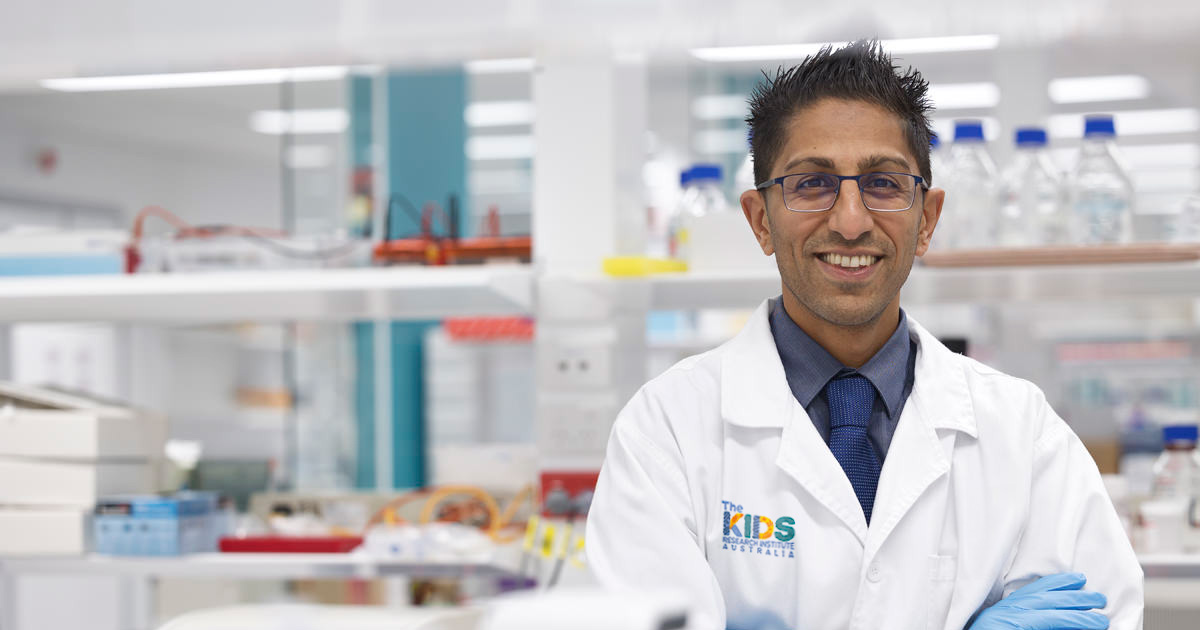
Pioneering paediatric oncologist receives top cancer research awardAssociate Professor Rishi Kotecha, Co-Head of Leukaemia Translational Research at The Kids Research Institute Australia Cancer Centre and Consultant Paediatric Oncologist at Perth Children's Hospital, has been named Cancer Council WA’s 2024 Cancer Researcher of the Year.
Research
Vitamin D supplementation of initially vitamin D-deficient mice diminishes lung inflammation with limited effects on pulmonary epithelial integrityIn disease settings, vitamin D may be important for maintaining optimal lung epithelial integrity and suppressing inflammation, but less is known of its effects prior to disease onset.
Research
Clinical characteristics of Western Australian children diagnosed with type 2 diabetes before 10 years of ageWe aimed to describe the characteristics of Western Australian children aged less than 10 years diagnosed with type 2 diabetes between June 2000 and June 2017
Research
Global fertility in 204 countries and territories, 1950-2021, with forecasts to 2100: a comprehensive demographic analysis for the Global Burden of Disease Study 2021Accurate assessments of current and future fertility-including overall trends and changing population age structures across countries and regions-are essential to help plan for the profound social, economic, environmental, and geopolitical challenges that these changes will bring. Estimates and projections of fertility are necessary to inform policies involving resource and health-care needs, labour supply, education, gender equality, and family planning and support.
Research
Molecular analysis of human tick-bitten skin yields signatures associated with distinct spatial and temporal trajectories - A proof-of-concept studyTick-associated diseases present challenges due to tridirectional interactions among host-specific responses, tick toxins and salivary proteins as well as microbes. We aimed to uncover molecular mechanisms in tick-bitten skin samples and contralateral skin samples collected simultaneously from the same participants, using spatial transcriptomics.
Research
Two decades of increasing incidence of childhood-onset type 2 diabetes in Western Australia (2000–2019)This retrospective population‐based study aimed to determine the incidence of type 2 diabetes from 2012 to 2019 in Western Australian youth aged under 16 years, and to examine temporal trends between 2000 and 2019, using data from the Western Australian Children’s Diabetes Database (WACDD). The data extracted for eligible patients diagnosed with type 2 diabetes, according to standard criteria, included diagnosis year, age, sex and self‐reported Aboriginal or Torres Strait Islander status.