
Search
Research
A randomised trial of a trauma-informed well-being program to promote mental health in adolescents with type 1 diabetes: Study protocolChildren and young people with type 1 diabetes (T1D) experience high rates of mental ill health and stress due to the emotional and cognitive energy required to manage their condition. Our team has codesigned Wellbeing T1D, a brief trauma-informed online intervention for adolescents living with T1D. This 5-week intervention will teach skills to promote problem solving, improve emotional regulation and promote helpful thinking and coping.
Research
Confident and Trustworthy Model for Fidgety Movement ClassificationGeneral movements (GMs) are part of the spontaneous movement repertoire and are present from early fetal life onwards up to age five months. GMs are connected to infants' neurological development and can be qualitatively assessed via the General Movement Assessment. In particular, between the age of three to five months, typically developing infants produce fidgety movements and their absence provides strong evidence for the presence of cerebral palsy.
Research
Extreme weather events, home damage, and the eroding locus of controlThe catastrophic consequences of natural disasters on social and economic systems are extensively documented, yet their influence on individuals' sense of control over their life outcomes remains unexplored. This study pioneers an investigation into the causal effects of natural disaster-related home damage on the locus of control.
Research
Proteomics confirms immune stabilizing effects of narrowband UVB treatment in patients with clinically isolated syndrome and multiple sclerosisMultiple sclerosis (MS) demonstrates a latitude gradient in prevalence and severity, implicating ultraviolet B (UVB) exposure and photoimmune mechanisms in disease risk and progression. While narrowband (NB)-UVB phototherapy has long stabilized inflammation in dermatology, its systemic immunomodulatory effects in MS remain incompletely defined.
Research
Empowering Social Competence: A Scoping Review of Digital Social Skills Training InterventionsEffective social skills are essential for functional social support, help-seeking, and resource access. Digital social skills training plays a key role in empowering individuals to develop social competence, improve access to various support and resources, and enhance locus of control through dynamic media.
Research
Neonatal skin: barrier, immunity and infection prevention in the NICUThe neonatal skin is central to early survival and immune development. Far from being a passive mechanical barrier, it integrates physical, chemical, and microbial defences that together protect the infant in the immediate postnatal period. In preterm infants, structural immaturity, reduced antimicrobial capacity, and altered microbial colonisation confer heightened vulnerability to infection and inflammation.
Research
Change in Diet Quality and Dietary Intake From Pregnancy to 1-Year Postpartum: A Longitudinal Analysis in Australian WomenThis longitudinal analysis in Australian women evaluated change in diet quality and food and nutrient intakes from the third trimester of pregnancy to 1-year postpartum with comparison to national nutrition recommendations. Associations between diet quality, sociodemographic and health characteristics were also investigated.
Research
DeepEGFR a graph neural network for bioactivity classification of EGFR inhibitorsEpidermal Growth Factor Receptor (EGFR) plays a critical role in the development of several cancers. Thus, modulation/inhibition of EGFR activity is an appealing target of developing novel cancer therapeutics.
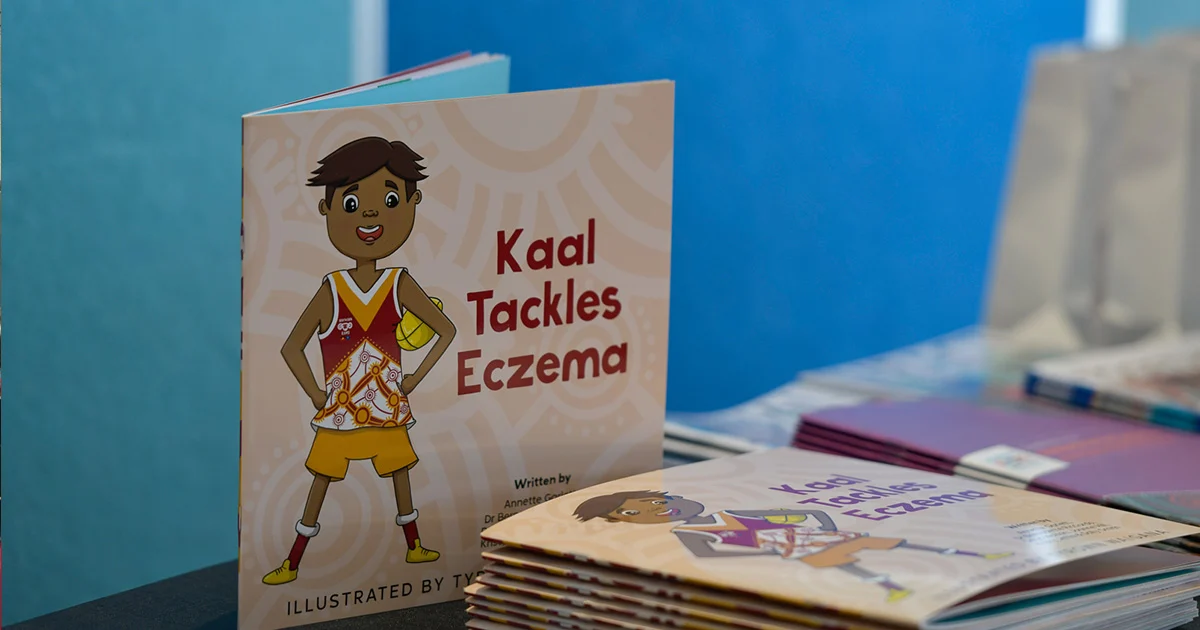
In close partnership with Aboriginal Elders and community members in Western Australia's south-west, we created ‘Kaal Tackles Eczema’, a children’s book to help Aboriginal families manage eczema. Our research showed a high prevalence and need for culturally relevant resources. The book uses Noongar language and art to educate and reduce infections, and is available online and in schools.
Join us! Get involved with The Kids through providing a donation, volunteering your time, participating in important research, or with a professional commitment to the institute.