Skip to content
The Kids Research Institute Australia logo
Donate

No results yet

Search

Research

How climate change degrades child health: A systematic review and meta-analysis

Children are more vulnerable than adults to climate-related health threats, but reviews examining how climate change affects human health have been mainly descriptive and lack an assessment of the magnitude of health effects children face. This is the first systematic review and meta-analysis that identifies which climate-health relationships pose the greatest threats to children.

Research

Dysregulated Notch Signaling in the Airway Epithelium of Children with Wheeze

The airway epithelium of children with wheeze is characterized by defective repair that contributes to disease pathobiology. Dysregulation of developmental processes controlled by Notch has been identified in chronic asthma. However, its role in airway epithelial cells of young children with wheeze, particularly during repair, is yet to be determined.

Research

Primary Nasal Epithelial Cells as a Surrogate Cell Culture Model for Type-II Alveolar Cells to Study ABCA-3 Deficiency

ATP Binding Cassette Subfamily A Member 3 (ABCA-3) is a lipid transporter protein highly expressed in type-II alveolar (AT-II) cells. Mutations in ABCA3 can result in severe respiratory disease in infants and children. To study ABCA-3 deficiency in vitro, primary AT-II cells would be the cell culture of choice although sample accessibility is limited. Our aim was to investigate the suitability of primary nasal epithelial cells, as a surrogate culture model for AT-II cells, to study ABCA-3 deficiency.

Research

Phage therapy for multi-drug resistant respiratory tract infections

The emergence of multi-drug resistant (MDR) bacteria is recognised today as one of the greatest challenges to public health. As traditional antimicrobials are becoming ineffective and research into new antibiotics is diminishing, a number of alternative treatments for MDR bacteria have been receiving greater attention. Bacteriophage therapies are being revisited and present a promising opportunity to reduce the burden of bacterial infection in this post-antibiotic era.

Research

Associations between respiratory and vascular function in early childhood

The link between respiratory and vascular health is well documented in adult populations. Impaired lung function is consistently associated with thicker arteries and higher incidence of cardiovascular disease. However, there are limited data on this relationship in young children and the studies that exist have focussed on populations at high risk of cardiorespiratory morbidity.

Research

Differential cell counts using center-point networks achieves human-level accuracy and efficiency over segmentation

Differential cell counts is a challenging task when applying computer vision algorithms to pathology. Existing approaches to train cell recognition require high availability of multi-class segmentation and/or bounding box annotations and suffer in performance when objects are tightly clustered.

Contact us

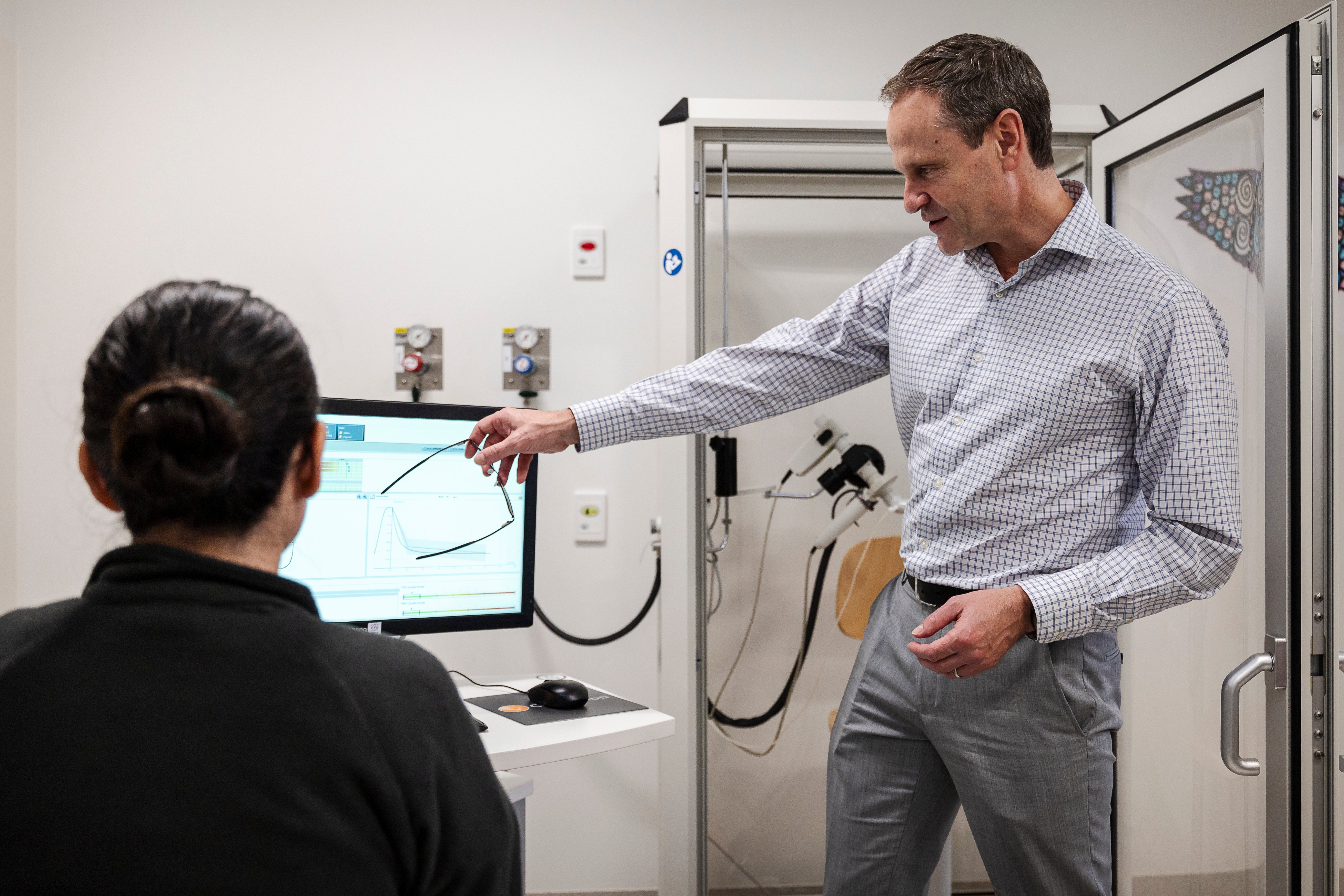
Please contact the team early (at the stage of project design and budgeting) to ensure the most appropriate physiological test is selected with adequate funding.

Focus areas for the Centre

Learn more about the Focus areas for the Wal-yan Respiratory Centre

Artificial Intelligence

The Artificial Intelligence team at the Wal-yan Respiratory Research Centre is dedicated to delivering AI solutions for major challenges in respiratory healthcare and research.

Aboriginal Respiratory Health

Respiratory illness accounts for 12% of the age-standardised gap in mortality between Indigenous and non-Indigenous Australians.