
Search
Showing results for "Professor"
Research
The safety of co-administration of Bacille Calmette-Guérin (BCG) and influenza vaccinesWith the emergence of novel vaccines and new applications for older vaccines, co-administration is increasingly likely. The immunomodulatory effects of BCG could theoretically alter the reactogenicity of co-administered vaccines. Using active surveillance in a randomised controlled trial, we aimed to determine whether co-administration of BCG vaccination changes the safety profile of influenza vaccination.
News & Events
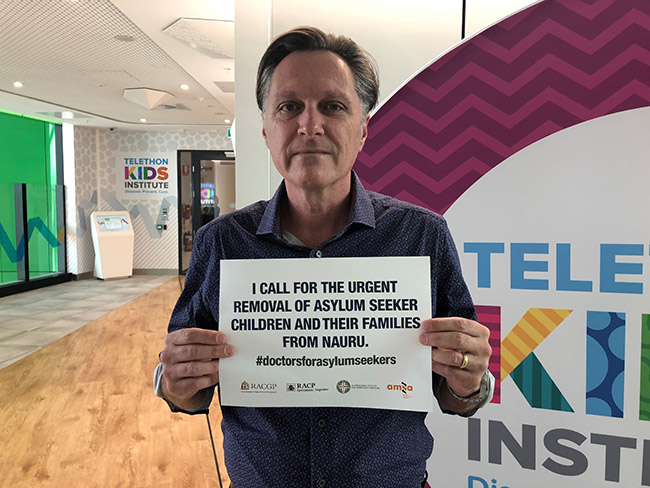
The Kids calls for urgent removal of kids on NauruThe Kids Research Institute Australia is calling for the immediate removal of all refugee and asylum seeker children and their families from Nauru.
News & Events
Rally for Research for a Healthy FutureHundreds of researchers from Perth's The Kids for Child Health Research will join a rally in Forrest Place today
Research
Small-molecule screen reveals synergy of cell cycle checkpoint kinase inhibitors with DNA-damaging chemotherapies in medulloblastomaMedulloblastoma (MB) consists of four core molecular subgroups with distinct clinical features and prognoses. Treatment consists of surgery, followed by radiotherapy and cytotoxic chemotherapy. Despite this intensive approach, outcome remains dismal for patients with certain subtypes of MB, namely, MYC-amplified Group 3 and TP53-mutated SHH. Using high-throughput assays, six human MB cell lines were screened against a library of 3208 unique compounds. We identified 45 effective compounds from the screen and found that cell cycle checkpoint kinase (CHK1/2) inhibition synergistically enhanced the cytotoxic activity of clinically used chemotherapeutics cyclophosphamide, cisplatin, and gemcitabine.
Research
A Pre-Clinical Assessment of the Pan-ERBB Inhibitor Dacomitinib in Pediatric and Adult Brain TumorsGlioblastoma in adults, and medulloblastoma and pineoblastoma that mainly affect children, are aggressive brain tumors.
Research
Imaging of Abdominal Complications in Children With Acute Lymphoblastic LeukaemiaAcute lymphoblastic leukaemia (ALL) is the most common paediatric malignancy and remains one of the most common causes of cancer-related death in children and adolescents. Five-year overall survival rates now exceed 90% with current multidrug chemotherapeutic regimens.
Research
Australian children's physical activity and screen time while in grandparental careThe objective of this study was to explore Australian children's engagement in physical activity and screen time while being cared for by their grandparents.
Research
Proteomics confirms immune stabilizing effects of narrowband UVB treatment in patients with clinically isolated syndrome and multiple sclerosisMultiple sclerosis (MS) demonstrates a latitude gradient in prevalence and severity, implicating ultraviolet B (UVB) exposure and photoimmune mechanisms in disease risk and progression. While narrowband (NB)-UVB phototherapy has long stabilized inflammation in dermatology, its systemic immunomodulatory effects in MS remain incompletely defined.
Research
High Expression of NTRK1 in ETV6::RUNX1 Positive Acute Lymphoblastic Leukaemia Drives Factor Independence and Sensitivity to LarotrectinibETV6::RUNX1 is one of the most common recurrent genomic abnormalities in acute lymphoblastic leukaemia (ALL) and is associated with a good prognosis. High expression of NTRK1, encoding tropomyosin receptor kinase A (TrkA), confers a poor prognosis in other malignancies and may contribute to therapy resistance in patients with ETV6::RUNX1 B-ALL.
Research
Inflammatory bowel diseases: interrelationships between dietary vitamin D, exposure to UV radiation and the fecal microbiomeThis review explores the interaction of vitamin D, and ultraviolet radiation, with the intestinal innate and adaptive immune systems