
Search
Showing results for "Study of bullying"
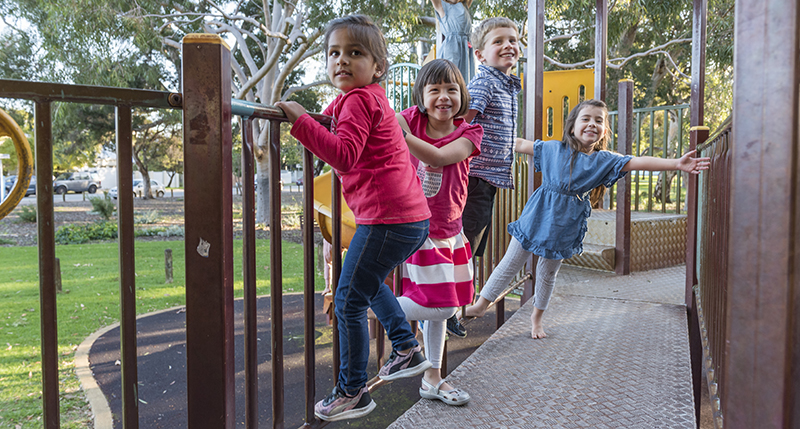
We have all heard of the phrase ‘it takes a village to raise a child’ but unfortunately in contemporary western society that ‘village’ can be hard to find.
In 2020, school and early childhood educational centre (ECEC) closures affected over 1.5 billion school-aged children globally as part of the COVID-19 pandemic response. Attendance at school and access to ECEC is critical to a child's learning, well-being and health. School closures increase inequities by disproportionately affecting vulnerable children. Here, we summarise the role of children and adolescents in Severe Acute Respiratory Syndrome Coronavirus 2 (SARS-CoV-2) transmission and that of schools and ECECs in community transmission and describe the Australian experience.
We write this perspective to raise awareness of antimicrobial resistance as an issue in Indigenous primary health care
Peter Shelley Jacoby Gorman BA (Hons) MSc BSc (Hons) PhD Biostatistician Honorary Research Associate Peter.Jacoby@thekids.org.au shelley.gorman@
Penelope Yael Jacinta Strauss Perry Freeman BA, MPH, PhD BPsych (Hons) MPsych (Clin) PhD BScs, MPH Research Fellow in Youth Suicide Prevention Head,
Susan Prescott MBBS BMedSci PhD FRACP Honorary Research Fellow susan.prescott@thekids.org.au Honorary Research Fellow Susan Prescott is a Professor
Rhinoviruses (RVs) can cause severe wheezing illnesses in young children and patients with asthma. Vaccine development has been hampered by the multitude of RV types with little information about cross-neutralization. We previously showed that neutralizing antibody (nAb) responses to RV-C are detected twofold to threefold more often than those to RV-A throughout childhood. Based on those findings, we hypothesized that RV-C infections are more likely to induce either cross-neutralizing or longer-lasting antibody responses compared with RV-A infections.
Autism omics research has historically been reductionist and diagnosis centric, with little attention paid to common co-occurring conditions (for example, sleep and feeding disorders) and the complex interplay between molecular profiles and neurodevelopment, genetics, environmental factors and health. Here we explored the plasma lipidome in 765 children (485 diagnosed with autism spectrum disorder (ASD)) within the Australian Autism Biobank.

Senior Research Officer
In comparisons between mutant and wild-type genotypes, transcriptome analysis can reveal the direct impacts of a mutation, together with the homeostatic responses of the biological system. Recent studies have highlighted that, when the effects of homozygosity for recessive mutations are studied in non-isogenic backgrounds, genes located proximal to the mutation on the same chromosome often appear over-represented among those genes identified as differentially expressed.