
Search
Showing results for "Professor"
Research
Identifying young adults at high risk of cardiometabolic disease using cluster analysis and the Framingham 30-yr risk scoreCurrent strategies to reduce cardiovascular disease (CVD) risk in young adults are largely limited to those at extremes of risk. In cohort studies we have shown cluster analysis identified a large sub-group of adolescents with multiple risk factors.
Research
Machine Learning-Based Single Cell and Integrative Analysis Reveals That Baseline mDC Predisposition Correlates With Hepatitis B Vaccine Antibody ResponseVaccination to prevent infectious disease is one of the most successful public health interventions ever developed. And yet, variability in individual vaccine effectiveness suggests that a better mechanistic understanding of vaccine-induced immune responses could improve vaccine design and efficacy.
Research
The Fifth International Neonatal and Maternal Immunization Symposium (INMIS 2019): Securing Protection for the Next GenerationDespite significant progress in reaching some milestones of the United Nations Sustainable Development Goals, neonatal and early infant morbidity and mortality remain high, and maternal health remains suboptimal in many countries. Novel and improved preventative strategies with the potential to benefit pregnant women and their infants are needed, with maternal and neonatal immunization representing effective approaches.
Research
Free testosterone levels in umbilical cord blood predict infant head circumference in girlsFetal androgens influence fetal growth as well as postnatal neurocognitive ability.

News & Events
The Kids Research Institute Australia Director elected to prestigious Australian Academy of ScienceProf Jonathan Carapetis has been elected as a new Fellow of the prestigious Australian Academy of Science in recognition of his pioneering, paradigm-shifting expertise in infectious diseases.
News & Events
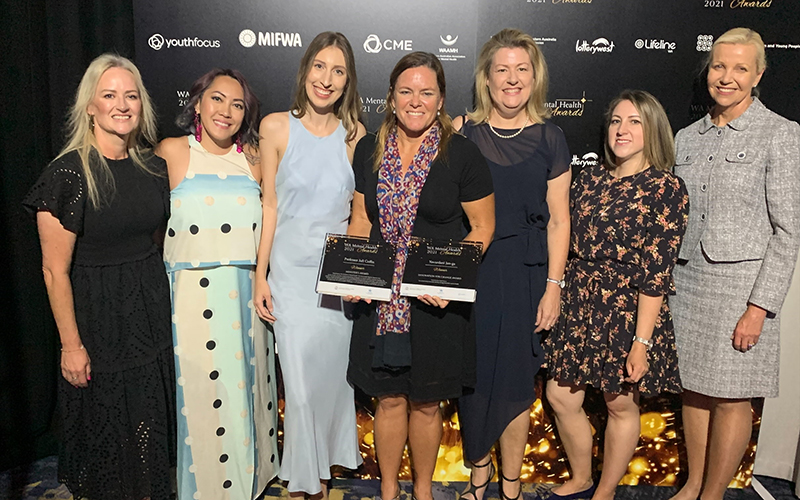
Innovative mental health researcher takes top prize at WA Mental Health AwardsOutstanding Aboriginal mental health researcher Professor Juli Coffin has taken out top honours at the 2021 Western Australian Mental Health Awards in recognition of her ground-breaking work to enhance Aboriginal social and emotional wellbeing.
Research
Re-analysis of the association between perinatal androgens and postnatal head circumference growthThis paper is a correction of an earlier report that identified a link between exposure to high levels of testosterone during pregnancy and reduced head...
Research
Idiosyncratic nature of voriconazole photosensitivity in children undergoing cancer therapyIn adults, the unpredictability of voriconazole pharmacokinetics, particularly in those patients receiving chemotherapy, is well recognised. A paucity of...

News & Events
Aboriginal researcher and psychiatrist named joint winner of national mental health prizePioneering Aboriginal psychiatrist, researcher and mental health champion Professor Helen Milroy has been named joint winner of the 2020 Australian Mental Health Prize.
Research
Efficacy thresholds and target populations for antiviral COVID-19 treatments to save lives and costs: a modelling studyIn 2023 severe acute respiratory syndrome coronavirus 2 (SARS-CoV-2) was declared endemic, yet hospital admissions have persisted and risen within populations at high and moderate risk of developing severe disease, which include those of older age, and those with co-morbidities. Antiviral treatments, currently only available for high-risk individuals, play an important role in preventing severe disease and hospitalisation within this subpopulation.