
Search
Showing results for "Au"
Research
A process and impact evaluation of use of a Powered Wheelchair Standing Device by boys with Duchenne muscular dystrophyGraham Jenny Peter Hall Downs Jacoby BAppSci PhD CRFS FANZSRS FThorSoc FERS BApplSci (physio) MSc PhD BA (Hons) MSc Honorary Research Associate Head,
Research
Developing and characterising juvenile models of aggressive paediatric brain cancers for the evaluation of novel immunotherapiesNick Raelene Terrance Gottardo Endersby Johns MBChB FRACP PhD BSc (Hons) PhD Head of Paediatric and Adolescent Oncology and Haematology, Perth
Research
Educational Outcomes of Children in Contact with the Child Protection System: A Longitudinal Population StudyMelissa Fiona Helen O'Donnell Stanley Leonard BPsych (Hons), MPsych, GradDip Ed, PhD FAA FASSA MSc MD FFPHM FAFPHM FRACP FRANZCOG HonDSc HonDUniv
Research
International Rett syndrome study: InterRettHelen Jenny Leonard Downs MBChB MPH BApplSci (physio) MSc PhD Principal Research Fellow Head, Child Disability +61 419 956 946 08 6319 1763

News & Events
International Women's Day 2025Hear from Avril Bezant, ORIGINS Data Coordinator, and Alexis Harun, ORIGINS Paediatric Coordinator, and be reminded that it’s never too late to pursue your passion along with their hopes for women entering a STEM career.
News & Events
Inside the lab: children’s brain tumour research in WAAt The Kids Research Institute Australia, our Brain Tumour Research team is leading the charge to change the story for children diagnosed with brain cancer by working on safer, more effective treatments.

News & Events
Pioneering technique opens new window on first week of lifeAn international team of researchers has pioneered a technique which gives unprecedented insight into the dramatic changes occurring in a baby’s body in the first week of life.
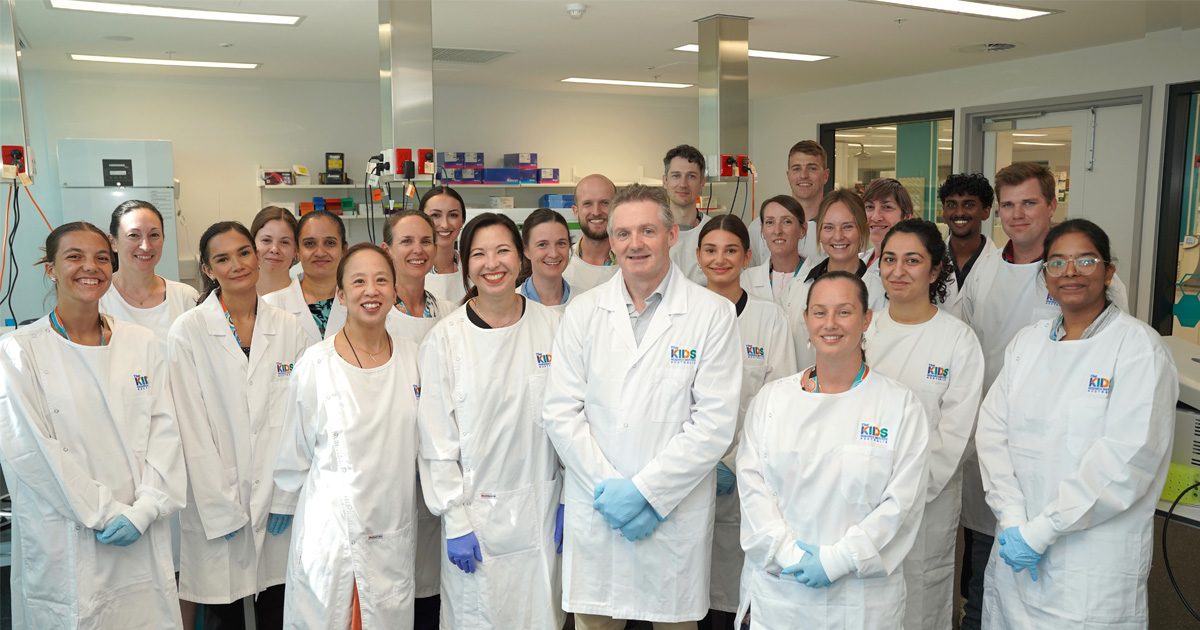
Meet the ASAVI team
Research
Standardization of Epidemiological Surveillance of Acute Poststreptococcal GlomerulonephritisAcute poststreptococcal glomerulonephritis (APSGN) is an immune complex-induced glomerulonephritis that develops as a sequela of streptococcal infections. This article provides guidelines for the surveillance of APSGN due to group A Streptococcus (Strep A). The primary objectives of APSGN surveillance are to monitor trends in age- and sex-specific incidence, describe the demographic and clinical characteristics of patients with APSGN, document accompanying risk factors, then monitor trends in frequency of complications, illness duration, hospitalization rates, and mortality.
Research
Penicillin G concentrations required for prophylaxis against Group A Streptococcus infection evaluated using a hollow fibre model and mathematical modellingAcute rheumatic fever (ARF), an autoimmune reaction to Group A Streptococcus (Streptococcus pyogenes; Strep A) infection, can cause rheumatic heart disease (RHD). New formulations of long-acting penicillins are being developed for secondary prophylaxis of ARF and RHD.