
Search
Showing results for "about author"
Research
Healthy Ears Clinical Trial: A telehealth-facilitated randomised-controlled trial utilising a health promotion intervention to resolve otitis media with effusion for children won specialist Ear, Nose and Throat (ENT) waiting listsA telehealth-facilitated randomised-controlled trial utilising a health promotion intervention to resolve otitis media with effusion for children won specialist Ear, Nose and Throat (ENT) waiting lists
Research
Epidemiology of gastrostomy insertion for children and adolescents with intellectual disabilityGastrostomy is increasingly used in multiple neurological conditions associated with intellectual disability, with no apparent accessibility barriers
Research
Optimising detection of thrombosis in paediatric Staphylococcus aureus bacteraemia: A prospective interventional sub-study protocolStaphylococcus aureus bacteraemia (SAB) is the most common cause of sepsis, contributing to paediatric intensive care unit admission in Australia and New Zealand. While deep venous thrombosis (DVT) has been reported in children with invasive S. aureus infections, the actual frequency and possible effects of thrombosis on disease severity and outcome in paediatric SAB remain unknown. Moreover, guidance regarding imaging for paediatric SAB management are poorly defined.
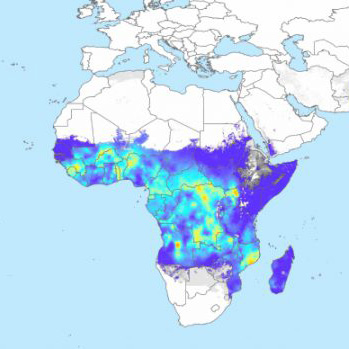
The Infectious Disease Ecology and Modelling team led by Professor Nick Golding, combines mathematical and statistical modelling, ecology, and public health to address malaria and other infectious and vector-borne diseases. The team uses modelling and maps to measure the risk posed by some of the world’s most important and neglected diseases – including malaria, Japanese Encephalitis and COVID-19 – and provide rapid modelling analyses to policy makers.
Research
Djaalinj Waakinj Ear Portal: An ENT and Audiology referral pathway for improving access to ear and hearing services for Aboriginal children in the metropolitan area using telehealthThe Djaalinj Waakinj (Listening, Talking) Ear Portal project commenced in 2020 to evaluate an equitable ear and hearing care pathway for Aboriginal children residing in the metropolitan area of Perth.
On this Research Impact page, learn about our work that's actively translated as Government policy or in active practice. Learn how our research is making a difference in people's lives - not tomorrow, next week, or next year - but today!
On this Research Impact page, we showcase real game-changers - research that changes the very way other scientists around the world think and approach challenges. The far-reaching impact on children and families for all the stories shown on these pages is both exciting and significant.
Research
Colostrum as a Protective Factor Against Peanut Allergy: Evidence From a Birth CohortFood allergy affects families' quality of life, can be lifelong and life-threatening, urging the identification of early modifiable risk factors. Formula feeding in the first days of life may increase the risk of cow's milk allergy, a risk often attributed to cow's milk allergens exposure. Early formula feeding also reduces the colostrum intake, the first 3 days' milk, which is rich in bioactive compounds critical for immune and gut health. This study investigates whether partial colostrum feeding increases the risk of food allergy beyond cow's milk.
Scientific Launch Speakers Professor Liz Davis @ProfLizDavis @CDCTelethonKids Professor Davis is the Co-Director of the JDRF Global Centre of
Research
Effect of maternal prebiotic supplementation on human milk immunological composition: Insights from the SYMBA studyImmunomodulatory proteins in human milk (HM) can shape infant immune development. However, strategies to modulate their levels are currently unknown. This study investigated whether maternal prebiotic supplementation alters the levels of immunomodulatory proteins in HM.