
Search
Showing results for "Au"
Research
Postsepsis Care Needs in Children and Families: Single-Center, Codesign Qualitative Research from Western AustraliaSepsis, for children and their parents, is a life-altering illness with far-reaching psychosocial and physical impacts. We aimed to explore the needs of such patients and their parents after hospital admission for sepsis to inform the development of a Western Australian postsepsis care service.
News & Events
Study looks at fish oil as treatment for autismThe Kids Research Institute Australia research has shown nearly 50 per cent of children with autism have tried fish oil supplements, but does it actually improve symptoms?
Research
Autistic and autism community perspectives on infant and family support in the first two years of life: Findings from a community consultation surveyMost support programmes for Autistic children are available only after they are diagnosed. Research suggests that parenting supports may be helpful for parents and their infants, when provided in the first 2 years of life - before a formal diagnosis is given, but when information suggests an infant is more likely to be Autistic. However, we do not know how acceptable these types of supports might be to the Autistic and autism communities.
Research
Exercise training to address lifelong consequences of preterm birth: a survey of perceived needsThe identification of a COPD etiotype associated with preterm birth (COPD-developmental) has expedited calls for intervention strategies that may improve health outcomes for survivors of preterm birth (<37 weeks' gestation). Pulmonary-rehabilitation style training interventions achieve physiological and symptom improvement in older people with COPD, but whether similar training interventions are suitable for young people is unclear. We sought to understand the perceived need and requirements of an exercise training intervention for children, adolescents and adults born preterm.
Research
Acceptability and Implementation Challenges of Benzathine Penicillin G Secondary Prophylaxis for Rheumatic Heart Disease in Ethiopia: A Qualitative StudyMonthly intramuscular injections of benzathine penicillin G (BPG) remain the cornerstone of secondary prophylaxis for acute rheumatic fever and rheumatic heart disease (RHD). The barriers to successful delivery of BPG may be patient- or service-delivery-dependent.
Research
Comments and Controversies in Oncology: The Tribulations of Trials Developing ONC201Our international team highlights issues with efficacy reports in several studies on DMG with the new drug ONC201.
Research
Longitudinal associations between maternal and child screen use at 1 year of age and child behavior and development at 3 years of ageYoung children are increasingly exposed to evolving screen technology. International guidelines recommend no screen use for children under the age of 2 years, due to the potential for detrimental effects on behaviour and development. However, evidence for these guidelines is limited by inadequate consideration of device-specific effects (TV and mobile phone/tablet computer), maternal screen use, confounders such as maternal mental health and importance of effect sizes.
Research
“If you build it, they will come”: the convergence of funding, research and collaboration in paediatric brain cancer clinical trialsEach year, approximately 1000 children in Australia and New Zealand, aged 0–14 years, are diagnosed with cancer. Despite paediatric cancer accounting for less than 1% of all cancer cases, the impact on their families and communities is profound and disproportionate.
The aim of RESP-ACT is to reduce these children’s respiratory hospital admissions and visits to Emergency Department, and to help them and their families to have as the best possible quality of life.
News & Events
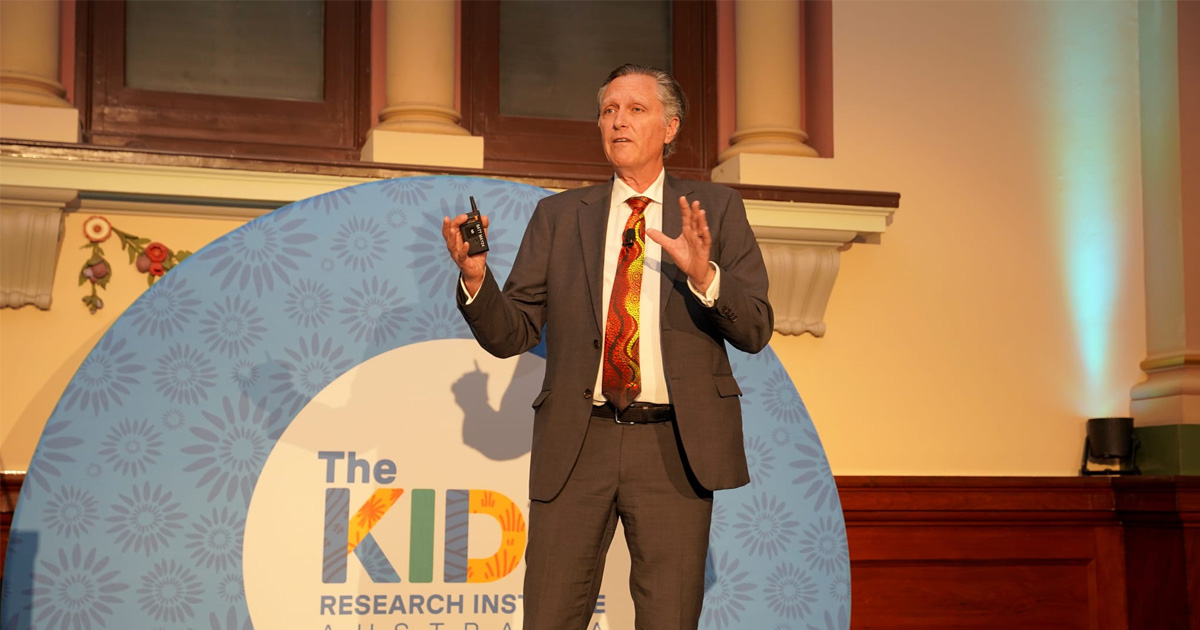
The Kids takes fight against one of the world’s deadliest bugs to national stageLast night, almost 60 supporters gathered at Adelaide Town Hall for the inaugural The Kids Research Institute Australia Adelaide Lecture, Not Just a Sore Throat: The Race to Stop One of the Deadliest Bugs on the Planet.