
Search
Showing results for "Professor"

News & Events
Bupa pledges half a million dollars to end rheumatic heart diseaseResearchers will extend a unique community-led project to end rheumatic heart disease in Aboriginal communities, thanks to nearly half a million dollars in funding from Bupa.

News & Events
Empowering parents: ORIGINS secures MRFF grant to develop early childhood flourishing toolORIGINS sub-project, The Flourishing Child, has received a $746,051 grant from the Medical Research Future Fund to develop a Flourishing Assessment and Pathway Tool to address gaps in early intervention for children's mental health.

Minderoo Foundation and The Kids join forces to give children the best possible start.

News & Events
For kids, by kids: New “Boom Boom” song teaches children how to prevent deadly heart diseaseOnce you hear it, you won’t be able to get it out of your head – and that’s exactly the point of the new song ‘Boom Boom’.
News & Events
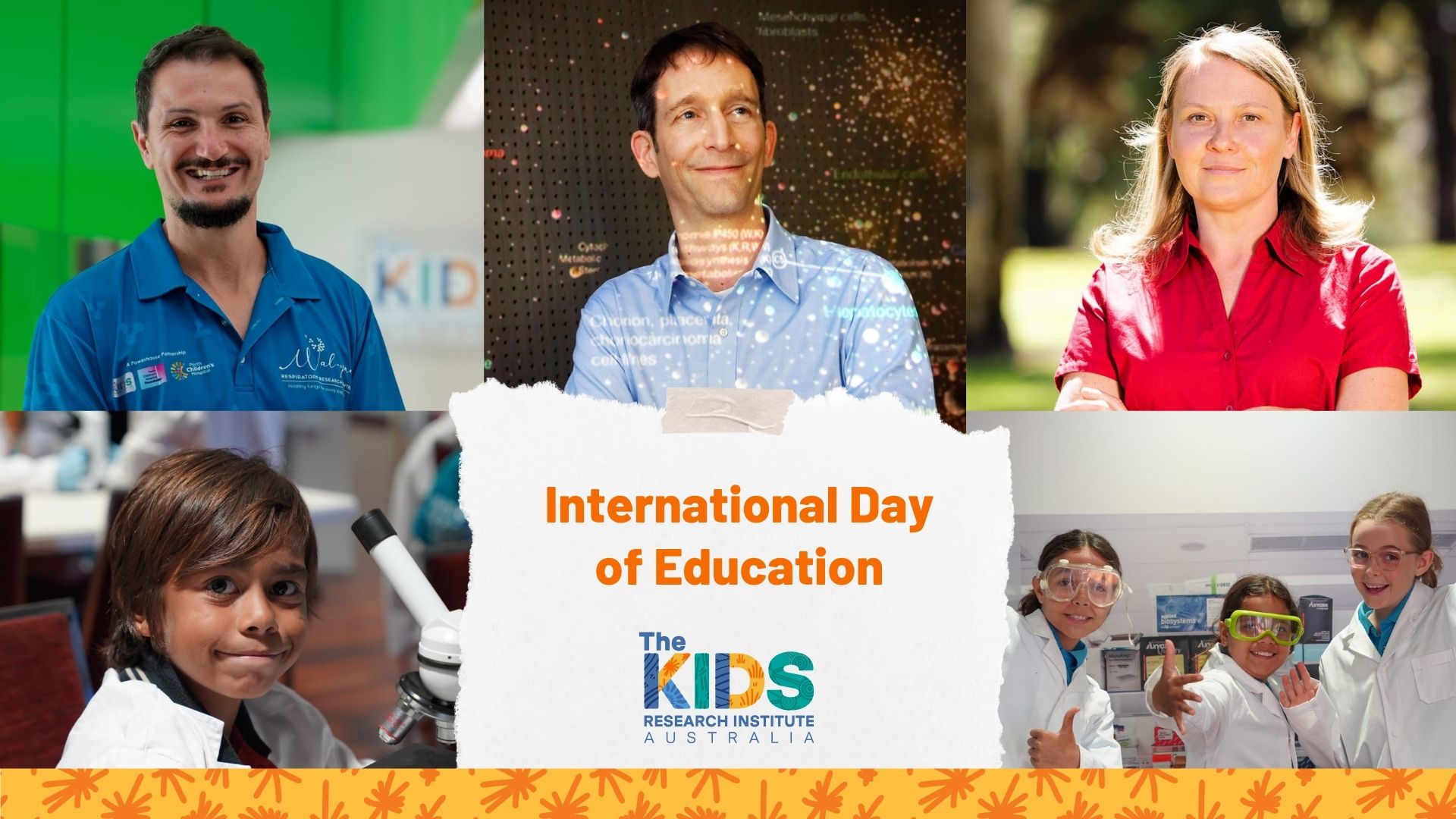
International Day of Education: AI and Education at The Kids Research InstituteToday, 24 January 2025, is International Day of Education, a global celebration of the power of learning to transform lives. This year’s theme, “AI and Education: Preserving Human Agency in an Automated World”, underscores the critical role of education in preparing kids for a future increasingly shaped by AI.
Research
Antimicrobial Resistance of Clostridioides (Clostridium) difficile in CambodiaAntimicrobial resistance (AMR) remains a major topic of interest in infectious disease management. We studied AMR in Clostridioides difficile isolated in Cambodia.
Research
Prenatal and Infant Reports and Child Protection Involvement: A Longitudinal Cohort StudyIn Australia, infants have the highest rate of child protection involvement. Many jurisdictions in Australia and internationally have introduced policies for prenatal planning and support, however little is known about outcomes of infants reported prenatally. This study is the first to use cross-jurisdictional, individual-record data to examine child protection pathways associated with prenatal and infant reports.
Research
Prevalence of attention deficit hyperactivity disorder/hyperkinetic disorder of pediatric and adult populations in clinical settings: a systematic review, meta-analysis and meta-regressionAttention-Deficit/Hyperactivity Disorder (ADHD)/Hyperkinetic Disorder (HD) is linked to increased risks of morbidity, comorbidity and mortality, with higher prevalence in clinical populations. The differential prevalence of ADHD/HD across adult and pediatric clinical populations, influenced by factors such as time trends, sex, age, geographic regions, and comorbidities, has not been systematically assessed.
Research
Extreme drought and sexual violence against adolescent girls and young women: A multi-country population-based studyDroughts have profound and far-reaching impacts on human health and well-being, but their influence on sexual violence among adolescent girls in low- and middle-income countries (LMICs) is underexamined.This study examines the association between drought and sexual violence against adolescent girls and young women globally, using cross-sectional, nationally representative data from the Violence Against Children and Youth Surveys (VACS) from 2013 and 2019.
Research
Nationwide spatial dynamics of taeniasis in Thailand: declining prevalence but shifting focus and One Health risk factors across 2008–2014The prevalence of taeniasis in Thailand has decreased over the past six decades. However, it remains a public health concern, particularly in focal areas, especially along the border regions where migration between Thailand and neighboring endemic countries is frequent. Spatial distribution analysis provides a useful method for identifying high-risk areas and implementing targeted integrated control measures. This study aimed to examine the spatial patterns of taeniasis in 2008 and 2014, along with their associated One Health risk factors at the sub-district level.