
Search
Showing results for "Au"

News & Events
Unique twin study reveals clues to childhood allergiesA study published in Science Advances has revealed that while genetics play a significant role in shaping children's immune systems, environmental factors also influence key immune responses, offering opportunity for preventing allergic diseases.
Research
Impact of Parent-Reported Antibiotic Allergies on Pediatric Antimicrobial Stewardship ProgramsAntimicrobial stewardship (AMS) is crucial for optimizing antimicrobial use and restraining emergence of antimicrobial resistance. The overall increase in reported antibiotic allergies in children can pose a significant barrier to AMS, but its impact on clinical AMS care in children has not been addressed.
Research
Management and outcomes of children hospitalised with COVID-19 including incidental and nosocomial infections in Australia 2020–2023: A national surveillance studyManagement and outcomes of children hospitalised with acute SARS-CoV-2 infection may differ throughout the pandemic or with admission type (clinical COVID-19, incidental COVID-19 or nosocomial infection).
Research
Progress towards a coordinated, national paediatric antimicrobial resistance surveillance programmeThese data support that children are not just 'little adults' in the AMR era, and analyses by age group are important to detect differences in antibiotic susceptibility
Research
The Cardiovascular Risk Evaluation in Expectant Fathers (CARE-Dads) StudySusan Prescott MBBS BMedSci PhD FRACP Honorary Research Fellow susan.prescott@thekids.org.au Honorary Research Fellow Susan Prescott is a Professor
Research
Which emerging autism features at 12 months of age are associated with later parent-child interaction?Parent-child interactions (PCI) in infants with an elevated likelihood (EL) of autism start to diverge from other infants toward the end of the first year. This divergence is often attributed to emerging features of autism impacting infant social interactions in ways that become increasingly amplified. The aim was to identify which, if any, 12-month autism features were associated with later PCI qualities.
Research
Influences of bilingual input on English vocabulary size and academic outcomes: a large-scale longitudinal study following children in Australia from five to ten yearsResearch from large population-based studies investigating the language and academic outcomes for bilingual children is rare. The current study aimed to investigate the influence of dual language exposure on (i) English vocabulary outcomes at 5 years (126 bilinguals, 1675 monolinguals), and 10 years (vocabulary: 92 bilinguals, 1413 monolinguals:), and (ii) academic outcomes at 10 years (107 bilinguals, 1746 monolinguals).
News & Events
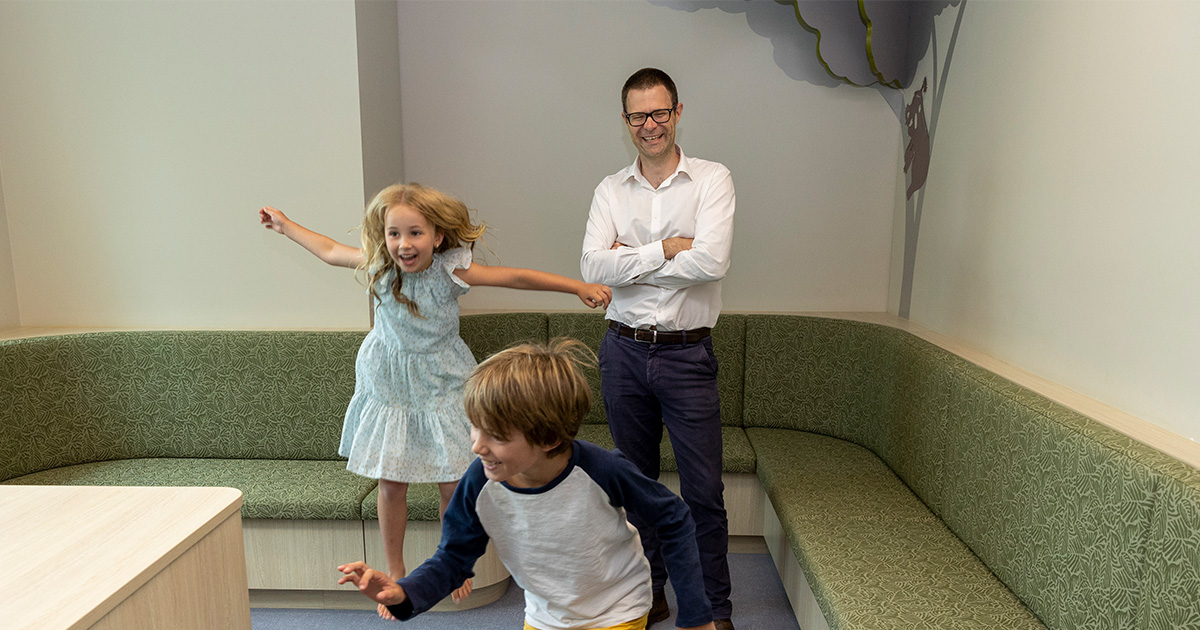
News you can use – How you can support your child while you wait for a diagnosisThe Kids Research Institute Australia's Professor Andrew Whitehouse and Sarah Pillar share four things families can do to support their child while waiting to receive an ADHD or autism diagnostic assessment.
Research
“The Wrong Supports Are Worse than no Support”: Autistic Perspectives on Early-in-Life Infant Autism SupportsEvidence suggests that the earlier supports are provided to young Autistic children, the better the overall outcomes. Supports have typically only been available after an autism diagnosis but with increased knowledge about early developmental trajectories, clinical supports can now be offered prediagnosis for infants showing early autism features and/or those with a family history of autism.
Research
Topical antibiotics for chronic suppurative otitis mediaChronic suppurative otitis media (CSOM), sometimes referred to as chronic otitis media, is a chronic inflammation and often polymicrobial infection (involving more than one micro-organism) of the middle ear and mastoid cavity, characterised by ear discharge (otorrhoea) through a perforated tympanic membrane.