
Search
Fetal Alcohol Spectrum Disorder (FASD) is a lifelong condition characterised by severe neurodevelopmental impairment due to prenatal exposure to alcohol.
Young people must be central to health response design to ensure they are relevant and effective. It requires a clearer understanding of the opportunities and expectations surrounding youth engagement. Therefore, this study aims to gain a deeper understanding of the health priorities of young adults residing in South Australia and their engagement in the design of health programmes.

Discover more about Telethon Kids Institute research.
First Nations women in Australia continue to experience disproportionately adverse maternal and infant outcomes. The ongoing legacy of colonisation and systemic racism shapes these outcomes. In the Australian Capital Territory (ACT), maternity services remain dominated by Western biomedical approaches that fail to deliver culturally safe and anti-racist care despite national standards that mandate such practices.
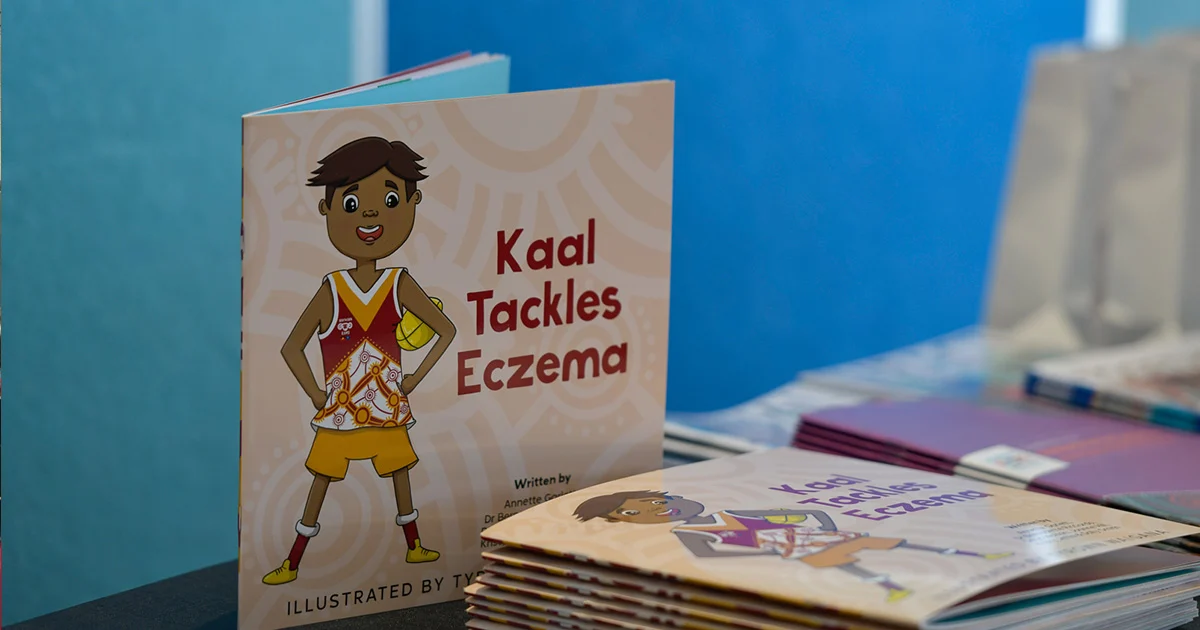
In close partnership with Aboriginal Elders and community members in Western Australia's south-west, we created ‘Kaal Tackles Eczema’, a children’s book to help Aboriginal families manage eczema. Our research showed a high prevalence and need for culturally relevant resources. The book uses Noongar language and art to educate and reduce infections, and is available online and in schools.
Childhood cancer survivors (CCS) are at risk of long-term skeletal muscle deficits following intensive therapies during critical periods of growth. This review aimed to synthesize approaches for assessing muscle quantity, quality, and function in CCS and to quantify deficits relative to healthy peers.
Children with early-stage (pre-symptomatic) type 1 diabetes are currently identified primarily via research-based screening programmes in Australia. Once identified, families live with the knowledge that their child has an increased chance of developing symptomatic, lifelong, insulin-requiring type 1 diabetes but have no specific clinical pathway available to them in Western Australia for accessing tailored support or education. This project aimed to co-design a new clinical pathway to address this unmet need.
Aboriginal and Torres Strait Islander Peoples share rich cultural traditions unrivalled across the world; however, the continued impact of colonisation led to sustained, profound trauma that has spanned generations. With Aboriginal and Torres Strait Islander people presenting to hospital emergency departments for self-harm and suicidal behaviours at a rate 2.9 times higher than non-Indigenous people, there is a need to develop culturally appropriate interventions to address this growing problem.
Severe microcephaly, or head circumference at least 3 standard deviations below the mean for age and sex, is a rare condition with diverse etiology, making diagnosis challenging. Following the 2015 to 2016 Zika virus outbreak, surveillance studies in Australia, Canada, New Zealand, and the United Kingdom and Ireland were conducted to monitor severe microcephaly. We describe the etiology, clinical features, and diagnostic investigations of severe microcephaly among children aged younger than 1 year.
While international evidence suggests seasonal variations may influence outcomes of interventions for pediatric obesity, data for Aotearoa New Zealand are limited. We examined seasonal variations in changes in body mass index standard deviation score (BMI SDS) in young people with obesity enrolled in an intervention programme.