
Search
Showing results for "Professor"
Research
It’s not just droplets: a systematic review and meta-analysis of the modes of transmission of Group A StreptococcusThe transmission of Group A Streptococcus (Strep A) through respiratory droplets has been considered the dominant mode of transmission to date; however, little is known about the relative contribution of other modes of transmission. This review systematically summarises the contemporary evidence regarding the transmission of Strep A.
Research
Spatial co-distribution of tuberculosis prevalence and low BCG vaccination coverage in EthiopiaWhile bacille-calmette-guerin (BCG) vaccination is one of the recommended strategies for preventing tuberculosis, its coverage is low in several countries, including Ethiopia. This study investigated the spatial co-distribution and drivers of TB prevalence and low BCG coverage in Ethiopia.
Research
Skin health of urban-living Aboriginal children attending a primary care Aboriginal Community Controlled Health Organisation clinicDespite increasing urbanisation, little is known about skin health for urban-living Aboriginal children and young people (CYP, aged <18 years). This study aimed to investigate the primary care burden and clinical characteristics of skin conditions in this cohort.
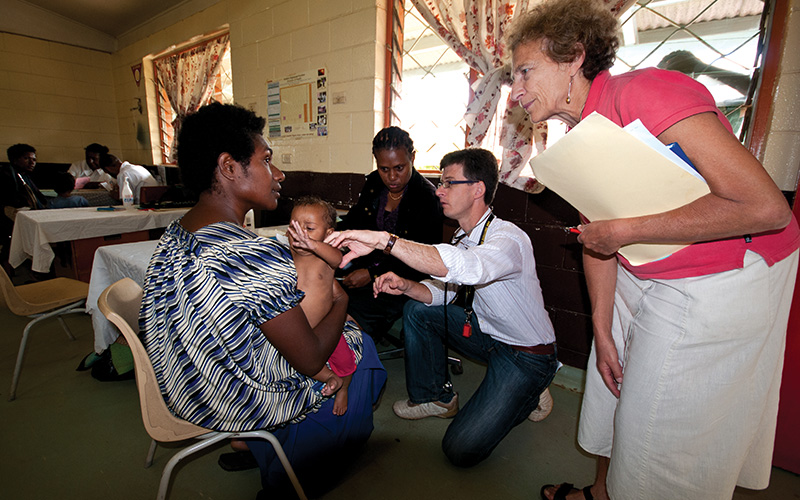
New research has revealed the extraordinary impact of a collaborative project between The Kids Research Institute Australia and the Papua New Guinea Institute of Medical Research, with rates of hospitalisation for pneumonia dropping by nearly 60 per cent thanks to the introduction of the pneumococcal vaccine
Research
Towards Harmonized Adolescent Health Measurement: Assessing Alignment Between Current Recommendations and the Global Action for Measurement of Adolescent Health–Recommended IndicatorsThis study identified alignment of indicators across different initiatives and data collection instruments as a foundation for future harmonization of adolescent health measurement.
Research
Antenatal creatine supplementation reduces persistent fetal lung inflammation and oxidative stress in an ovine model of chorioamnionitisChorioamnionitis is a common antecedent of preterm birth and induces inflammation and oxidative stress in the fetal lungs. Reducing inflammation and oxidative stress in the fetal lungs may improve respiratory outcomes in preterm infants. Creatine is an organic acid with known anti-inflammatory and antioxidant properties.
Research
Indigenous Australian perspectives on the perinatal period: Social well-being, culture and early infant attachmentsAlthough social factors and culture are significant determinants of health in Aboriginal and Torres Strait Islander peoples, little is known academically about key interpersonal and social experiences of this population during the perinatal period, or how early attachments are formed through culture. This study addressed this gap in the literature.
Research
Missing Piece Study protocol: Prospective surveillance to determine the epidemiology of group A streptococcal pharyngitis and impetigo in remote Western AustraliaGroup A β-haemolytic Streptococcus (GAS), a Gram-positive bacterium, causes skin, mucosal and systemic infections. Repeated GAS infections can lead to autoimmune diseases acute rheumatic fever (ARF) and rheumatic heart disease (RHD). Aboriginal and Torres Strait Islander peoples in Australia have the highest rates of ARF and RHD in the world.
Research
Attenuation of Post-Exercise Energy Intake Following 12 Weeks of Sprint Interval Training in Men and Women with OverweightAn acute bout of sprint interval training (SIT) performed with psychological need-support incorporating autonomy, competence, and relatedness has been shown to attenuate energy intake at the post-exercise meal, but the long-term effects are not known. The aim of this trial was to investigate the effects of 12 weeks of SIT combined with need-support on post-exercise food consumption.
Research
Tumour draining lymph node-generated CD8 T cells play a role in controlling lung metastases after a primary tumour is removed but not when adjuvant immunotherapy is usedSurgical resection of cancer remains the frontline therapy for millions of patients annually, but post-operative recurrence is common, with a relapse rate of around 45% for non-small cell lung cancer. The tumour draining lymph nodes (dLN) are resected at the time of surgery for staging purposes, and this cannot be a null event for patient survival and future response to immune checkpoint blockade treatment. This project investigates cancer surgery, lymphadenectomy, onset of metastatic disease, and response to immunotherapy in a novel model that closely reflects the clinical setting. In a murine metastatic lung cancer model, primary subcutaneous tumours were resected with associated dLNs remaining intact, completely resected or partially resected.