
Search
Showing results for "Professor"

Our team’s vision is to reduce the burden of infectious diseases in children and their families through comprehensive approaches to understanding the burden of disease, developing and optimising diagnosis and treatment strategies and evaluating and informing current and future prevention programs.
As well as ORIGINS long-term core research, there are a number of clinical trials, early interventions and shorter-term research studies that sit within ORIGINS. Known as sub-projects, these studies look at multiple aspects of child and family health and development.
Research
Djaalinj Waakinj Ear Portal: An ENT and Audiology referral pathway for improving access to ear and hearing services for Aboriginal children in the metropolitan area using telehealthThe Djaalinj Waakinj (Listening, Talking) Ear Portal project commenced in 2020 to evaluate an equitable ear and hearing care pathway for Aboriginal children residing in the metropolitan area of Perth.
Research
‘Beyond core business’: A qualitative review of activities supporting environmental health within remote Western Australian schoolsAboriginal children and families contend with higher rates of preventable infectious diseases that can be attributed to their immediate living environment. The environments in which children spend most of their time are their homes and schools. We aimed to understand the opportunities in the school setting to support student skin health and wellbeing through environmental health activities, how these activities were completed, and the barriers to their implementation.
Research
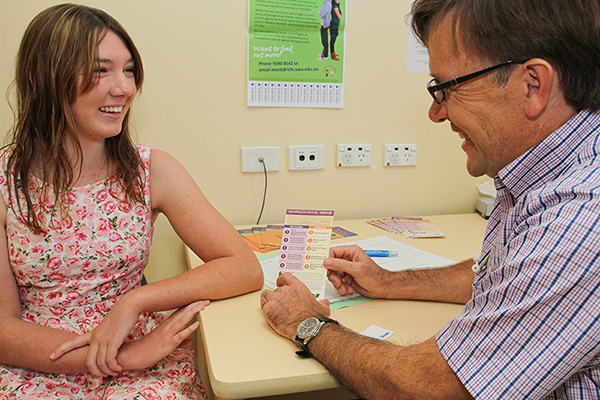
Meningococcal DiseaseMeningococcal disease is caused by the bacteria Neisseria meningitidis, or 'meningococcus'. It is an uncommon but very serious disease that can result in death if not recognised and treated quickly.
Research
Tonsils at Telethon: developing a standardised collection of tonsil photographs for group A streptococcal (GAS) researchGroup A streptococcus (GAS) infections, such as pharyngitis and impetigo, can lead to rheumatic fever and rheumatic heart disease (RHD). Australian Aboriginal and Torres Strait Islander populations experience high rates of RHD and GAS skin infection, yet rates of GAS pharyngitis are unclear.
Research
HipHop2SToP a community-led health promotion initiative empowering Aboriginal youth in the Kimberley region of Western Australia: a process evaluationFor millennia, Aboriginal people's ways of knowing, doing and being were shared through art, song, and dance. Colonisation silenced these ways, affecting loss of self-determination for Aboriginal people. Over the past decade in Australia, hip-hop projects have become culturally appropriate approaches for health promotion.
Research
Subcutaneous infusion of high-dose benzathine penicillin G is safe, tolerable, and suitable for less-frequent dosing for rheumatic heart disease secondary prophylaxis: a phase 1 open-label population pharmacokinetic studySince 1955, the recommended strategy for rheumatic heart disease secondary prophylaxis has been benzathine penicillin G injections administered intramuscularly every 4 weeks. Due to dosing frequency, pain, and programmatic challenges, adherence is suboptimal. It has previously been demonstrated that BPG delivered subcutaneously at a standard dose is safe and tolerable and has favorable pharmacokinetics, setting the scene for improved regimens with less frequent administration.
Research
Tassie Kids: PathwaysTassie Kids will bring together information about what early childhood services families use across the first five years of a child’s life.
Research
The pathogen specific burden of hospitalisation for enteric and blood stream infection in children and young people in Western AustraliaHannah Tom Moore Snelling OAM BSc (Hons) GradDipClinEpi PhD BMBS DTMH GDipClinEpid PhD FRACP Head, Infectious Diseases Research Head, Infectious