
Search
Showing results for "Professor"
News & Events
WA leading the race to stop one of the deadliest bugs on the planetIn Perth, The Kids Research Institute Australia is spearheading global efforts to tackle this insidious bacterium and reduce its impact on kids’ health.
Research
Mindful Self-Compassion for LGBTQ youth: a multi-site randomized controlled trialAmy Penelope Yael Finlay-Jones Strauss Perry BPsych(Hons), MPsych(Clinical), MHealthEcon, PhD (Clin Psych) BA, MPH, PhD BPsych (Hons) MPsych (Clin)
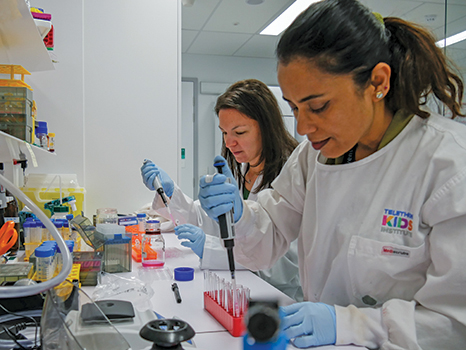
The The Kids Cancer Centre is at the cutting edge of developing new, safer ways of treating children with cancer using their own immune systems.
Research
Clostridioides (Clostridium) difficile in hospitalised children in CambodiaKefyalew Alene BSc, MPH, PhD Head, Geospatial and Tuberculosis 0404705064 Kefyalew.alene@thekids.org.au Honorary Research Fellow Dr Kefyalew Alene
Research
Epidemiology and Outcomes of Neonatal Sepsis: Experience from a Tertiary Australian NICUNeonatal sepsis is associated with significant mortality and morbidity. Low-middle-income countries are disproportionately affected, but late-onset sepsis still occurs in up to 20% of infants <28 weeks in high-income countries. Understanding site-specific data is vital to guide management.
Research
Improving the capacity of researchers and bereaved parents to co-design and translate stillbirth research togetherWorking with bereaved parents in co-designed stillbirth research, policy and practice is essential to improving care and outcomes.
Research
Using causal directed acyclic graphs (DAGs) to select patient-important outcomes in transplantation trials—interventions to treat polyomavirus infection as an exampleTom Snelling BMBS DTMH GDipClinEpid PhD FRACP Head, Infectious Disease Implementation Research 08 6319 1817 tom.snelling@thekids.org.au Head,
Research
Characterizing restricted and unusual interests in autistic youthA broad range of interests characterized by unusual content and/or intensity, labeled as circumscribed interests are a core diagnostic feature of autism. Recent evidence suggests that a distinction can be drawn between interests that, although characterized by unusually high intensity and/or inflexibility, are otherwise common in terms of their content (e.g., an interest in movies or animals), labeled as restricted interests and interests that are generally not salient outside of autism (e.g., an interest in traffic lights or categorization), labeled as unusual interests.
Research
From guidelines to practice: A retrospective clinical cohort study investigating implementation of the early detection guidelines for cerebral palsy in a state-wide early intervention serviceTo report on knowledge translation strategies and outcomes from the implementation of the early detection guidelines for cerebral palsy (CP) in a state-wide tertiary early intervention (EI) service and investigate the impact of social determinants on clinical services.
Research
Healthy Environments and Lives (HEAL): Australian research network in human health and environmental changeThe HEAL Network aims to strengthen the Australian health system and community resilience to climate change, extreme events, and environmental degradation.