
Search
Showing results for "Professor"
News & Events
Urgent action needed to stop 500 preventable deathsA new report predicts rheumatic heart disease (RHD) will lead to over 500 preventable deaths and cost the Australian health system $317 million by 2031 if no further action to tackle the disease is taken.
News & Events
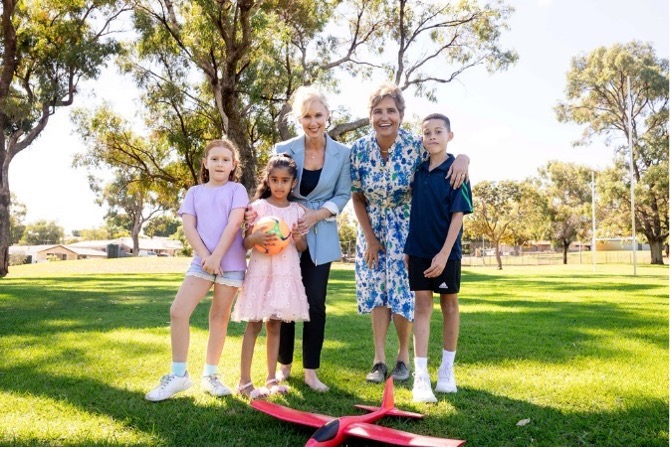
Funding boost for ORIGINS child and family health researchORIGINS is celebrating a substantial funding increase for its world-class research into child and family health and wellbeing.

News & Events
Research to see if AI can speed up therapy for people with antibiotic-resistant bacterial infectionsResearchers from the Wal-yan Respiratory Research Centre are aiming to combine artificial intelligence with natural, infection-fighting viruses to help save lives from an increasingly common medical emergency found in hospitals.
Research
Skin MicrobiomeThe skin is home to an array of bacteria, fungi and viruses, which together make up the skin microbiome. We explore how the skin microbiome can contribute to healthy skin.
Research
Performance characteristics and potential public health impact of improved pre-erythrocytic malaria vaccines targeting childhood burdenNew malaria vaccine development builds on groundbreaking recommendations and roll-out of two approved pre-erythrocytic vaccines (PEVs); RTS,S/AS01 and R21/Matrix-M. Whilst these vaccines are effective in reducing childhood malaria within yearly routine immunization programs or seasonal vaccination, there is little evidence on how different PEV efficacies, durations of protection, and spacing between doses influence the potential to avert uncomplicated and severe childhood malaria.
Research
Spatial codistribution of HIV, tuberculosis and malaria in EthiopiaHIV, tuberculosis (TB) and malaria are the three most important infectious diseases in Ethiopia, and sub-Saharan Africa. Understanding the spatial codistribution of these diseases is critical for designing geographically targeted and integrated disease control programmes. This study investigated the spatial overlap and drivers of HIV, TB and malaria prevalence in Ethiopia.
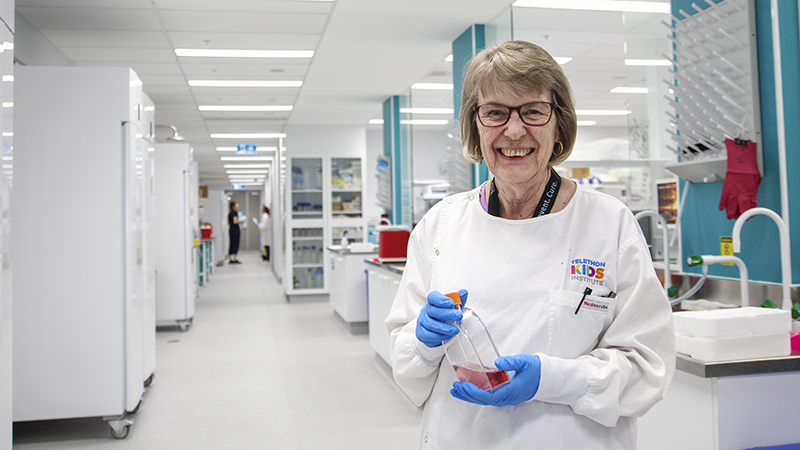
The Institute farewelled one of its most treasured employees this year, as The Kids Cancer Centre research officer Jette Ford closed the door on a quietly stellar 37-year career which has helped to change the face of cancer research in WA and around the world.
Research
Time-course RNAseq data of murine AB1 mesothelioma and Renca renal cancer following immune checkpoint therapyTime-critical transcriptional events in the immune microenvironment are important for response to immune checkpoint blockade (ICB), yet these events are difficult to characterise and remain incompletely understood. Here, we present whole tumor RNA sequencing data in the context of treatment with ICB in murine models of AB1 mesothelioma and Renca renal cell cancer.
Research
Defining target penicillin concentrations for subsequent studies of a reformulated long-acting benzathine penicillin prototypeAims: To determine the minimum inhibitory concentrations of penicillin G against a representative collection of Strep A strains; and to evaluate the impact of penicillin G concentration and size of bacterial inoculum on the prophylactic effect for Strep A strains
Research
Environmental and social determinants of acute rheumatic fever: a longitudinal cohort studyPrevention strategies in ARF endemic settings may be enhanced by targeting new members entering a community and children in environments of close contact