Skip to content

Search

Discrete alterations of brain network structural covariance in individuals at ultra-high risk for psychosis.

The aim of the present study was to investigate whole-brain structural covariance patterns of eight large-scale networks in young people identified as...

Parents’ experience and psychoeducation needs when supporting a young person who self-harms

The study highlights the need for support for parents and carers of young people who engage in self-harm

Self-Compassion in the wake of COVID-19 lockdown

With COVID-19 restrictions starting to lift and families resuming some level of ‘normal life’, it is natural to have mixed feeling during this time, says The Kids mental health researcher.

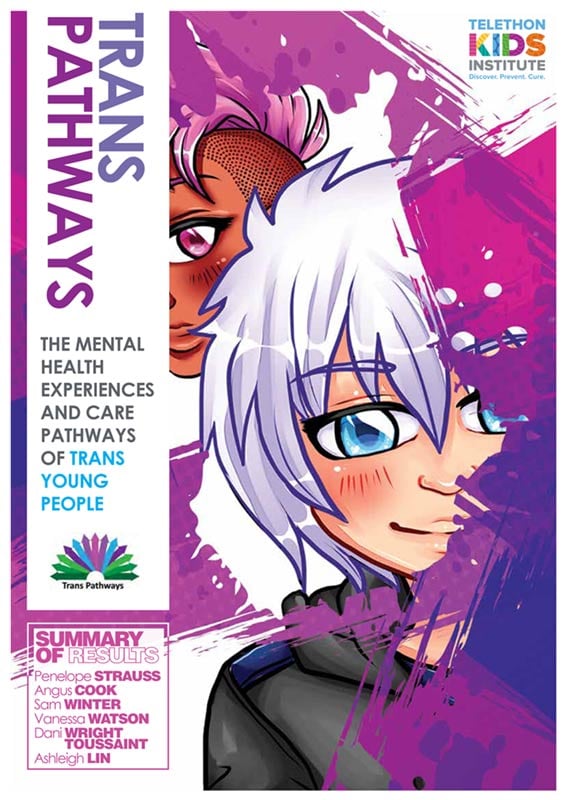
Associations between negative life experiences and the mental health of trans and gender diverse young people in Australia: Findings from Trans Pathways

The current results highlight the urgent need for better mental health care and provide insight into areas for targeted mental health interventions

Mental Health Issues and Complex Experiences of Abuse Among Trans and Gender Diverse Young People: Findings from Trans Pathways

Those working in trans and gender diverse health care need to be aware of the high prevalence of violence and abuse among trans and gender diverse young people

Can a social media intervention improve online communication about suicide? A feasibility study examining the acceptability and potential impact of the #chatsafe campaign

There is a need for effective and youth-friendly approaches to suicide prevention, and social media presents a unique opportunity to reach young people. Although there is some evidence to support the delivery of population-wide suicide prevention campaigns, little is known about their capacity to change behaviour, particularly among young people and in the context of social media. Even less is known about the safety and feasibility of using social media for the purpose of suicide prevention.

Caregiver-mediated interventions to support self-regulation among infants and young children (0-5 years): A protocol for a realist review

Self-regulation is a modifiable protective factor for lifespan mental and physical health outcomes. Early caregiver-mediated interventions to promote infant and child regulatory outcomes prevent long-term developmental, emotional and behavioural difficulties and improve outcomes such as school readiness, educational achievement and economic success. To harness the population health promise of these programmes, there is a need for more nuanced understanding of the impact of these interventions.

Mental health difficulties among trans and gender diverse young people with an autism spectrum disorder (ASD): Findings from Trans Pathways

Recent research highlights an overlap of gender diversity and autism spectrum disorders (ASD); however, data on individuals who are trans and also on the autism spectrum are largely from clinical samples and may not be representative of individuals who are trans with ASD in the general population. In addition, there is scant literature on the mental health of these individuals and their experiences in accessing gender-affirming care.

The association between migrant status and transition in an ultra-high risk for psychosis population

Migrant status is one of the most replicated and robust risk factors for developing a psychotic disorder. This study aimed to determine whether migrant status in people identified as Ultra-High Risk for Psychosis (UHR) was associated with risk of transitioning to a full-threshold psychotic disorder. Hazard ratios for the risk of transition were calculated from five large UHR cohorts (n = 2166) and were used to conduct a meta-analysis using the generic inverse-variance method using a random-effects model.

Group mindful self-compassion training to improve mental health outcomes for LGBTQIA+ young adults: Rationale and protocol for a randomised controlled trial

Young adults who are lesbian, gay, bisexual, trans, queer or questioning, intersex, asexual and other diverse genders and sexualities (LGBTQIA+) are more likely to experience mental health difficulties and are at significantly elevated risk of substance abuse, self-harm and suicide, relative to their heterosexual, endosex and cisgender peers. There is a need for effective mental health interventions for LGBTQIA+ young adults. Mindful Self-Compassion training is a promising approach; among LGBTQIA+ individuals, self-compassion accounts for more variation in mental health outcomes than bullying, victimization, and adverse childhood experiences combined. Furthermore, LGBTQIA+ individuals with high self-compassion report more positive identity and happiness, less self-stigma, and lower suicidality than those with low self-compassion.