
Search
Showing results for "Professor"
An interactive Child Development Atlas is giving policymakers, planners and services easy access to important data about the health and wellbeing of WA families.
Research
Neonatal sepsis and cardiovascular dysfunction I: mechanisms and pathophysiologyThe highest incidence of sepsis across all age groups occurs in neonates leading to substantial mortality and morbidity. Cardiovascular dysfunction frequently complicates neonatal sepsis including biventricular systolic and/or diastolic dysfunction, vasoregulatory failure, and pulmonary arterial hypertension.
Research
Proposed Core Outcomes After Neonatal Sepsis: A Consensus StatementSepsis is one of the leading causes of neonatal mortality. There is heterogeneity in the outcomes measured and reported in studies of neonatal sepsis. To address this challenge, a core outcome set (COS) for research on neonatal sepsis was needed.

News & Events
New funding for innovative multiple sclerosis researchWA researchers hope to gain new insights into the way immune cells in the body trigger attacks of multiple sclerosis (MS), thanks to new funding from MS Australia.

News & Events
People power takes tiny study to the next levelOne of the biggest problems facing young people with neuromuscular disorders is the risk of breathing problems caused by muscle weakness during sleep.
News & Events
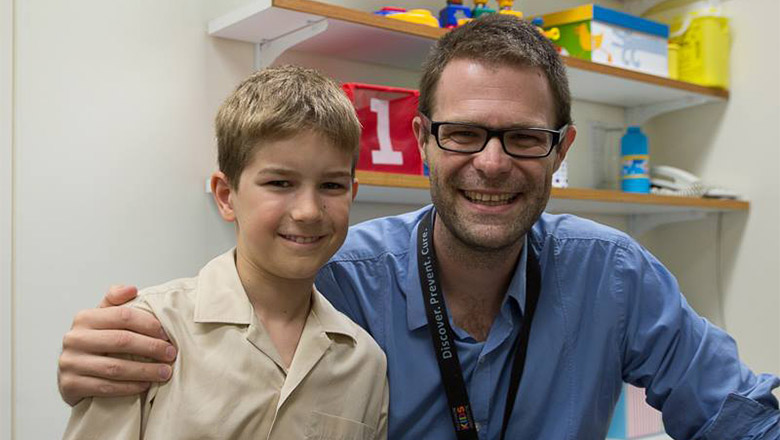
Telethon champ visits The KidsTen year old Scott has been walking for Telethon since he was four years old and he's now raised a massive $100 thousand for Telethon.
Research
Antibiotic exposure for culture-negative early-onset sepsis in late-preterm and term newborns: an international studyEarly-life antibiotic exposure is disproportionately high compared to the burden of culture-proven early-onset sepsis (CP-EOS). We assessed the contribution of culture-negative cases to the overall antibiotic exposure in the first postnatal week.
Research
Characterizing the interplay between autism spectrum disorder and comorbid medical conditions: An integrative reviewWe review medical conditions that have been repeatedly highlighted as sharing the strongest associations with ASD-epilepsy, sleep, as well as gastrointestinal and immune functioning
Research
Sex-specific associations between umbilical cord blood testosterone levels and language delay in early childhoodPreliminary evidence suggests that prenatal testosterone exposure may be associated with language delay.