
Search
Showing results for "Professor"
Research
Caregiver sensitivity predicts infant language use, and infant language complexity predicts caregiver language complexity, in the context of possible emerging autismWhile theory supports bidirectional effects between caregiver sensitivity and language use, and infant language acquisition-both caregiver-to-infant and also infant-to-caregiver effects-empirical research has chiefly explored the former unidirectional path. In the context of infants showing early signs of autism, we investigated prospective bidirectional associations with 6-min free-play interaction samples collected for 103 caregivers and their infants (mean age 12-months; and followed up 6-months later).
Research
Perspectives of culturally and linguistically diverse families in the management of children with type 1 diabetes in Western AustraliaChildren with Type 1 diabetes (T1D) from different ethnic backgrounds are growing in proportion in clinical practice and tend to have a higher risk of poor health outcomes. The study aimed to investigate the perspectives of culturally and linguistically diverse families in the management of children with T1D in Western Australia.
Research
Interferon β-1a ring prophylaxis to reduce household transmission of SARS-CoV-2: a cluster randomised clinical trialAccumulating evidence indicates that an early, robust type 1 interferon (IFN) response to SARS-CoV-2 is important in determining COVID-19 outcomes, with an inadequate IFN response associated with disease severity. Our objective was to examine the prophylactic potential of IFN administration to limit viral transmission.
Research
Remote paediatric ear examination comparing video-otoscopy and still otoscopy clinician rated outcomesTelemedicine, particularly real time video-otoscopy in rural and remote Australia holds great potential in assessing and managing otology conditions. There is good evidence of store and forward images for assessment, however limited evidence exists for the use of real-time video-otoscopy. The objective of this study was to assess the validity of using real time video-otoscopy, compared to standard store and forward still image otoscopy, in a paediatric population.
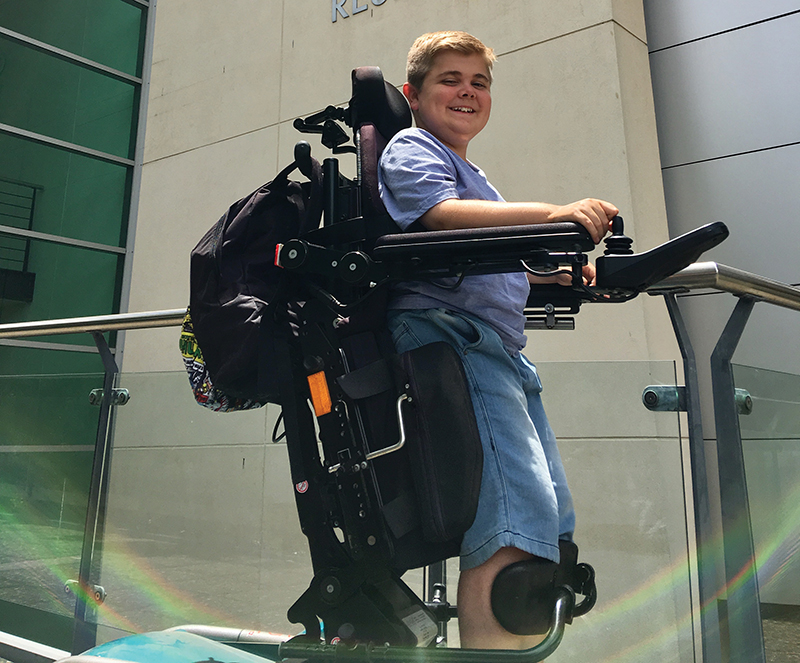
Klair Bayley knew her son Logan would eventually need a wheelchair.
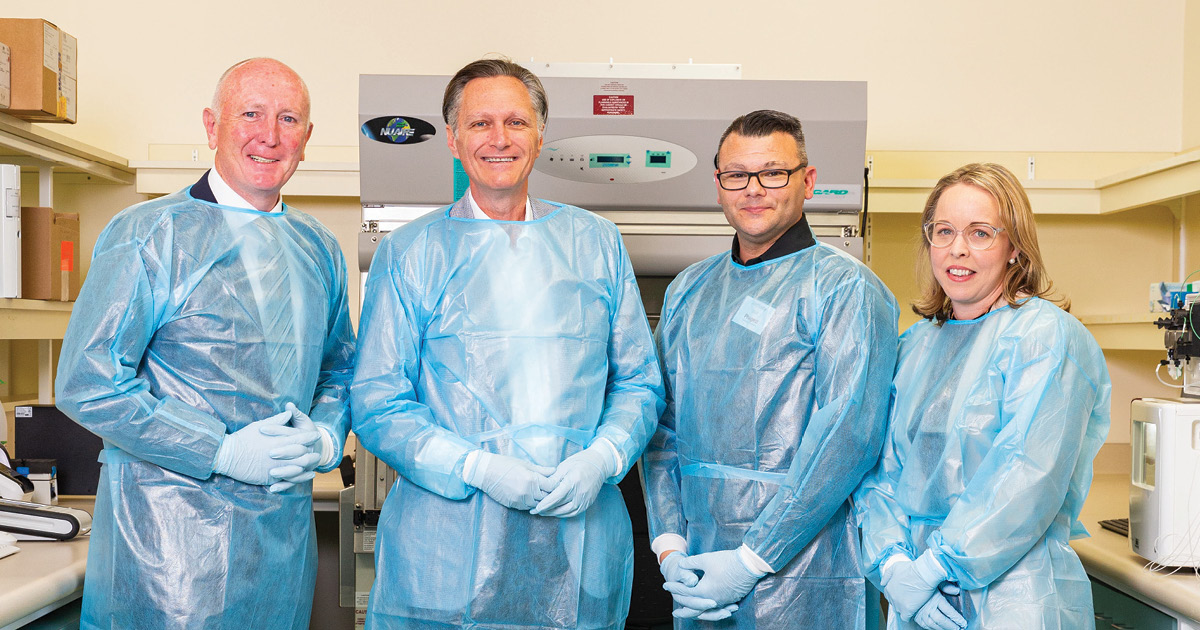
Western Australia’s first bacteriophage manufacturing facility has been opened in a significant development that brings patients battling antibiotic-resistant infections a step closer to life-saving phage therapy.
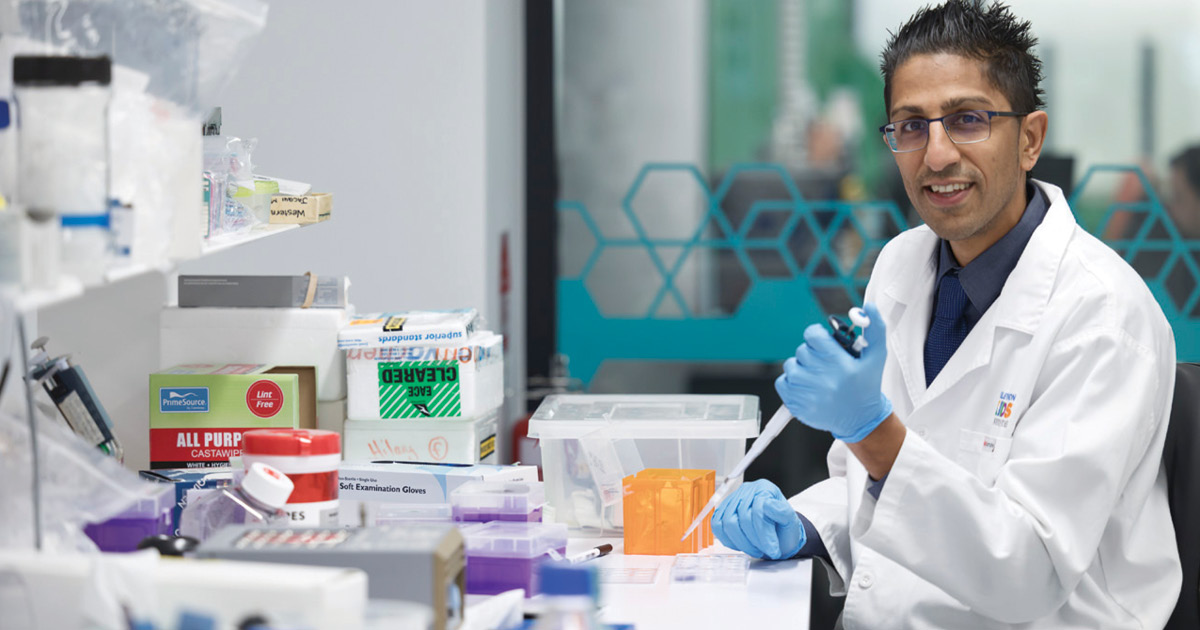
A pilot clinical study has found an immunotherapy drug can dramatically increase survival rates for babies with a rare form of leukaemia, paving the way for a major international clinical trial.
Research
Longitudinal associations between maternal and child screen use at 1 year of age and child behavior and development at 3 years of ageYoung children are increasingly exposed to evolving screen technology. International guidelines recommend no screen use for children under the age of 2 years, due to the potential for detrimental effects on behaviour and development. However, evidence for these guidelines is limited by inadequate consideration of device-specific effects (TV and mobile phone/tablet computer), maternal screen use, confounders such as maternal mental health and importance of effect sizes.
Research
Mapping the global prevalence, incidence, and mortality of Plasmodium falciparum, 2000-17: a spatial and temporal modelling studyHigh-resolution maps of P falciparum are a resource for informing global policy and malaria control planning, programme implementation, and monitoring initiatives
Research
An integrative analysis of non-coding regulatory DNA variations associated with autism spectrum disorderOverall, we found that the regulatory variants in autism spectrum disorder cases were enriched in ASD-risk genes and genes involved in fetal neurodevelopment