
Search
Showing results for " https://www.galaxus.ch/en/sector/showdiscussion/360hack360-com-visit-kunghaccom-whd8eez7-223334"

The Kids Research Institute Australia's Professor Andrew Whitehouse and Sarah Pillar share four things families can do to support their child while waiting to receive an ADHD or autism diagnostic assessment.
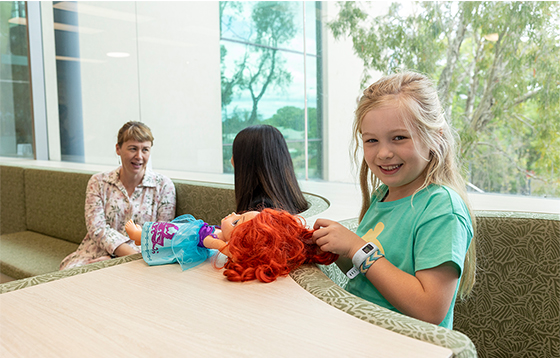
CliniKids has two clinics - in Subiaco and also in Joondalup.
Cancer immunotherapy has shown impressive results, but most patients do not respond.
This research project was part of the broader Ngulluk Koolunga Ngulluk Koort (Our Children, Our Heart) five-year (2016 to 2020) project.

New Study ‘Plugs’ Digital Intervention for Perinatal Mental Health

As one of Telethon’s earliest and most long-standing beneficiaries, we are incredibly proud to be taking part in the Telethon Weekend again in 2018.
The overarching aim of this project is to understand how plasmacytoid dendritic cells function in children with asthma and how genes and environmental stimuli influence these cells.
Hayley Karen Christian Lombardi BSc (1st Class Hons), PhD (Distinction) W.Aust. BHSc (Hons), PhD Head, Child Physical Activity, Health and
Streptococcus pyogenes (also known as group A Streptococcus , Strep A) is an obligate human pathogen with significant global morbidity and mortality. Transmission is believed to occur primarily between individuals via respiratory droplets, but knowledge about other potential sources of transmission via aerosols or the environment is limited. Such knowledge is required to design optimal interventions to control transmission, particularly in endemic settings.
Invasive group A streptococcal (Strep A) infections occur when Streptococcus pyogenes, also known as beta-hemolytic group A Streptococcus, invades a normally sterile site in the body. This article provides guidelines for establishing surveillance for invasive Strep A infections. The primary objective of invasive Strep A surveillance is to monitor trends in rates of infection and determine the demographic and clinical characteristics of patients with laboratory-confirmed invasive Strep A infection, the age- and sex-specific incidence in the population of a defined geographic area, trends in risk factors, and the mortality rates and rates of nonfatal sequelae caused by invasive Strep A infections.