
Search
Showing results for "Study of bullying"
Individuals with fetal alcohol spectrum disorder (FASD) are at an elevated suicide risk compared with those in the general population. This public health issue warrants further research attention to help inform the development of prevention and intervention efforts. Our study is the first to characterize suicidality (i.e., suicidal ideation/suicide attempt) and explore associated risk factors in young individuals with FASD within the Australian context.
According to the Cognitive Emotional Model of Non-Suicidal Self-Injury (NSSI), this behavior is governed by a complex interplay of NSSI-related cognitions (i.e., a person's expected outcomes of self-injury and self-efficacy to resist NSSI) and emotion-regulatory strategies (i.e., cognitive reappraisal and expressive suppression). To empirically test this proposition, the current study examined the moderating roles of self-efficacy to resist NSSI, cognitive reappraisal, and expressive suppression in the relationships between outcome expectancies and NSSI frequency among university students.
Having a child on the autism spectrum (AS) is known to impact caregiver quality of life (QoL), time use, and stress. A co-occurring diagnosis of intellectual disability (ID) is common among children on the autism spectrum, with ID itself impacting caregiver outcomes. This study sought to understand how co-occurring ID in children on the autism spectrum may influence caregiver-related outcomes. Secondary analysis of survey data from caregivers of 278 children on the autism spectrum with (n = 62) and without (n = 216) co-occurring ID was conducted, exploring impacts on caregiver QoL, stress, coping, and time-use.
This study examined whether the 12-month prevalence of major depressive disorder, attention-deficit/hyperactivity disorder, and conduct disorder among 6- to 17-year-olds in Australia changed between 1998 and 2013 to 2014. It also investigated whether changes in the prevalence of disorders over this time varied for children living in families containing 2 parents versus single parents, and families with high versus low income.
Children spend almost one-third of their waking hours at school. Streptococcus pyogenes (Strep A) is a common childhood bacterial infection that can progress to causing serious disease. We aimed to detect Strep A in classrooms by using environmental settle plates and swabbing of high-touch surfaces in two remote schools in the Kimberley, Western Australia.
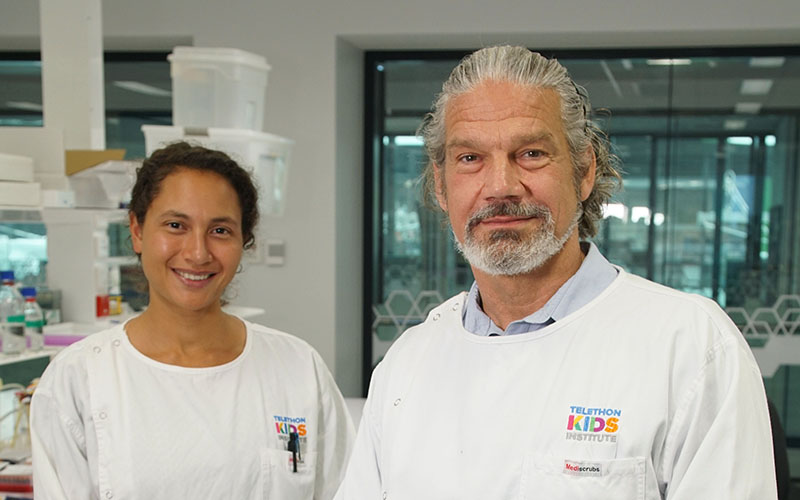
The Kids Research Institute Australia researchers working with a global team have identified the mechanism behind one of science’s most enduring mysteries.
MECP2 duplication syndrome is a rare but important diagnosis in children because of the burden of respiratory illness and recurrence risk
Understanding variations in risk profiles among persistently non-attending children will inform the development of absence interventions.
In view of its side effect profile, ketogenic diet (KD) administration should be supervised by a pediatric neurologist and specialist dietician.
Quantifying individual's with Rett syndrome with the ability to walk, walking based activities and sedentary time, analyzing a variety of influences.