
Search
Showing results for "clinikids"
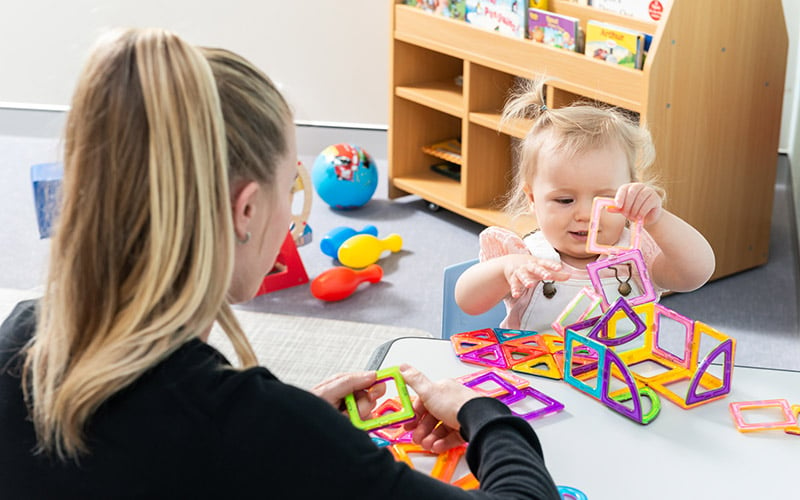
Learn more about the TOTS Study at CliniKids
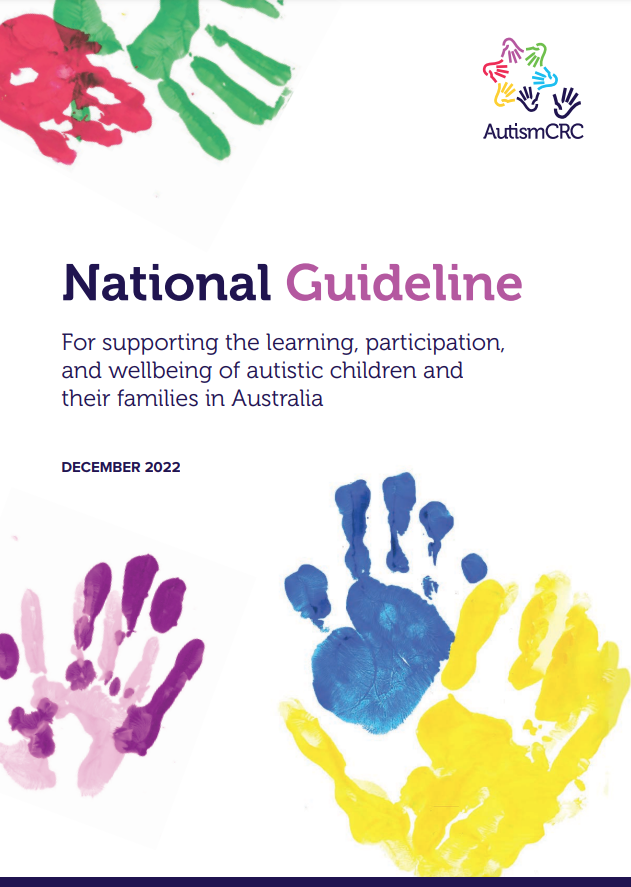
CliniKids has partnered with Autism CRC to deliver an online self-paced short course which explores the Recommendations included within the National Guideline for supporting the learning, participation, and wellbeing of autistic children and their families in Australia.

We are currently working through several clinical audits to ensure that we are meeting our service delivery standards and governance requirements. As part of this, we have audited our Service Agreements to ensure that we have a signed agreement on file for all our clients. This agreement is an NDIS
April is Autism Month and to mark the occasion, we’re transforming our reception desk in the clinic to an AMAZING wall for our families to contribute to.
Evidence suggests that the earlier supports are provided to young Autistic children, the better the overall outcomes. Supports have typically only been available after an autism diagnosis but with increased knowledge about early developmental trajectories, clinical supports can now be offered prediagnosis for infants showing early autism features and/or those with a family history of autism.
Research from large population-based studies investigating the language and academic outcomes for bilingual children is rare. The current study aimed to investigate the influence of dual language exposure on (i) English vocabulary outcomes at 5 years (126 bilinguals, 1675 monolinguals), and 10 years (vocabulary: 92 bilinguals, 1413 monolinguals:), and (ii) academic outcomes at 10 years (107 bilinguals, 1746 monolinguals).
Parent-child interactions (PCI) in infants with an elevated likelihood (EL) of autism start to diverge from other infants toward the end of the first year. This divergence is often attributed to emerging features of autism impacting infant social interactions in ways that become increasingly amplified. The aim was to identify which, if any, 12-month autism features were associated with later PCI qualities.
Individuals exhibiting pronounced autistic traits (e.g., social differences and specialised interests) may struggle with cognitive empathy (i.e., the ability to infer others' emotions), although the relationship with affective empathy (i.e., the ability to share others' emotions) is less clear in that higher levels of autistic traits may be linked with increased affective empathy for negative emotions but reduced affective empathy for positive emotions. The current study investigates this empathy profile and whether alexithymia and emotion dysregulation help to explain it.
The developmental origins of handedness remain elusive, though very early emergence suggests individual differences manifesting in utero could play an important role. Prenatal testosterone and Vitamin D exposure are considered, yet findings and interpretations remain equivocal.
The Repetitive Behaviours Questionnaire for Adults (RBQ-2A) measures two factors of restricted and repetitive behaviours (RRBs) associated with autism. However, the Diagnostic and Statistical Manual of Mental Disorders (DSM-5) provides four criteria for RRBs: repetitive motor behaviours, insistence on sameness, restricted interests, and interest in sensory aspects of the environment (or atypical sensitivity).