
Search
Showing results for "Study of bullying"
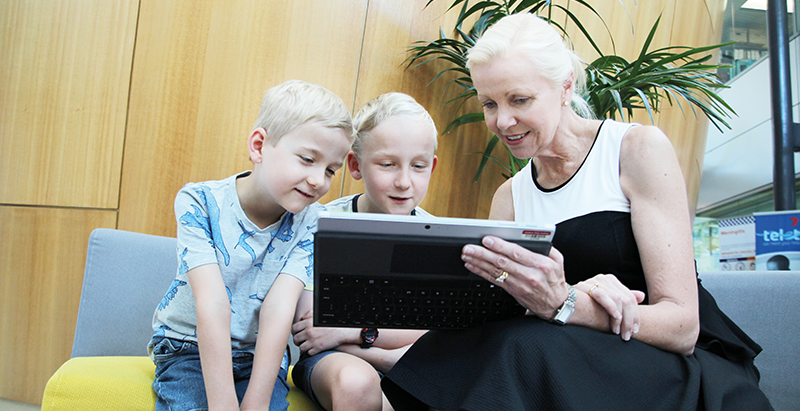
Schools from around the globe have turned to The Kids Research Institute Australia, seeking access to invaluable lessons learned from Australian students on how to effectively reduce harm from cyberbullying.
Group data from retrospective recall of sun-related behaviours may be of limited value in studying the relationship between sun exposure and health outcomes;
This study investigates the performance of an iteration of the Medtronic hybrid closed-loop algorithm
This project is a partnership between researchers, the Aboriginal community and government to provide evidence for policy addressing major health priority areas for Aboriginal children and families.
In this study, we sought to develop—and provide preliminary validity evidence for scores derived from—a new Psychological Flow Scale (PFS). We propose a parsimonious model of three core dimensions of flow, reflecting the findings from a recent scoping review that synthesised flow research across scientific disciplines.
Perioperative respiratory adverse events account for a third of all perioperative cardiac arrests, with bronchospasm and laryngospasm being most common. Standard treatment for bronchospasm is administration of inhaled salbutamol, via pressurized metered dose inhaler. There is little evidence on the best method of attaching the pressurized metered dose inhaler to the artificial airway during general anesthesia. The aim of this study is to investigate the best method to deliver aerosolized salbutamol via pressurized metered dose inhaler to the lungs of an anesthetized child.
Perioperative respiratory adverse events account for a third of all perioperative cardiac arrests, with bronchospasm and laryngospasm being most common. Standard treatment for bronchospasm is administration of inhaled salbutamol, via pressurized metered dose inhaler. There is little evidence on the best method of attaching the pressurized metered dose inhaler to the artificial airway during general anesthesia. The aim of this study is to investigate the best method to deliver aerosolized salbutamol via pressurized metered dose inhaler to the lungs of an anesthetized child.
The WHF echocardiographic criteria enable reproducible categorisation of echocardiograms as definite RHD versus no or borderline RHD
We propose that this system provides a model for the differentiation and adaptation of monocytes entering the intestinal lamina propria.
This study measured use and cost of health sector and related services in Rett syndrome and effects of socio-demographic, clinical severity and genetic factors