
Search
Showing results for "Au"
Research
Spatiotemporal patterns of influenza in Western AustraliaUnderstanding the geospatial distribution of influenza infection and the risk factors associated with infection clustering can inform targeted preventive interventions. We conducted a geospatial analysis to investigate the spatial patterns and identify drivers of medically attended influenza infection across all age groups in Western Australia.
Research
Hospitalizations Following Complex Hip Surgery in Children with Intellectual Disability: A Self-Controlled Case Series AnalysisTo evaluate the associations between complex hip surgery and subsequent hospitalizations in children with intellectual disability, including a subset of children with cerebral palsy.
Research
Physical activity interventions for the promotion of mental health outcomes in at-risk children and adolescents: a systematic reviewMany young people are exposed to risk factors that increase their risk of mental illness. Physical activity provision is an increasingly popular approach to protect against mental illness in the face of these risk factors. We examined the effectiveness of physical activity interventions for the promotion of mental health outcomes in at-risk children and adolescents.
Research
Very Early Identification and Intervention for Infants at Risk of Neurodevelopmental Disorders: A Transdiagnostic ApproachIn this article, we examine the utility of a transdiagnostic, dimensional approach to very early identification and intervention for infants at risk of neurodevelopmental disorders
Research
Fine-scale maps of malaria incidence to inform risk stratification in LaosMalaria risk maps are crucial for controlling and eliminating malaria by identifying areas of varying transmission risk. In the Greater Mekong Subregion, these maps guide interventions and resource allocation. This article focuses on analysing changes in malaria transmission and developing fine-scale risk maps using five years of routine surveillance data in Laos (2017-2021). The study employed data from 1160 geolocated health facilities in Laos, along with high-resolution environmental data.
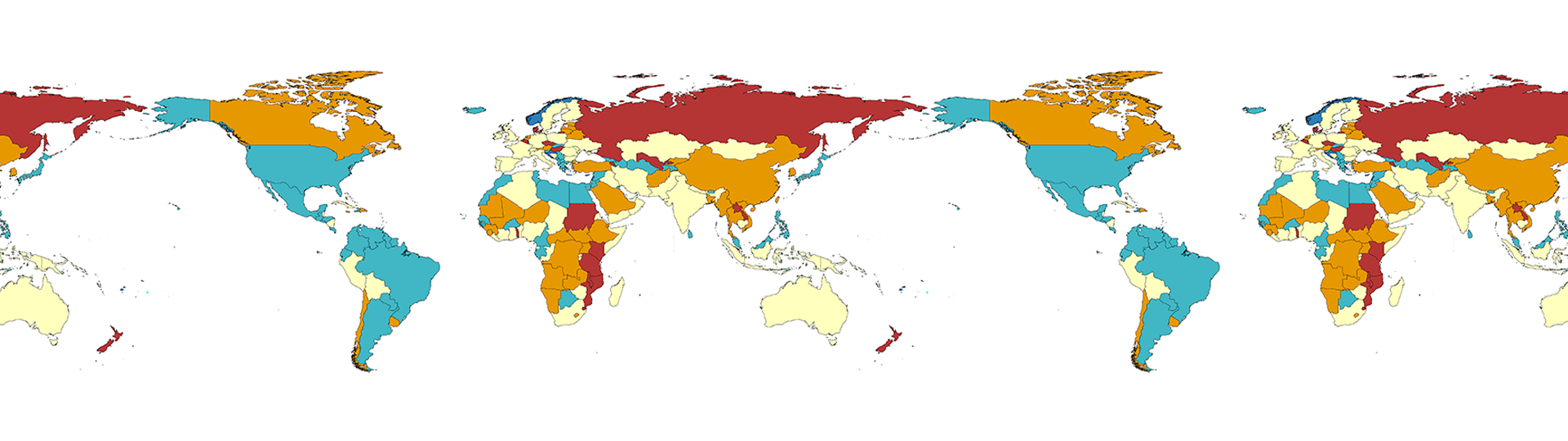
The Geospatial and Tuberculosis (GeoTB) team led by Kefyalew Alene focuses on designing an innovative approach for improving the efficiency and effectiveness of public health interventions to help control and ultimately eliminate tuberculosis in high-burden countries.
Research
Intrafamilial Maltreatment of People with Intellectual Disability: A Scoping ReviewPeople with intellectual disability experience a greater risk of maltreatment than people without intellectual disability. Maltreatment by family members presents additional risks, including greater possibilities for concealment. This scoping reviewResults were summarized in both narrative and tabular formats summarizes extant knowledge about the familial maltreatment of people with intellectual disability and identifies gaps in the literature.
Research
Is Systemic Dissemination of BCG Following Neonatal Vaccination Required for Protection Against Mycobacterium tuberculosis?Tuberculosis (TB) is caused by Mycobacterium tuberculosis (Mtb) and is a leading cause of death. BCG is the only licensed TB vaccine. Preclinical studies have shown that in adults, intravenous administration of BCG improves protection against TB. We hypothesize that intradermal administration of BCG to the human newborn leads to low-grade BCG bacteremia and that this systemic dissemination improves protection against Mtb infection. This hypothesis is based on supporting observations including animal and human studies. It is a testable hypothesis and offers to deliver immediately actionable insight to advance the global efforts against TB.
Research
Exploring the Experiences of Australian Fathers Who Lead School ‘Dads Groups’Past research suggests that fathers are underrepresented in traditional parenting and child health promotion programs compared to mothers. One promising method to deliver support is a peer-facilitated approach that enables fathers to connect with their peers. This model has been adopted by several community organisations in Australia. However, limited research evaluates the implementation and impact of these services.
Research
Effectiveness of current digital cognitive behavioural therapy for insomnia interventions for adolescents with insomnia symptoms: A systematic review and meta-analysisSleep problems occur in up to 20%-45% of adolescents. This systematic review and meta-analysis examined the effectiveness of digital sleep interventions, based on cognitive behavioural therapy for insomnia, for adolescents with insomnia symptoms. The objective was to synthesise and quantify, through meta-analyses, changes in sleep following completion of a digital sleep-based intervention.