Search
To explore parents' experiences of using continuous glucose monitoring in their young children with early-stage type 1 diabetes, being followed in the Australian Environmental Determinants of Islet Autoimmunity (ENDIA) study.
Less than 20% of Australians with type 1 diabetes (T1D) meet recommended glucose targets. Technology use is associated with better glycaemia, with the most advanced being automated insulin delivery (AID) systems, which are now recommended as gold-standard T1D care. Our Australian AID trial shows a wide spectrum of adults with T1D can achieve recommended targets. Other studies, including lived experience data, are supportive. Insulin pumps are not subsidised for most Australian adults with T1D. We advocate change.
Given limited data regarding the involvement of disadvantaged groups in paediatric diabetes clinical trials, this study aimed to evaluate the socioeconomic representativeness of participants recruited into a multinational clinical trial in relation to regional and national type 1 diabetes reference populations.
Glycemia risk index (GRI) is a novel composite metric assessing overall glycemic risk, accounting for both hypoglycemia and hyperglycemia and weighted toward extremes. Data assessing GRI as an outcome measure in closed-loop studies and its relation with conventional key continuous glucose monitoring (CGM) metrics are limited.
While advancements in the treatment of diabetes continue to rapidly evolve, many of the newer technologies have financial barriers to care, opposing the egalitarian ethos of Banting who sold his patent on insulin for a nominal cost to allow it to be made widely available. Inequity in access to new therapies drives disparity in diabetes burden with potential for these gaps to widen in the future.
The ESCALATION system is a novel paediatric Early Warning System that incorporates family involvement and sepsis recognition. This study aimed to assess the feasibility and iteratively refine the ESCALATION system in a variety of hospital settings in preparation for full-service implementation.
One third of Australian children diagnosed with type 1 diabetes present with life-threatening diabetic ketoacidosis (DKA) at diagnosis. Screening for early-stage, presymptomatic type 1 diabetes, with ongoing follow-up, can substantially reduce this risk (<5% risk). Several screening models are being trialled internationally, without consensus on the optimal approach. This pilot study aims to assess three models for a routine, population-wide screening programme in Australia.
The evidence about the acceptability and effectiveness of innovative paediatric models of care for Type 1 diabetes is limited. To address this gap, we synthesised literature on implemented models of care, model components, outcomes, and determinants of implementation and sustainability.
To assess relationships between continuous glucose monitoring (CGM) time in range (TIR), 70-180 mg/dL, time below range (TBR), <70 mg/dL, time above range (TAR), >180 mg/dL, and glucose coefficient of variation (CV) in relation to currently recommended clinical CGM targets for older people, which recommend reduced TIR and TBR targets relative to the general type 1 diabetes population.
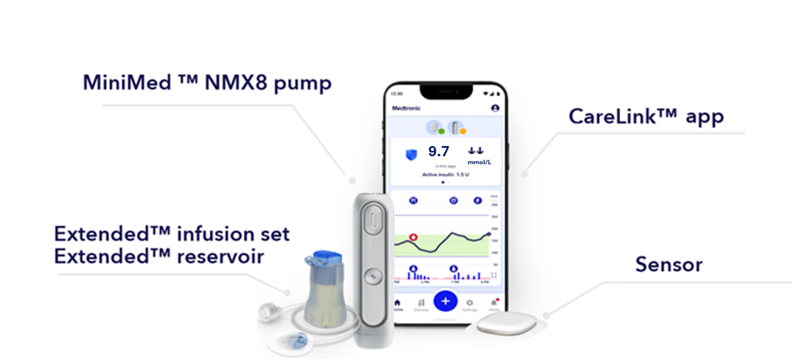
Advanced hybrid closed-loop (AHCL) therapy with the Medtronic MiniMed™ 780G system improves glycemia; however, the clinical outcomes in younger children remain less established. This pilot study aimed to explore the continuous glucose monitoring (CGM) metrics in very young children on AHCL. Children between 2 and 7 years of age and on insulin pump therapy were recruited.