
Search
Showing results for "Professor"
Research
Safety, immunogenicity, and tolerability of meningococcal serogroup B bivalent recombinant lipoprotein 2086 vaccine in healthyNeisseria meningitidis serogroup B is a major cause of invasive meningococcal disease, but a broadly protective vaccine is not currently licensed. A bivalent...
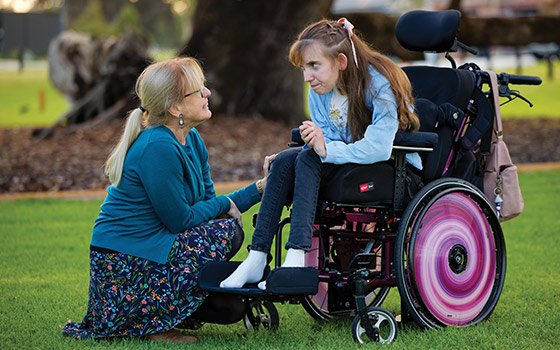
The Quality of Life Inventory - Disability

Discover what drives us as an organisation. Learn about history and the impact of the Institute along with the amazing ambitious goals we've achieved so far in the field of children's research.
News & Events
School excursions at The Kids Research Institute AustraliaThe The Kids Discovery Centre schools pilot program is returning in 2021!
Research
The contribution of viruses and bacteria to community-acquired pneumonia in vaccinated children: A case - Control studyRespiratory viruses, particularly respiratory syncytial virus and human metapneumovirus, are major contributors to pneumonia in Australian children
Research
The bone marrow microenvironment of pre-B acute lymphoblastic leukemia at single-cell resolutionThe bone marrow microenvironment (BMM) plays a key role in leukemia progression, but its molecular complexity in pre-B cell acute lymphoblastic leukemia (B-ALL), the most common cancer in children, remains poorly understood. To gain further insight, we used single-cell RNA sequencing to characterize the kinetics of the murine BMM during B-ALL progression.
Research
Use of data linkage to investigate the aetiology of acute lower respiratory infection hospitalisations in childrenThe aim was to document the aetiology of acute lower respiratory infection (ALRI) hospitalisations in Western Australian children
Research
Estimating the impact of Western Australia's first respiratory syncytial virus immunisation program for all infants: A mathematical modelling studyThe Australian Therapeutic Goods Administration approved the use of nirsevimab, a long-acting monoclonal antibody for the prevention of Respiratory Syncytial Virus (RSV), in November 2023. Western Australia (WA) implemented a combination of nirsevimab administration strategies designed to protect all infants starting in April 2024, before the epidemic season. We developed a dynamic transmission model to predict the impact of WA's RSV immunisation program on infant hospitalisations.
Research
Genome-wide association study of IgG1 responses to the choline-binding protein PspC of Streptococcus pneumoniaeDelayed development of antibodies to S. pneumoniae in infancy is associated with the development of atopy and asthma.
Research
Advances in Vaccines to Prevent Viral Respiratory Illnesses in ChildrenChildhood vaccination has played a critical role in the reduction of morbidity and mortality from communicable diseases, including specific respiratory pathogens