
Search
Showing results for "grants"
Research
CNTNAP2 variants affect early language development in the general populationWe tested the hypothesis that these CNTNAP2 variants affect communicative behavior, measured at 2 years of age in a large epidemiological sample...
Research
Inner speech impairment in children with autism is associated with greater nonverbal than verbal skillsWe present a new analysis of Whitehouse, Maybery, and Durkin's (2006, Experiment 3) data on inner speech in children with autism (CWA).
Opportunity to join the Autism Research Team as a Senior Research Officer

News & Events
The Kids celebrate neurodiverse leader selected for prestigious STEM programA remarkable Institute leader will join a cohort of 25 STEM-qualified women to take part in the prestigious 2024 Women in Leadership Development (WILD) program.
News & Events
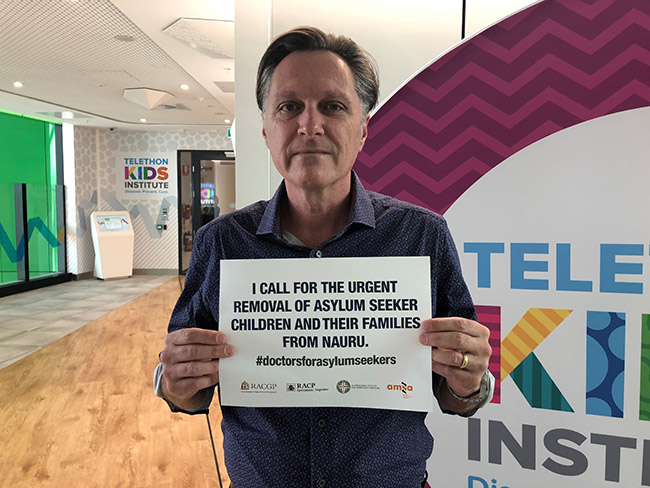
The Kids calls for urgent removal of kids on NauruThe Kids Research Institute Australia is calling for the immediate removal of all refugee and asylum seeker children and their families from Nauru.

News & Events
Speech Pathology Week at The KidsWe’re currently celebrating Speech Pathology Week at The Kids!
Research
Empathy and Autism: Establishing the Structure and Different Manifestations of Empathy in Autistic Individuals Using the Perth Empathy ScaleThere is a common mischaracterisation that autistic individuals have reduced or absent empathy. Measurement issues may have influenced existing findings on the relationships between autism and empathy, and the structure of the empathy construct in autism remains unclear.
Research
Child and Family Characteristics Associated with Symptoms of Anxiety in Autistic Children: A Biobank StudyAutistic children have an increased likelihood of anxiety, but more research is needed on the characteristics that predict various types of anxiety in this population.
Research
A GWAS for grip strength in cohorts of children-Advantages of analysing young participants for this traitGrip strength is a proxy measure for muscular strength and a predictor for bone fracture risk among other diseases. Previous genome-wide association studies have been conducted in large cohorts of adults focusing on scores collected for the dominant hand, therefore increasing the likelihood of confounding effects by environmental factors.
Research
Harmonization of SDQ and ASEBA Phenotypes: Measurement Variance Across CohortsHarmonizing the scores obtained by different instruments that measure the same construct enable researchers to combine them in one analysis. An important step in harmonization is checking whether there is measurement invariance across populations.