
Search
Research
The ORVAC Trial - A phase IV, double-blind, randomised, placebo-controlled clinical trial to optimise the delivery of RV1 rotavirus vaccine to Northern Territory Aboriginal infantsTom Snelling BMBS DTMH GDipClinEpid PhD FRACP Head, Infectious Disease Implementation Research 08 6319 1817 tom.snelling@thekids.org.au Head,

Guide our sibling research!
Research
Tissue resident memory T cells: putting cancer cells to sleep and a target for therapyTissue resident memory T cells are cancer killing immune cells that have emerged as key players in immune-mediated control of solid cancers, as well as being markers of prognosis and predictors of response to immunotherapy.
Research
Tonsil organ model to evaluate carriage, disease mechanisms and therapeutic interventions for treatment and prevention of GAS infectionsTonsil organ model to evaluate carriage, disease mechanisms and therapeutic interventions for treatment and prevention of Group A Streptococcal infections.
Research
Using co-design to understand and enhance the experiences of emerging adults with type 1 diabetes and their parents as they transition from paediatric to adult care in metropolitan and regional Western AustraliaKeely Bebbington MClinPsych/PhD McCusker Postdoctoral Research Fellow in Type 1 Diabetes 08 6319 1766 keely.bebbington@thekids.org.au McCusker
News & Events
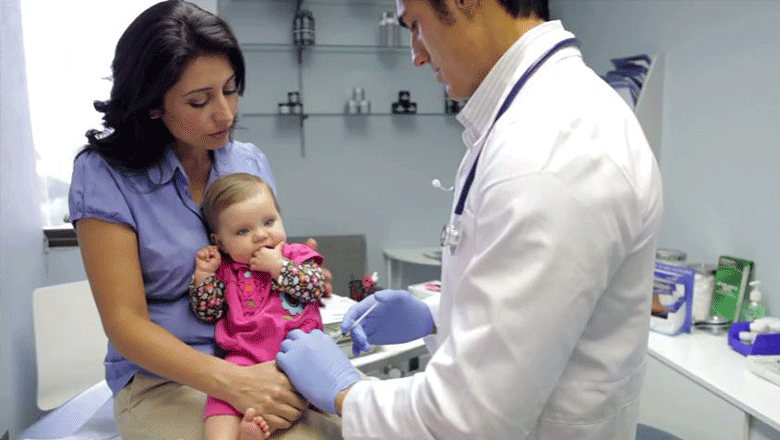
Video: Flu vaccine Q&AIt's that time of year again... Flu vaccine time! Watch Dr Chris Blyth answer commonly asked questions in the video below.
Research
The STAMP RSV ProgramSTAMP RSV is a multifaceted program of work with the single focus to prepare the community for the uptake of new and emerging RSV immunisation strategies by providing the evidence to inform public health policy.
Research
“It’s all gone quiet…” MUSIC from COVID19Hannah Huong Christopher Moore Le Blyth OAM BSc (Hons) GradDipClinEpi PhD MA (Dev. Econ), MA (App. Stats), PhD (Econ) MBBS (Hons) DCH FRACP FRCPA PhD
Research
Childhood pneumonia in the Eastern Highlands Province of Papua New Guinea: clinical, microbiological and immunological predictors of diseaseChristopher Deborah Hannah Lea-Ann Peter Blyth Lehmann Moore Kirkham Richmond MBBS (Hons) DCH FRACP FRCPA PhD AO, MBBS, MSc OAM BSc (Hons)
Research
Infection Transmission in Early Childhood Education and Care: a mixed methods study to inform future interventionsThe COVID-19 pandemic has exposed many uncertainties and incorrect assumptions about respiratory pathogen transmission.