
Search
Showing results for "Study of bullying"
This paper presents qualitative findings focusing on the scope and role of outreach in supporting family engagement in the Tasmanian early childhood services
This study developed and tested a highly usable, and moderately acceptable, smartphone app to improve the psychosocial health of young people living with CF
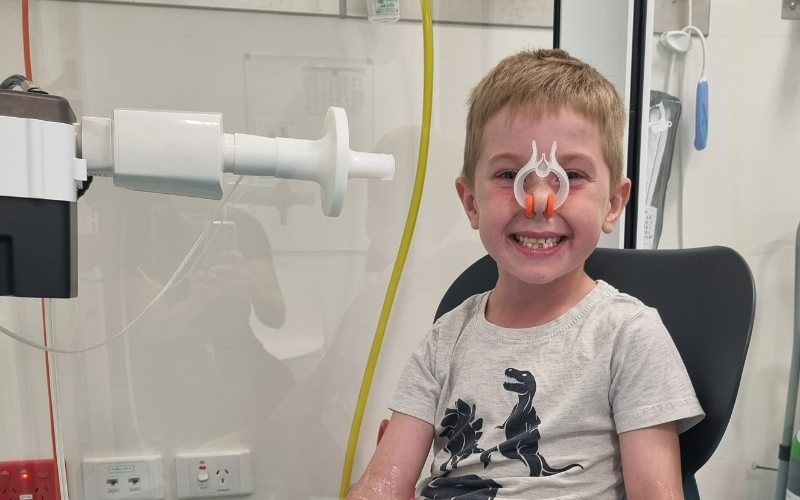
A new study to determine if it’s safe for children who were born preterm to attend day care officially commenced this month.
This study provides the first clear evidence of a reduction over time in the behavioral severity of individuals diagnosed with Autistic Disorder during a period of stability in diagnostic criteria
In this study, we examined the effects of maternal smoking as a major adverse exposure in early life, on mucosal immune function and allergen sensitization...
The COVID-19 pandemic has seen evidence and advice evolve quickly. Since the start of the pandemic there has been confusion and concern about breastfeeding and COVID-19, and advice for this group has at times been contradictory. The volume of information on social media has exacerbated this. This study aimed to understand breastfeeding-related COVID-19 information sharing on social media during the global and Australian vaccine roll-out.
Malaria in Bhutan has fallen significantly over the last decade. As Bhutan attempts to eliminate malaria in 2022, this study aimed to characterize the space-time clustering of malaria from 2010 to 2019. Malaria data were obtained from the Bhutan Vector-Borne Disease Control Program data repository.
This retrospective population‐based study aimed to determine the incidence of type 2 diabetes from 2012 to 2019 in Western Australian youth aged under 16 years, and to examine temporal trends between 2000 and 2019, using data from the Western Australian Children’s Diabetes Database (WACDD). The data extracted for eligible patients diagnosed with type 2 diabetes, according to standard criteria, included diagnosis year, age, sex and self‐reported Aboriginal or Torres Strait Islander status.
This study examines survival differences between patients with epithelioid MM diagnosed by cytology only and other subtypes diagnosed by histology.
Prevalence of impetigo (skin sores) remains high in remote Australian Aboriginal communities, Fiji, and other areas of socio-economic disadvantage. Skin sore infections, driven primarily in these settings by Group A Streptococcus (GAS) contribute substantially to the disease burden in these areas. Despite this, estimates for the force of infection, infectious period and basic reproductive ratio-all necessary for the construction of dynamic transmission models-have not been obtained.