
Medulloblastoma (MB) consists of four core molecular subgroups with distinct clinical features and prognoses. Treatment consists of surgery, followed…
Immunotherapy has revolutionised the treatment of cancers by harnessing the power of the immune system to eradicate malignant tissue. However, it is…
Infant acute lymphoblastic leukemia (ALL) is characterized by a high incidence of KMT2A gene rearrangements and poor outcome. We evaluated the value…
DYRK1A is a serine/threonine kinase encoded on human chromosome 21 (HSA21) that has been implicated in several pathologies of Down syndrome (DS), inc…
The bone marrow microenvironment (BMM) plays a key role in leukemia progression, but its molecular complexity in pre-B cell acute lymphoblastic leuke…
PTEN mutation occurs in a variety of aggressive cancers and is associated with poor patient outcomes. Recent studies have linked mutational loss of P…
The Zero Childhood Cancer Program is a precision medicine program to benefit children with poor-outcome, rare, relapsed or refractory cancer. Using t…
Cancer cells display DNA hypermethylation at specific CpG islands in comparison to their normal healthy counterparts, but the mechanism that drives t…
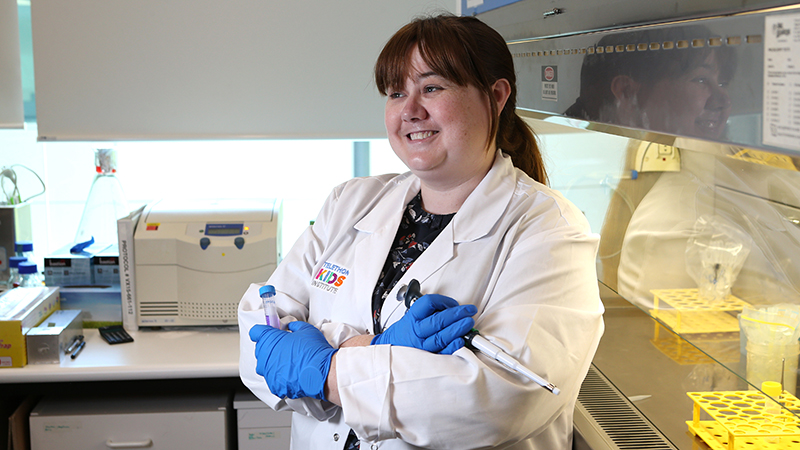
New research by The Kids shows donor immune cells are highly effective at boosting the body’s response against leukaemia.

Researchers at The Kids Research Institute Australia have been awarded $4.6 million in national funding from the National Health and Medical Research…