
Search
The Kids CONNECT honours the many ways our community supports us to make our research great and achieve our vision of happy healthy kids.

We will be hosting a CONNECT cuppa catch up with the Diabetes Team on Wednesday, March 10, 2021. The event provides an opportunity to hear about the Centre’s research as well as chat to our researchers about their work.
Melissa O'Donnell BPsych (Hons), MPsych, GradDip Ed, PhD Honorary Research Associate Honorary Research Associate Areas of research expertise: Child
Melissa Rebecca O'Donnell Glauert BPsych (Hons), MPsych, GradDip Ed, PhD BPsych (Hons) PhD Honorary Research Associate Honorary Research Associate 08
In Australia, infants have the highest rate of child protection involvement. Many jurisdictions in Australia and internationally have introduced policies for prenatal planning and support, however little is known about outcomes of infants reported prenatally. This study is the first to use cross-jurisdictional, individual-record data to examine child protection pathways associated with prenatal and infant reports.
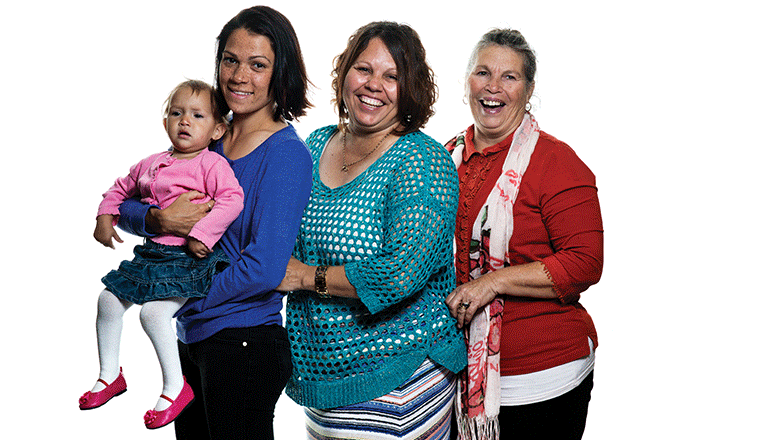
A study by researchers at The Kids Research Institute Australia has found Aboriginal mothers are at a significantly greater risk of preventable death than other Australia
Carrington Fiona Shepherd Stanley PhD FAA FASSA MSc MD FFPHM FAFPHM FRACP FRANZCOG HonDSc HonDUniv HonFRACGP HonMD HonFRCPCH HonLLB (honoris causa)
Carrington Shepherd PhD Honorary Research Associate Honorary Research Associate Areas of research expertise: Population health; Aboriginal and Torres
Stillbirth is a critical public health issue worldwide. While the rates in high-income countries are relatively low, there are persistent between-country disparities. We compared stillbirth rates and trends in Wales and the State of Western Australia (WA), Australia, and provide insights into any differences.
Vitamin D deficiency (serum 25-hydroxyvitamin D (25(OH)D) concentration <50 nmol/l) is recognised as a public health problem globally. The present study details the prevalence and predictors of vitamin D deficiency in a nationally representative sample (n 3250) of Australian Aboriginal and Torres Strait Islander adults aged ≥18 years. We used data from the 2012-2013 Australian Aboriginal and Torres Strait Islander Health Survey (AATSIHS). Serum 25(OH)D concentrations were measured by liquid chromatography-tandem MS.