
Search
Growing up in a language-rich home environment is important for children's language development in the early years. The concept of "technoference" (technology-based interference) suggests that screen time may be interfering with opportunities for talk and interactions between parent and child; however, limited longitudinal evidence exists exploring this association.
The aim of this project was to conduct a critical analysis of the AEDC data for NSW children to understand the factors contributing to the changes in child development outcomes over time.
In this report, we explore the relationship between student wellbeing, school engagement, and academic achievement.
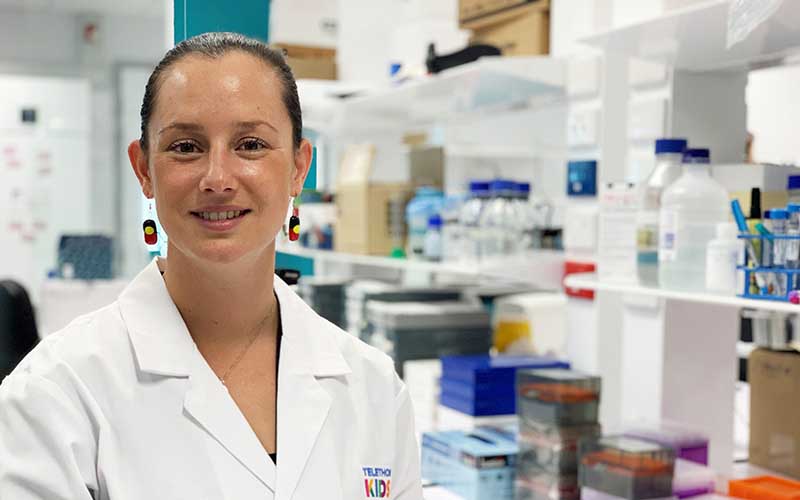
One of The Kids Research Institute Australia’s leading young researchers will travel to the world’s premier conference on childhood brain cancer.

The generous support of Western Australians through Channel 7’s Telethon is helping to fund life-changing child health research, with two The Kids Research Institute Australia researchers awarded significant grants.
Paediatric cancer is the leading cause of disease-related death in Australian children. Limited research focuses on cancer in Aboriginal and Torres Strait Islander children. Although there appears to be a lower incidence of cancer overall in Aboriginal and Torres Strait Islander children compared with non-Indigenous children, a high proportion of Aboriginal and Torres Strait Islander children are diagnosed with acute myeloid leukaemia.
While profound treatment responses have been realised using immunotherapy for some cancer types, this is yet to be seen for paediatric brain cancer patients.
Radiation therapy is an essential component of brain cancer treatment. However, the high doses currently required are extremely damaging to the growing brains and bodies of children.

Three researchers from The Kids Research Institute Australia were recognised as being among Western Australia’s brightest and most innovative scientific minds at last night’s 24th Premier's Science Awards.
Wastewater-based epidemiology (WBE) has emerged as a key method for the continuous monitoring of COVID-19 prevalence including circulating SARS-CoV-2 lineages. WBE addresses the limitations of traditional clinical COVID-19 surveillance such as clinical test availability, fluctuating testing rates, and increased reliance on rapid antigen tests.