
Search

News & Events
The Kids researcher awarded support fundingA The Kids Research Institute Australia researcher has been awarded $10,000 in State Government research support funding.
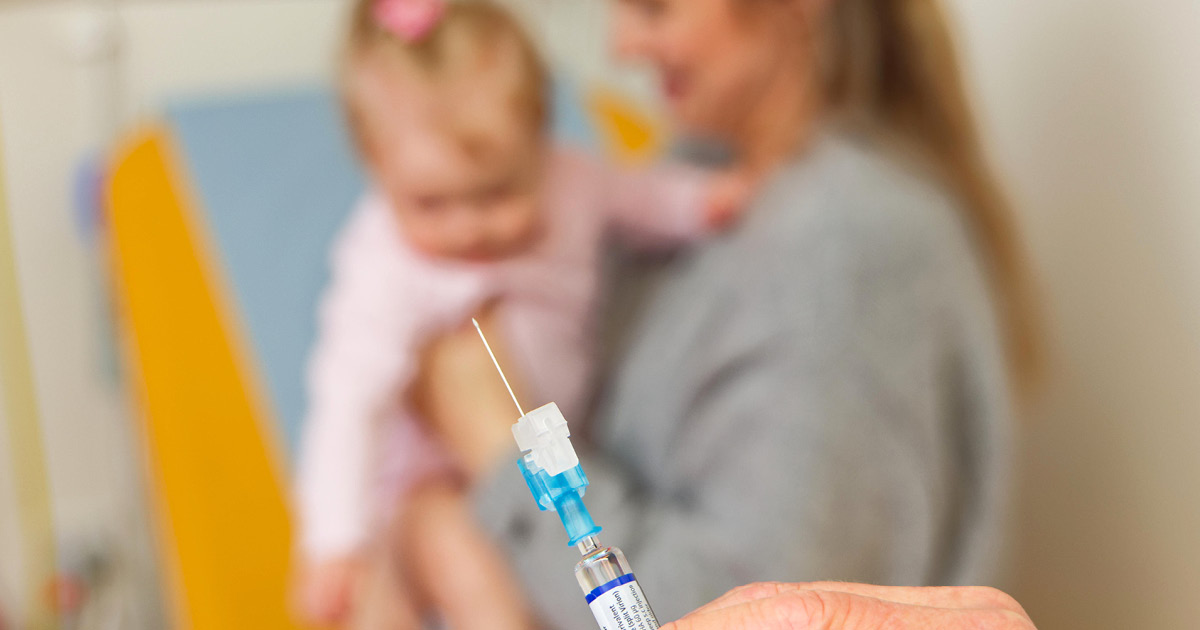
As a leading research site in Australia, the Wesfarmers Centre of Vaccines and Infectious Diseases played an instrumental role in the global effort to develop a world-first RSV immunisation for young babies.
Research
Acute rheumatic feverAcute rheumatic fever is an autoimmune disorder resulting from Group A Streptococcus pharyngitis or impetigo in children and adolescents, which may evolve to rheumatic heart disease (RHD) with persistent cardiac valve damage. RHD causes substantial mortality and morbidity globally, predominantly among socioeconomically disadvantaged populations, with an interplay of social determinants of health and genetic factors determining overall risk.
Research
Who is at risk of a respiratory syncytial virus hospitalisation? A linked, population-based birth cohort analysis in children aged less than 5 yearsRespiratory syncytial virus (RSV) is a major cause of acute lower respiratory infections globally in children under five years. With the development of RSV prevention strategies, understanding risk factors and relation to age and population is useful for deciding the type of program implemented.
Research
Online Health Literacy Resources for People With Intellectual Disability: A Grey Literature Scoping ReviewPeople with intellectual disability experience higher rates of physical and mental health problems than those without intellectual disability. Health literacy includes accessing, understanding, appraising and applying health information. Improving health literacy is associated with better health outcomes. The internet is a primary source of health information for many people. This study aimed to evaluate available online health resources for people with intellectual disability and their families to understand information gaps.
Research
Therapeutic potential of plant-based therapies in pediculosis capitis: Systematic review and meta-analysisPediculosis capitis is a worldwide prevalent public health issue, mostly involving children. Resistance has been increasingly identified with conventional treatments such as permethrin or malathion. We aimed to evaluate the therapeutic potential of plant-based therapies for pediculosis capitis. PubMed, MEDLINE, Embase, EmCare, Web of Science, Cochrane, and ScienceDirect were searched for studies.
Research
Is Systemic Dissemination of BCG Following Neonatal Vaccination Required for Protection Against Mycobacterium tuberculosis?Tuberculosis (TB) is caused by Mycobacterium tuberculosis (Mtb) and is a leading cause of death. BCG is the only licensed TB vaccine. Preclinical studies have shown that in adults, intravenous administration of BCG improves protection against TB. We hypothesize that intradermal administration of BCG to the human newborn leads to low-grade BCG bacteremia and that this systemic dissemination improves protection against Mtb infection. This hypothesis is based on supporting observations including animal and human studies. It is a testable hypothesis and offers to deliver immediately actionable insight to advance the global efforts against TB.
Research
Restricting outdoor advertising of unhealthy food: can Australia's food category-based classification system be applied consistently?Most outdoor food advertising (e.g. billboards and bus stops) features foods that are considered unhealthy. The most important technical challenge when designing policies to restrict unhealthy outdoor food advertising is defining 'unhealthy food'. To date, most restriction policies have used nutrient profiling models (i.e. foods are classified according to their nutritional composition) to determine which foods and beverages may be advertised. In Australia, state governments have endorsed a food category-based classification system, with no prescribed nutrient limits, which may create ambiguity when multiple users are identifying food advertisements to be restricted.
Research
Consultation informs strategies for improving the use of functional evidence in variant classificationWhen investigating whether a variant identified by diagnostic genetic testing is causal for disease, applied genetics professionals evaluate all available evidence to assign a clinical classification. Functional assays of higher and higher throughput are increasingly being generated and, when appropriate, can provide strong functional evidence for or against pathogenicity in variant classification. Despite functional assay data representing unprecedented value for genomic diagnostics, challenges remain around the application of functional evidence in variant curation.
Research
Does exercise in cool water cause a higher risk of hypoglycaemia than in thermoneutral conditions in type 1 diabetes?The aim of this study was to test the hypothesis that exercise in cool water results in a greater decrease in blood glucose concentration than in thermoneutral water or on land in individuals with type 1 diabetes.