
Search
Showing results for "Study of bullying"
Mesothelioma is a rare and universally fatal cancer linked to exposure to asbestos. Until recently, standard of care treatment was chemotherapy; a treatment resulting in a minimal survival extension, and not improved upon for almost twenty years. However, the advent of cancer immunotherapy – and in particular the immune checkpoint inhibitor class of drugs - has resulted in recently approved new treatment options, with more currently under investigation.
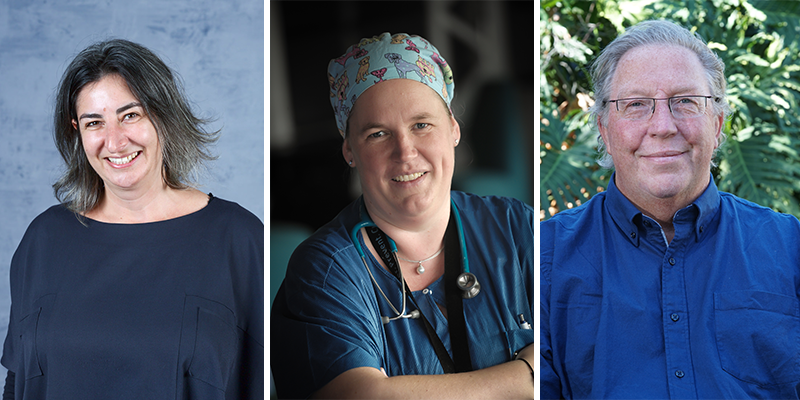
The Kids Research Institute Australia researchers have been awarded $5.3 million in prestigious Investigator Grants from the National Health and Medical Research Council

A new The Kids Research Institute Australia-led report into the impact of state and national policy on children’s health has called for kids and families to have more say when it comes
Rapid advances in next-generation sequencing technology, particularly whole exome sequencing and whole genome sequencing, have greatly affected our understanding of genetic variation underlying rare genetic diseases. Herein, we describe ethical principles of guiding consent and sharing of genomics research data. We also discuss ethical dilemmas in rare diseases research and patient recruitment policies and address bioethical and societal aspects influencing the ethical framework for genetic testing.
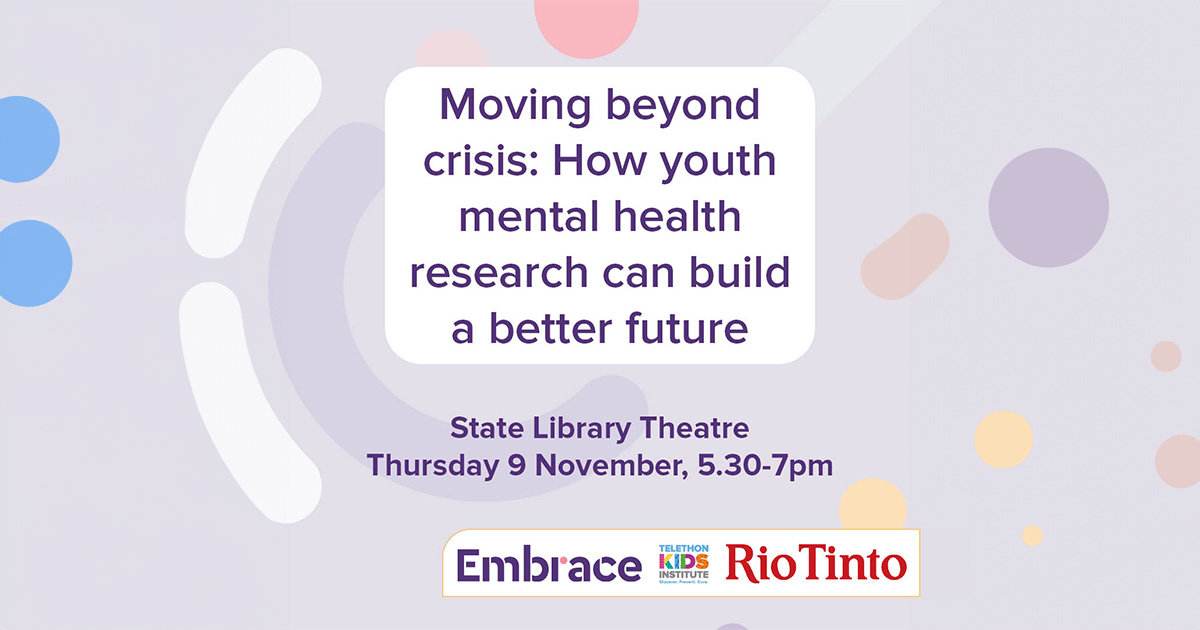
On the 9th of November from 5:30 to 7:30pm, Embrace @ The Kids Research Institute Australia, in partnership with Rio Tinto, invites you to a free public panel discussion on permacrisis and the mental health of young people.
Autistic children experience significantly higher rates of anxiety compared to nonautistic children. The precise relations between autism characteristics and anxiety symptoms remain unclear in this population. Previous work has explored associations at the domain level, which involve examining broad categories or clusters of symptoms, rather than the relationships between specific symptoms and/or individual characteristics. We addressed this gap by taking a network approach to understand the shared structure of autism characteristics and anxiety symptoms.
National policies are essential for countries to adapt to the negative health impacts of climate change. Children are disproportionately affected by these impacts and must be at the heart of adaptation policies to address their vulnerabilities. Adaptation commitments worldwide are integrated into national adaptation plans, nationally determined contributions, national communications, and other multisectoral policies. We aimed to evaluate how effectively national climate change policies worldwide plan to protect child health, considering a range of determinants for successful child-health adaptation.

Research to eliminate one of the world’s deadliest diseases – malaria – will be accelerated thanks to a USD $4.7 million grant from the Gates Foundation for scientists at The Kids Research Institute Australia and The University of Western Australia (UWA).
The Moombaki Research team developed a pilot Cultural Integrity Audit (CIA) that was co-designed with Aboriginal elders and educators as a tool for school leaders to measure the extent of culturally safe and responsive education at three test sites in Perth (Boorloo), Western Australia. This article analyses the political and social contexts and experiences of implementing the CIA as a tool – including the commitment, attitudes and values of school leaders.
In this review, we discuss the different subsets of tumor-infiltrating dendritic cells and their role in anti-tumor immunity