
Search
This study aimed to assess whether undertaking retrieval was associated with fatigue independent of sleep and circadian disruption. It also aimed to assess the feasibility of routinely measuring the psychomotor vigilance test on neonatal transport. Fatigue is associated with impaired clinician performance and safety.
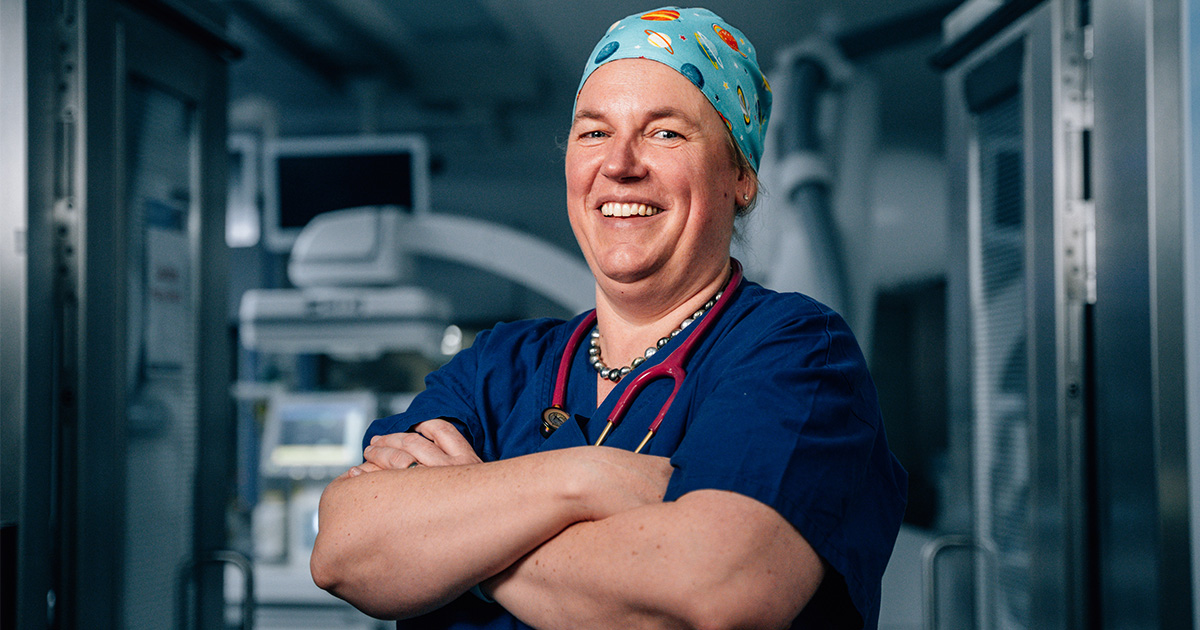
Congratulations to trailblazing Western Australian paediatric anaesthetist and researcher Professor Britta Regli-von Ungern-Sternberg, who has been awarded a prestigious Prime Minister’s Prize for Science for globally influential research that has made surgery and recovery safer for babies and children.

Researchers will use cutting edge big data and geospatial modelling techniques to tackle the dramatic decline in the number of West Australian children walking or riding to school.
Goal-directed training is an evidence-based occupational therapy intervention for children with cerebral palsy targeting motor performance and goal attainment. There is variability and limited description on goal-directed training delivery within the studies who found it a successful intervention. The aim of this study was to establish the who, what, why and how of goal directed training according to practicing occupational therapists.
Alcohol pharmacotherapies pose unknown teratogenic risks in pregnancy and are therefore recommended to be avoided. This limits treatment options for pregnant individuals with alcohol use disorders (AUD). The information on the safety of these medications during pregnancy is uncertain, prompting a scoping review. The objective of this review was to investigate available information on the safety of alcohol pharmacotherapies in pregnancy.
T cells engineered to express chimeric-antigen receptors (CAR-T cells) can effectively control relapsed and refractory haematological malignancies in the clinic. However, the successes of CAR-T cell therapy have not been recapitulated in solid tumours due to a range of barriers such as immunosuppression, poor infiltration, and tumour heterogeneity.
This manuscript sheds light on the impact of maternal breast milk antibodies on infant health. Milk antibodies prepare and protect the newborn against environmental exposure, guide and regulate the offspring's immune system, and promote transgenerational adaptation of the immune system to its environment.
Tamara Chris Valerie Veselinovic Brennan-Jones Swift BSc(Hons) MClinAud PhD PhD Clinical Research Fellow Head, Ear and Hearing Health Aboriginal
Bhutan has achieved a substantial reduction in both malaria morbidity and mortality over the last two decades and is aiming for malaria elimination certification in 2025. However, a significant percentage of malaria cases in Bhutan are imported (acquired in another country). The aim of the study was to understand how importation drives local malaria transmission in Bhutan.
PICOBOO is a randomised, adaptive trial evaluating the immunogenicity, reactogenicity, and safety of COVID-19 booster strategies. We report data for second boosters among individuals 50-<70 years old primed with AZD1222 (50-<70y-AZD1222) until Day 84.