
Search
This study investigates various common medical conditions affecting Australian children aged 4–14 years and the impact of prenatal and early-life conditions on these health conditions using a large national data set with 15 years of follow-up.
Acute rheumatic fever and rheumatic heart disease are caused by untreated group A streptococcus infections. Their prevalence is much higher among First Nations people than other Australians.
The Trial Remifentanil DEXmedetomidine trial aimed to determine if, in children < 2 years old, low-dose sevoflurane/dexmedetomidine/remifentanil anesthesia is superior to standard dose sevoflurane anesthesia in terms of global cognitive function at 3 years of age.
Despite the volume of accumulating knowledge from prospective Aboriginal cohort studies, longitudinal data describing developmental trajectories in health and well-being is limited.
SETBP1 Haploinsufficiency Disorder (SETBD) is characterised by mild to moderate intellectual disability, speech and language impairment, mild motor developmental delay, behavioural issues, hypotonia, mild facial dysmorphisms, and vision impairment. Despite a clear link between SETBP1 mutations and neurodevelopmental disorders the precise role of SETBP1 in neural development remains elusive.
Humans are commonly exposed to plastic through their dietary intake and food consumption patterns. Plastic-associated chemicals (PAC), such as bisphenols and phthalates, are recognized as endocrine-disrupting and are associated with increased risk of cardiovascular disease and metabolic syndrome. However, accurate methods to assess dietary exposure to plastic products and PAC are inadequate, limiting interrogation of health impacts.
The clinical consequences of an antibiotic allergy label are detrimental, impacting health care delivery and patient outcomes. We assessed hospital inpatients with intent to offer free antibiotic allergy labeling assessment within a randomized controlled trial. We sought to determine the feasibility of establishing an adult antibiotic allergy delabeling service in a Western Australian tertiary public hospital.
There are few options for patients with relapse/refractory B-cell acute lymphoblastic leukemia, thus this is a major area of unmet medical need. Here, we reveal that inclusion of a poison exon in RBM39, which could be induced both by CDK9 or CDK9 independent CMGC (cyclin-dependent kinases, mitogen-activated protein kinases, glycogen synthase kinases, CDC-like kinases) kinase inhibition, is recognized by the nonsense-mediated mRNA decay pathway for degradation.
An in-depth investigation of gene regulation and cell populations at sites of fetal blood-cell production provides clues as to why children with Down’s syndrome are predisposed to developing leukaemia.
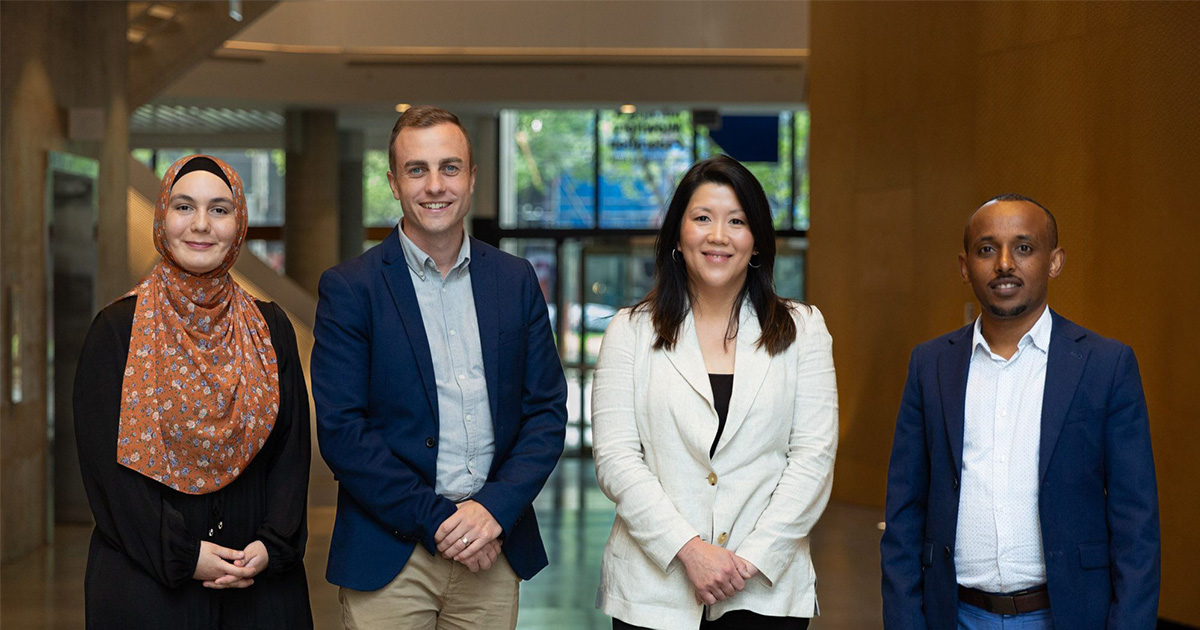
A leading tuberculosis researcher from The Kids Research Institute Australia and Curtin University has been named a finalist for the Association of Australian Medical Research Institutes (AAMRI) 2024 Rising Star Award.