
Search
If there’s one thing modern researchers and health professionals now understand, it’s that for so many diseases and conditions affecting children and adolescents, early intervention is crucial.

People at risk of developing multiple sclerosis (MS) have been offered a beacon of hope thanks to research into UV exposure.
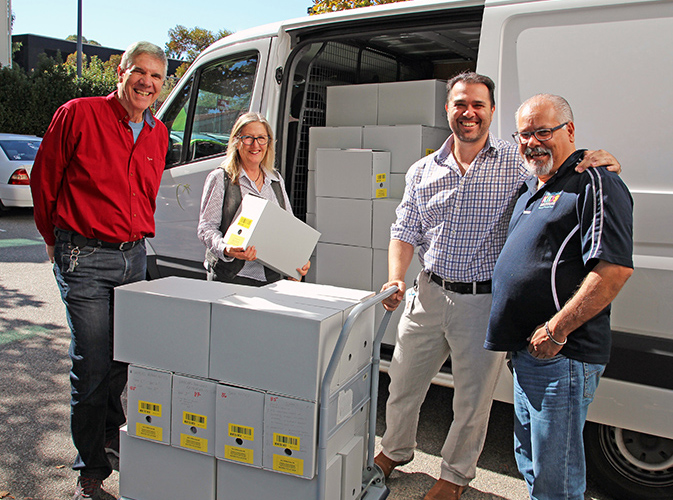
The landmark Western Australian Aboriginal Child Health Survey has been placed into archiving at the State Library of Western Australia to be preserved for future generations.

Findings of a research study examining the characteristics of service use by a cohort of young people born between 1994-1997 who used four government services.
Data on Western Australian children’s health, learning, development and social characteristics will be mapped using geospatial technology so that community leaders and service providers can identify the priority issues for their children.
You can make a difference to kids’ health at any age. Just ask 11-year-old Charlotte, who raised more than $11,000 for kids’ brain cancer research at The Kids Research Institute Australia simply by shaving her head.
Our findings are crucial in demonstrating that the Northern Territory STS clone is not STX resistant
Prevalence of skin sores and scabies in remote Australian Aboriginal communities remains unacceptably high, with Group A Streptococcus (GAS) the dominant pathogen. We aim to better understand the drivers of GAS transmission using mathematical models.
The current prophylactic treatment to prevent rheumatic heart disease requires four-weekly intramuscular injection of a suspension of the poorly soluble benzathine salt form of penicillin G (BPG) often for more than 10 years. In seeking to reduce the frequency of administration to improve adherence, biodegradable polymer matrices have been investigated.
The rates of RHD in Timor-Leste are among the highest in the world, and prevalence is higher among girls than boys. Community engagement is essential for ensuring follow-up and the effective delivery of secondary prophylaxis.