Skip to content

Search

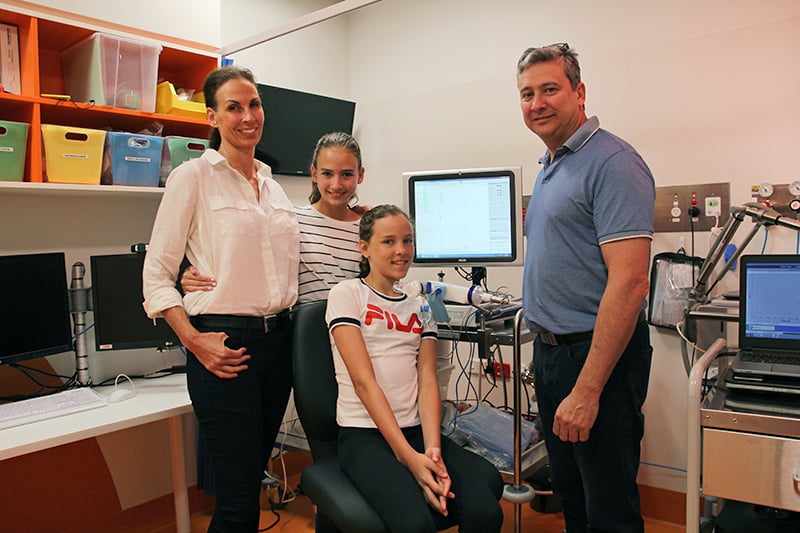
The feasibility of using electrical impedance tomography to guide positive pressure airway clearance in children with cystic fibrosis and tracheobronchomalacia

Positive expiratory pressure devices are frequently used for airway clearance in children with cystic fibrosis and tracheobronchomalacia. This study aimed to establish if electrical impedance tomography is a feasible measure to titrate pressures in non-sedated children.

Cystic Fibrosis

Cystic fibrosis (CF) is the most common chronic, life-shortening genetic condition affecting young Australians. There is no cure but researchers are working to prevent the onset of lung disease.

Giving kids with CF a chance at a longer, healthier life

COMBAT CF is one of two long-standing international trials which have resulted in new early intervention options helping to reduce progressive lung damage in kids living with CF.

A Small Device May Deliver King-Sized Solutions for Patients With an Exacerbation of Cystic Fibrosis

The aim is to examine whether using a portable spring-infusor device to deliver antibiotics compared with a standard infusion pump (SIP) translated to (i) improve health outcomes, (ii) reduce the length of stay (LoS), and (iii) reduce cost for treatment of exacerbations of cystic fibrosis.

Early nasal microbiota and subsequent respiratory tract infections in infants with cystic fibrosis

Respiratory tract infections (RTIs) drive lung function decline in children with cystic fibrosis (CF). While the respiratory microbiota is clearly associated with RTI pathogenesis in infants without CF, data on infants with CF is scarce. We compared nasal microbiota development between infants with CF and controls and assessed associations between early-life nasal microbiota, RTIs, and antibiotic treatment in infants with CF. 

A near-complete genome of the uncultured Staphylococcus aureus phage COMBAT-CF_PAR1 isolated from the lungs of an infant with cystic fibrosis

In cystic fibrosis, bacteria–bacteriophage interaction in the lower airways is poorly understood. We present the near-complete genome of the uncultured Siphovirus-like bacteriophage, Staphylococcus aureus phage COMBAT-CF_PAR1, isolated from the lower airways. The genome spans 41,510 bp with 33.45% guanine–cytosine content and contains 65 open reading frames.

Phage therapy to treat cystic fibrosis Burkholderia cepacia complex lung infections: perspectives and challengesge

Burkholderia cepacia complex is a cause of serious lung infections in people with cystic fibrosis, exhibiting extremely high levels of antimicrobial resistance. These infections are difficult to treat and are associated with high morbidity and mortality. 

Protocol for establishing a core outcome set for evaluation in studies of pulmonary exacerbations in people with cystic fibrosis

Pulmonary exacerbations are associated with increased morbidity and mortality in people with cystic fibrosis (CF). There is no consensus about which outcomes should be evaluated in studies of pulmonary exacerbations or how these outcomes should be measured.

Spring-infusors: How a simple and small solution can create king-sized complexity

The aims of the study were to investigate family and hospital staff views about the use of spring-infusor devices for administration of intravenous antibiotic medications, to examine if the device is acceptable and feasible and to map a process for implementation.

Detection of bile acids in bronchoalveolar lavage fluid defines the inflammatory and microbial landscape of the lower airways in infants with cystic fibrosis

Cystic Fibrosis (CF) is a genetic condition characterized by neutrophilic inflammation and recurrent infection of the airways. How these processes are initiated and perpetuated in CF remains largely unknown. We have demonstrated a link between the intestinal microbiota-related metabolites bile acids and inflammation in the bronchoalveolar lavage fluid from children with stable CF lung disease.