Skip to content
The Kids Research Institute Australia logo
Donate

No results yet

Search

Research

Well-being and Distress in University Students with ADHD Traits: the Mediating Roles of Self-Compassion and Emotion Regulation Difficulties

Tertiary education is particularly demanding for students with attention-deficit hyperactivity disorder (ADHD), who often struggle with emotion regulation and are at greater risk of internalising disorders compared to their peers. Self-compassion is a skill associated with positive mental health and adaptive emotion regulation that might support students in managing the emotional challenges of studying with ADHD.

Research

Within- and between-person relationships between spontaneous self-affirmations, coping style, and wellbeing

Self-affirmations—responding to self-threatening information by reflecting on positive values or strengths—help to realign working self-concept and may support adaptive coping and wellbeing. Little research has been undertaken on spontaneous self-affirmations in response to everyday threats, and less has been undertaken on the relationships between spontaneous self-affirmations, coping, and wellbeing.

Research

Perspectives of trans and gender diverse young people accessing primary care and gender-affirming medical services: Findings from Trans Pathways

Increasing numbers of trans young people are seeking medical services worldwide, but there have been few qualitative investigations of the experiences of trans young people attempting to engage with these services to explore in-depth experiences of clinical interactions.

Research

Occurrence of psychosis and bipolar disorder in adults with autism: A systematic review and meta-analysis

Evidence suggests that individuals with autism spectrum disorder have increased rates of co-occurring psychosis and/or bipolar disorder. Considering the peak age of onset for psychosis and bipolar disorder occurs in adulthood, we investigated the co-occurrence of these disorders in adults with autism.

Research

Early life determinants of health: Invest early to break the cycle of long-term disadvantage in neurodevelopmental disorders

This chapter discusses the importance of investment in early life determinants of health to break the cycle of long-term disadvantage. This chapter addresses these issues while focussing on neurodevelopmental disorders and their related mental health concerns as the targets at the centre of a biopsychosocial transformation of the health system.

Research

The relationship between parental mental health, reflective functioning coparenting and social emotional development in 0-3 year old children

The transition to parenthood is a high-risk period for many parents and is an important period for child development. Research has identified that parental mental health, reflective functioning (capacity to consider mental states of oneself and others) and coparenting (capacity to work together well as a parenting team) may be particularly significant predictors of later child outcomes, however these factors have seldom been considered together.

News & Events

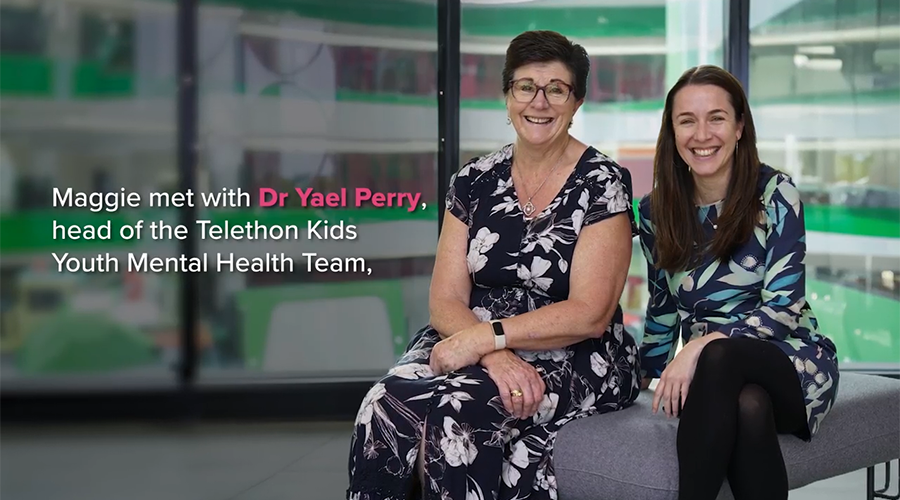
Maggie Dent visits The Kids Research Institute Australia as part of research for new book

We were delighted to have Australia’s best-known parenting author, Maggie Dent, back at ‌The Kids Research Institute Australia this week, to talk about the mental health of our teenagers.

News & Events

Mental health champion a ‘brilliant woman’

Congratulations to Head of Youth Mental Health at The Kids Research Institute Australia, Dr Yael Perry, who has received a Telstra Health 2023 Brilliant Women in Digital Health Award in recognition of her innovative use of technology to achieve positive mental health outcomes for marginalised young people.