Skip to content

Search

Mapping malaria by sharing spatial information between incidence and prevalence data sets

As malaria incidence decreases and more countries move towards elimination, maps of malaria risk in low-prevalence areas are increasingly needed. For low-burden areas, disaggregation regression models have been developed to estimate risk at high spatial resolution from routine surveillance reports aggregated by administrative unit polygons.

The effect and control of malaria in pregnancy and lactating women in the Asia-Pacific region

Half of all pregnancies at risk of malaria worldwide occur in the Asia-Pacific region, where Plasmodium falciparum and Plasmodium vivax co-exist. Despite substantial reductions in transmission, malaria remains an important cause of adverse health outcomes for mothers and offspring, including pre-eclampsia. Malaria transmission is heterogeneous, and infections are commonly subpatent and asymptomatic.

Spatio-temporal spread of artemisinin resistance in Southeast Asia

Current malaria elimination targets must withstand a colossal challenge-resistance to the current gold standard antimalarial drug, namely artemisinin derivatives. If artemisinin resistance significantly expands to Africa or India, cases and malaria-related deaths are set to increase substantially.

Severe outcomes of malaria in children under time-varying exposure

In malaria epidemiology, interpolation frameworks based on available observations are critical for policy decisions and interpreting disease burden. Updating our understanding of the empirical evidence across different populations, settings, and timeframes is crucial to improving inference for supporting public health.

AnophelesModel: An R package to interface mosquito bionomics, human exposure and intervention effects with models of malaria intervention impact

In recent decades, field and semi-field studies of malaria transmission have gathered geographic-specific information about mosquito ecology, behaviour and their sensitivity to interventions. Mathematical models of malaria transmission can incorporate such data to infer the likely impact of vector control interventions and hence guide malaria control strategies in various geographies.

The overlapping burden of the three leading causes of disability and death in sub-Saharan African children

Despite substantial declines since 2000, lower respiratory infections (LRIs), diarrhoeal diseases, and malaria remain among the leading causes of nonfatal and fatal disease burden for children under 5 years of age (under 5), primarily in sub-Saharan Africa.

Traditional Beliefs, Practices, and Migration: A Risk to Malaria Transmission in Rural Nepal

The study aimed to explore sociocultural factors influencing the risk of malaria and practices and beliefs towards malaria prevention, transmission and treatment in a remote village in Khatyad Rural Municipality (KRM) of Nepal. A sequential exploratory mixed methods approach was used.

Fine-scale spatial mapping of urban malaria prevalence for microstratification in an urban area of Ghana

Malaria is a focal disease and more localized in low endemic areas. The disease is increasingly becoming a concern in urban areas in most sub-Saharan African countries. The growing threats of Anopheles stephensi and insecticide resistance magnify this concern and hamper elimination efforts. It is, therefore, imperative to identify areas, within urban settings, of high-risk of malaria to help better target interventions.

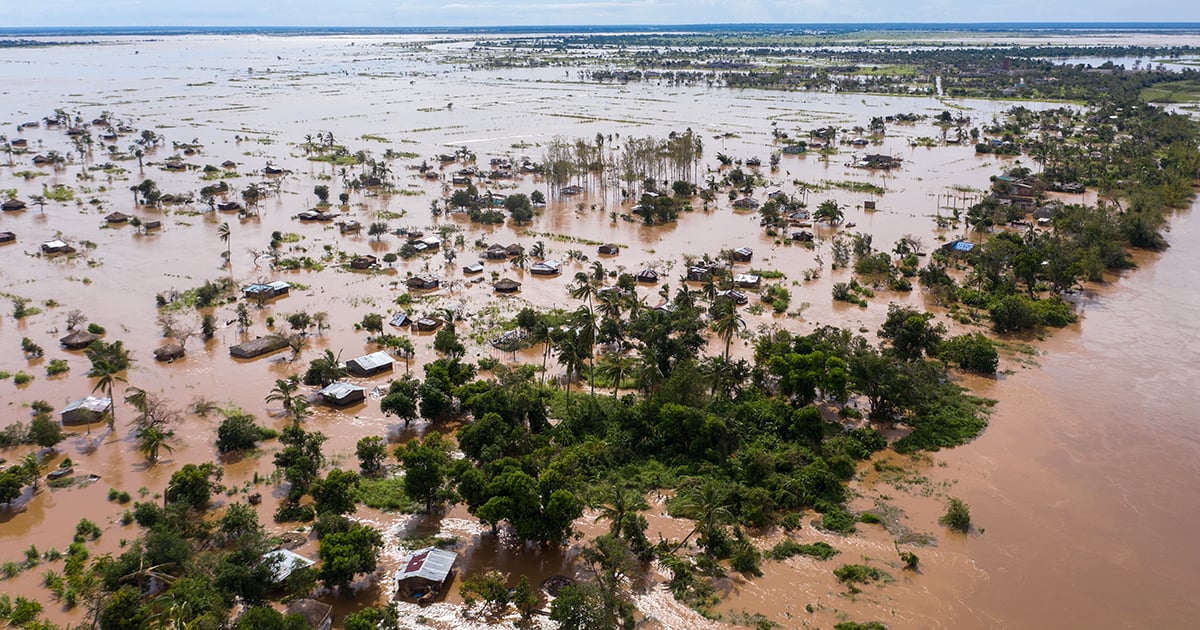
Climate change could cause more than 500,000 malaria deaths in Africa by 2050

World-first research from The Kids Research Institute Australia and Curtin University predicts climate change could trigger more than 100 million additional malaria cases and 500,000 additional deaths in Africa by 2050, including substantial impacts on children.

Projected impacts of climate change on malaria in Africa

The implications of climate change for malaria eradication this century remain poorly resolved. Many studies focus on parasite and vector ecology in isolation, neglecting the interactions between climate, malaria control and the socioeconomic environment, including disruption from extreme weather. Here we integrate 25 years of African data on climate, malaria burden and control, socioeconomic factors, and extreme weather.